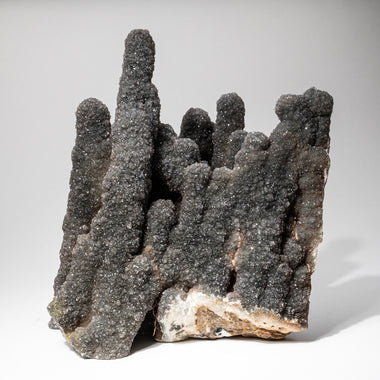
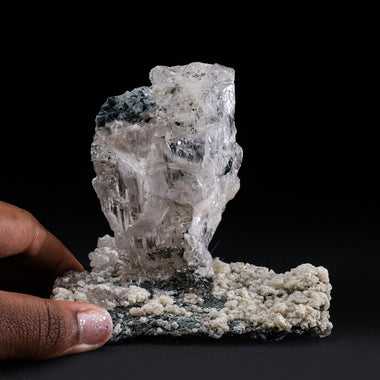
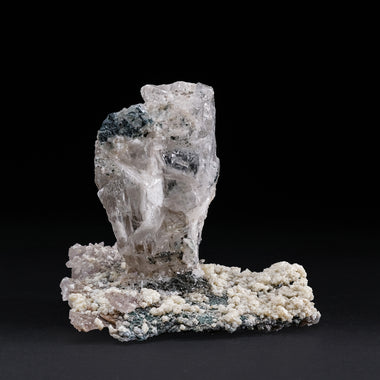
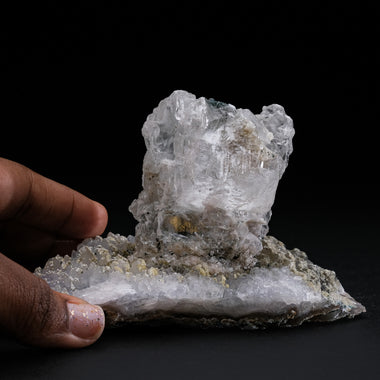
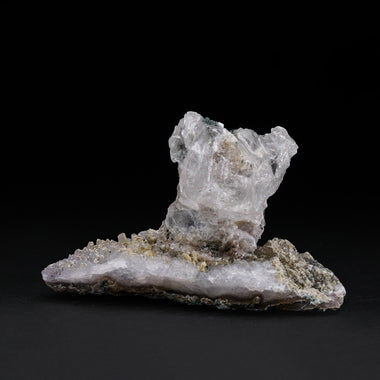
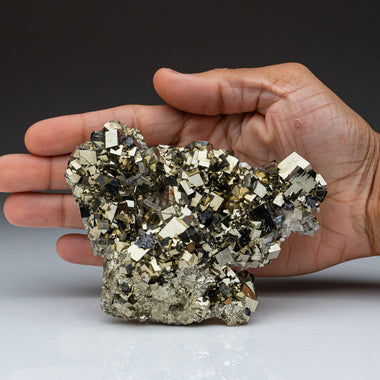
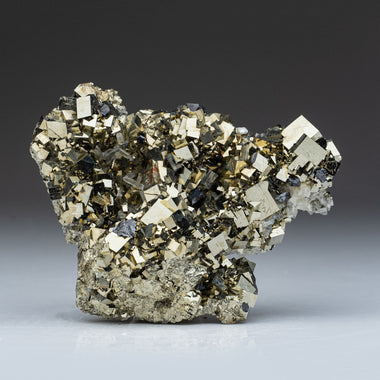
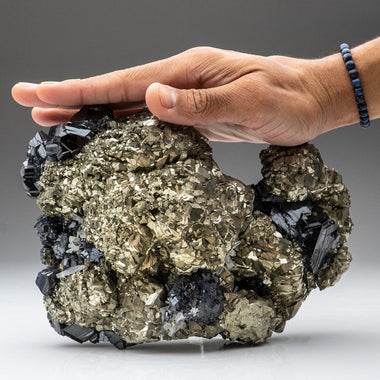
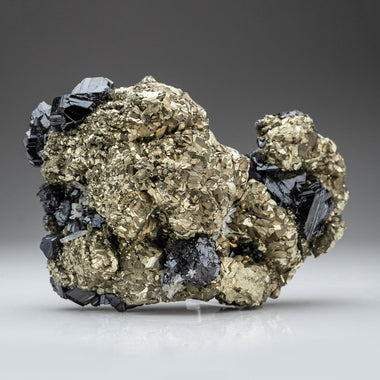
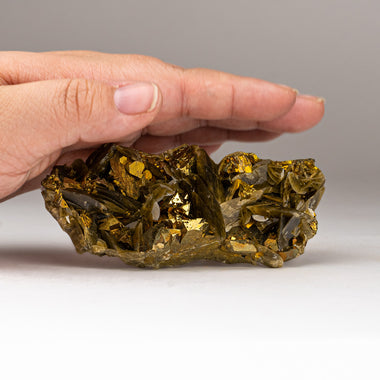
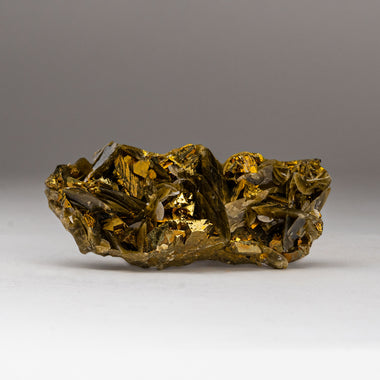
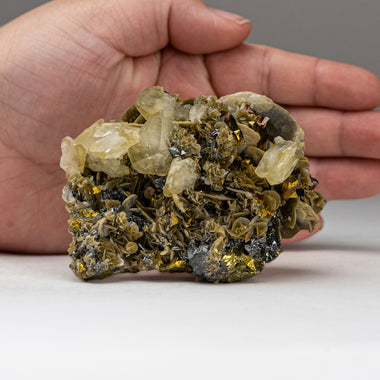
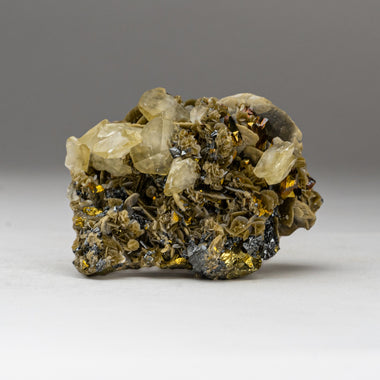
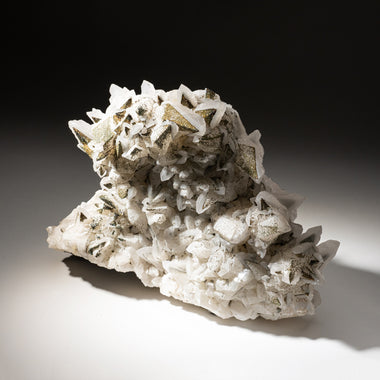
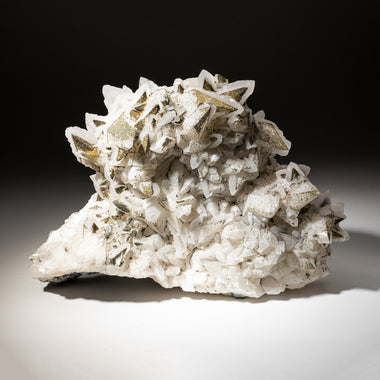
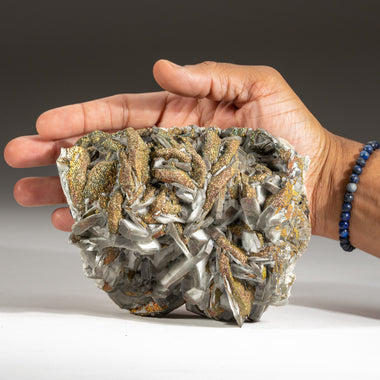
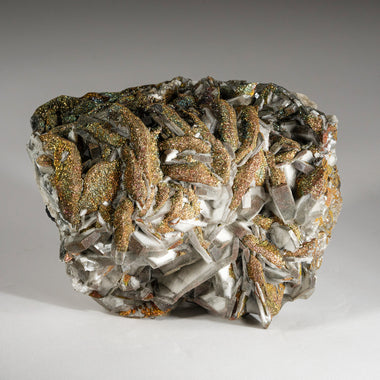
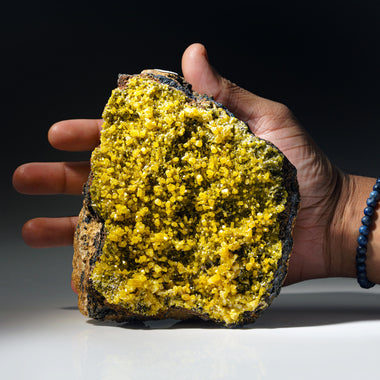
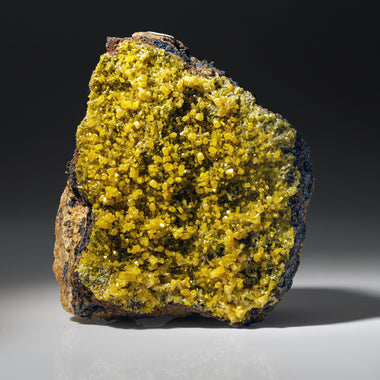
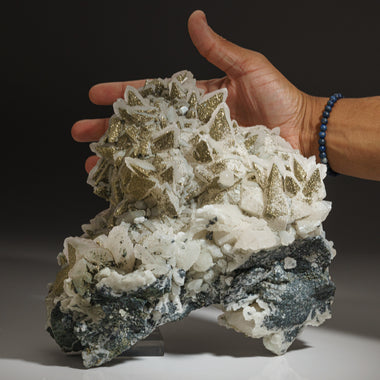
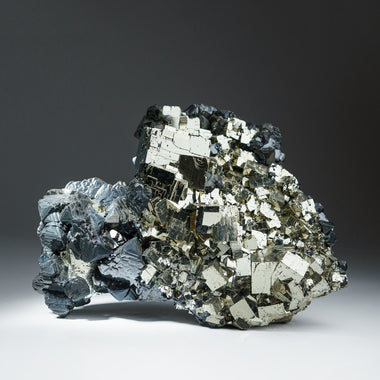
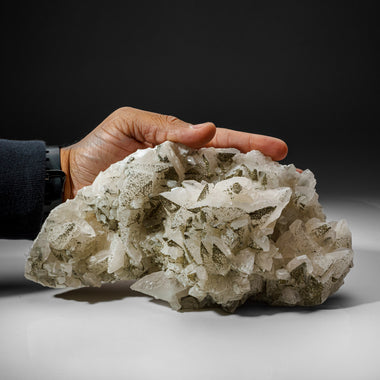
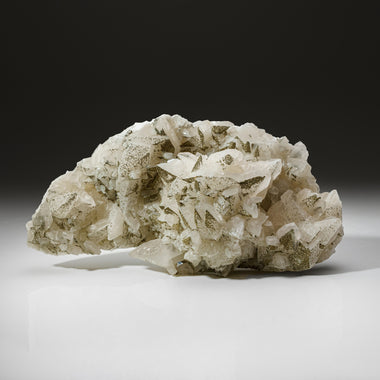
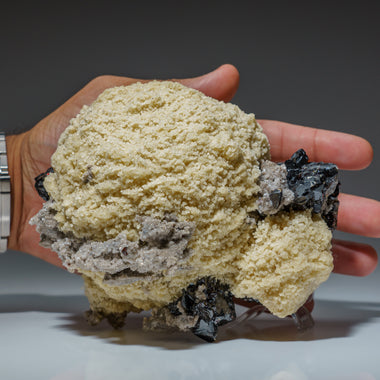
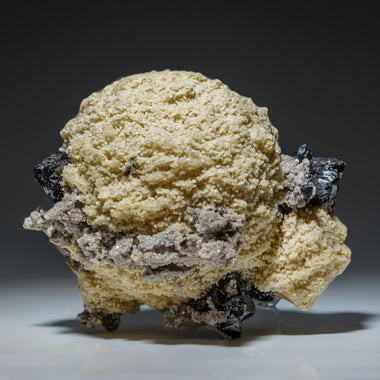
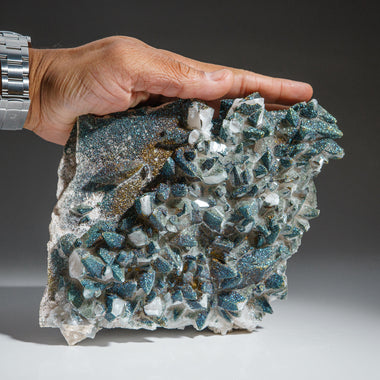
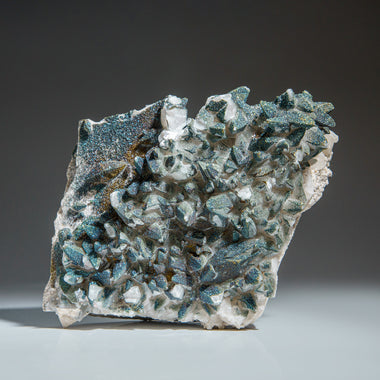
Artigas amethyst plates, Rio Grande do Sul barite and gypsum, Huaron sulfide groups and Campo del Cielo iron reach this page bought at source and catalogued one piece at a time.
Buy South American Mineral Specimens: Artigas Amethyst, Huaron Sulfides, Brazilian Barite and Campo del Cielo Iron
South American mineral specimens come out of three separate settings: the basalt geode belt of Uruguay and southern Brazil, the polymetallic mines of the Peruvian Andes, and the iron strewnfield of the Argentine Chaco. Astro Gallery of Gems catalogues 59 pieces drawn from that ground, weighing anything between a few hundred grams and thirty pounds. Every specimen carries its own locality, weight and inch dimensions on its listing, because no two pockets in this material break open alike.
What South American Material Costs Right Now: Live Figures From the Catalogue
Price settles most decisions on this shelf well before geology does, so the current figures open the page. Each row below is one physical specimen photographed as it will arrive, and a piece that sells vanishes from the table rather than sitting there unavailable.
Localities Behind the Shelf: Artigas, Rio Grande do Sul, Huaron and Gran Chaco
Origin governs colour, crystal size and price across this material far more than species does. The four grounds below behave differently enough that choosing between them is the first real decision a buyer makes.
Artigas Department, UruguayArtigas geodes yield deep purple amethyst plates and steep scalenohedral calcite perched on druzy, including San Eugenio material. Uruguayan colour runs darker and more evenly through the crystal than most Brazilian amethyst, which is why these plates price above their weight.
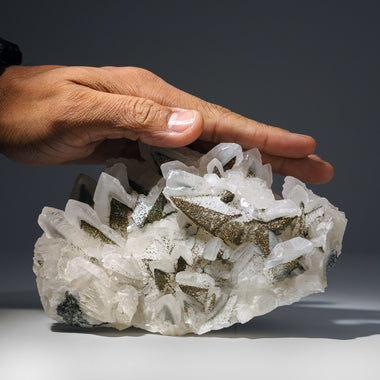
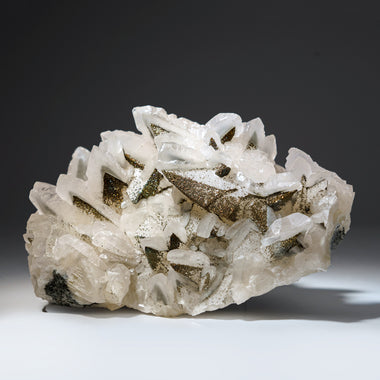
Rio Grande do Sul, BrazilRio Grande do Sul basalt supplies the powder blue barite on scalenohedral calcite and the gem transparent gypsum variety selenite on this page. Brazilian pockets open wide and flat, so a single Brazilian specimen frequently fills a shelf on its own.
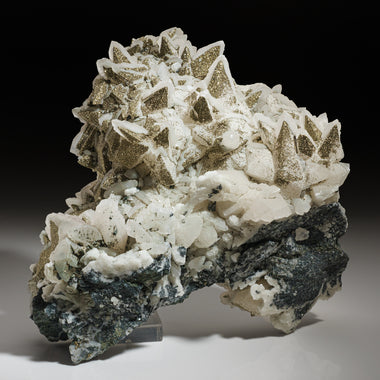
Alimon Mine, Huaron, PeruThe Alimon Mine at Huaron in Cerro de Pasco produces the metallic chalcopyrite overgrown on jet black sphalerite here. Andean sulfide material arrives small and dense, which puts sharp crystallisation and a famous mine name inside a modest budget.
Gran Chaco Gualamba, ArgentinaCampo del Cielo iron fell across the Chaco roughly four and a half thousand years ago and was recorded by Spanish expeditions in 1576. Astro Gallery weighs, measures and photographs every iron mass individually before it is catalogued.
Species and Associations: Amethyst, Chalcopyrite, Barite, Selenite and Iron Octahedrite
South American localities each favour a chemistry of their own, so the breakdown below sorts the shelf by what a specimen actually is rather than by which country shipped it.
| Material | How it appears in this collection |
|---|
| Amethyst plates and geode sections | Uruguayan and Brazilian amethyst arrives as sawn geode sections and druzy plates, with green celadonite and grey agate revealed wherever the cutter has polished the rim. |
| Calcite on amethyst | Scalenohedral and rhombic calcite crystals sit directly on purple druzy, adding a second species and a colour break that carries a plate across a room. |
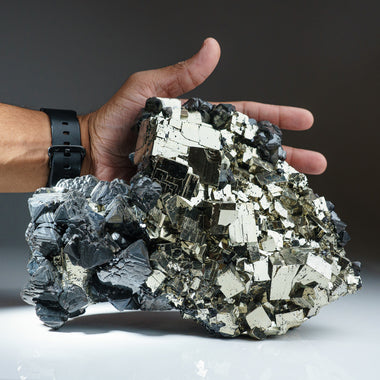
| Peruvian sulfide groups | Metallic chalcopyrite over jet black sphalerite, accented by pyrite and rhombic calcite, arrives at a few hundred grams and suits a cabinet drawer. |
| Barite and gypsum on matrix | Barium sulfate pyramids in powder blue and water clear gypsum on quartz matrix both sit under Mohs 3.5, so a closed case protects them properly. |
| Campo del Cielo iron | Iron octahedrite masses of the IAB group weigh several pounds apiece and read as dense worked metal in the hand rather than as crystal. |
Two Buying Paths: Floor Weight Geode Sections or Miniature Sulfide Groups
Room scale amethystA thirty pound Uruguayan amethyst section behaves as furniture rather than as an ornament, and it needs a hearth, a low table or a console built to carry concentrated weight. Both the polished rim and the rough basalt back remain visible, so position the piece with its cut edge facing the room.
Cabinet scale sulfideA Huaron chalcopyrite group of a few hundred grams belongs behind glass at eye level, where the iridescent brass film and the black sphalerite faces reward close looking. Specimens at this scale travel safely, store compactly and let a collection grow by locality rather than by volume.
Condition on South American Material: Contacts, Trim Lines, Iron Stain and Repair
Four faults recur across geode and mine material from this continent, and every one of them is legible in the listing photographs without the specimen in hand.
Contact facesA contact is the dull flat zone where a crystal grew against neighbouring rock instead of into open space. Contacts are normal on pocket material, and their position decides value, because a contact across the display face costs far more than one hidden at the back.
Trim line and basalt backAstro Gallery of Gems trims host basalt off Uruguayan and Brazilian plates with a diamond saw, then photographs the sawn edge and the reverse of the piece. A seller who never shows the back is usually hiding a trim you would want to measure.
Iron stain and cleaningGeode material carries an orange iron oxide film that a preparator lifts with oxalic acid before sale. Huaron sulfide groups take water and a soft brush only, since acid strips the brass coloured tarnish that gives chalcopyrite its entire appeal.
Stated repairAstro Gallery records reassembly, crystal reattachment and stabilisation in the description and repeats it on the invoice. Silence in a description therefore means the specimen left its pocket in the condition the photographs show.
Rated everywhere we trade
Listing Vocabulary: Druzy, Scalenohedral, Celadonite, Cathedral, Octahedrite and Vug
DruzyDruzy names the carpet of small glittering quartz crystals lining a geode wall, and how evenly it covers a plate governs the way that plate reads under a lamp.
ScalenohedralScalenohedral describes the steep pointed calcite habit dominating Artigas and Rio Grande do Sul pockets, separated at a glance from the blunter rhombic form.
CeladoniteCeladonite is the green iron rich mica coating many Uruguayan geode walls, and the contrast it throws against purple amethyst adds real money to a plate.
CathedralCathedral is the trade word for a tall amethyst geode section stood upright on a base, also sold as a church, and it describes format rather than quality.
OctahedriteOctahedrite classifies an iron meteorite by the nickel iron structure inside it, and Campo del Cielo material belongs to the IAB group within that class.
VugA vug is the gas cavity in basalt where the crystals grew, and a specimen that preserves its vug wall keeps the geological context intact.
Placement and Gifting: Consoles, Cabinets and the Vocabulary Buyers Bring
Two audiences buy this shelf, and one set of documents serves both of them. Interior buyers treat a Uruguayan amethyst section as a colour anchor, standing it where daylight crosses the druzy at a low angle so the purple does the work a painting would otherwise do. Collectors buy by locality instead, building a Peruvian sulfide suite or a run of Artigas calcite, and they read the label before they look at the photograph.
Metaphysical buyers arrive with a third vocabulary, asking for amethyst as a crown chakra stone, pyrite for abundance and quartz as a generator. Astro Gallery prints species, locality, weight and any treatment on every listing, and the gallery describes no crystal on this page as having a health or energetic effect. Naming the register buyers actually use costs nothing, while overstating what a crystal does would undermine the invoice and the guarantee attached to every sale.
Care by Species: Amethyst Colour, Gypsum Softness and Sulfide Lustre
Three separate risks run across this material, and the softest species sets the rule for the whole shelf. Gypsum variety selenite measures Mohs 2 and scratches under a fingernail, so it needs a closed case and no wet cleaning whatsoever. Amethyst holds Mohs 7 and absorbs ordinary handling, though months of direct sun will pale the purple, so a shelf out of the light protects the colour over years. Chalcopyrite, sphalerite and pyrite all tarnish as humidity climbs, so keep sulfide groups dry, lift them by the matrix and never wash them, since the brass film cannot be brought back once it has gone.
Payment, Packing and Freight: Moving Thirty Pounds of Geode Safely
Astro Gallery quotes delivery from the packed weight and carton dimensions of the exact specimen, and any buyer who asks receives that figure before paying anything. Checkout settles through Shop Pay, PayPal, Apple Pay, Google Pay, Visa, Mastercard, Discover or Diners Club, and the itemised invoice records species, locality, weight and price. Plates above roughly twenty pounds move as freight on a quotation settled with the buyer first, since ordinary parcel services will not accept that mass.
Astro Gallery seats geode sections crystal face upward in cut foam, braces the basalt back so the mass cannot shift inside the carton, and encloses everything above a pound in a second box. Huaron sulfide groups ride wrapped one by one with the matrix packed tight against the inner wall. Each carton ships under tracking, insured for its full declared value, with customs documentation filed before it leaves the New York gallery, and the returns policy applies from the moment it lands.
Buyer Questions: Price, Origin, Size, Shipping and Returns
What do South American mineral specimens cost?
Each specimen carries its own price, shown live in the table above, and that figure follows locality, crystal quality, size and association rather than any rate per pound. A few hundred gram Peruvian sulfide group and a thirty pound Uruguayan amethyst plate sit far apart on the same scale.
Where exactly does this material come from?
Four grounds supply almost everything here: Artigas in Uruguay, Rio Grande do Sul in Brazil, the Alimon Mine at Huaron in Peru, and the Campo del Cielo strewnfield in the Argentine Chaco. Every listing names its own locality rather than the country alone.
Is Uruguayan amethyst better than Brazilian amethyst?
Uruguayan amethyst runs darker and more evenly coloured, while Brazilian pockets produce larger and flatter plates. Neither origin is automatically superior, so compare the photographs for colour saturation and druzy evenness on the individual plate you are weighing up.
How large do these specimens get?
The heaviest current pieces reach about thirty pounds and seventeen inches across, while the smallest Peruvian groups weigh under two hundred grams. Weight and inch dimensions print on every listing, so shelf and cabinet planning happens well before checkout.
Are the Campo del Cielo meteorites genuine iron?
Yes. Campo del Cielo material is iron octahedrite of the IAB group from the Gran Chaco strewnfield in Argentina, and each mass is weighed, measured and photographed on its own. Astro Gallery records class, locality and weight on the invoice that travels with it.
Can a thirty pound amethyst plate ship internationally?
Yes. Heavy plates move by freight rather than parcel post, and Astro Gallery quotes that cost from the packed weight before payment is taken. Shipments leave tracked and fully insured at declared value with export customs paperwork prepared in advance.
How do I clean a pyrite or chalcopyrite group?
Use a dry soft brush and nothing else. Water encourages the pyrite decay collectors call rust, and household cleaners strip the iridescent brass film from chalcopyrite permanently, which removes the single feature the specimen was bought for.
Can I return a specimen that does not suit my cabinet?
Yes, under the policy recorded on your invoice, provided the specimen comes back in the condition sent and in equivalent protective packing. Contacting the gallery first registers and insures the return journey against loss.
Neighbouring Shelves: Amethyst, Pyrite, Geodes and Fine Minerals
South American material overlaps several other groups in the catalogue, so the useful question is whether the species, the continent or the format matters most to you.