Skip to content

Palm Stones

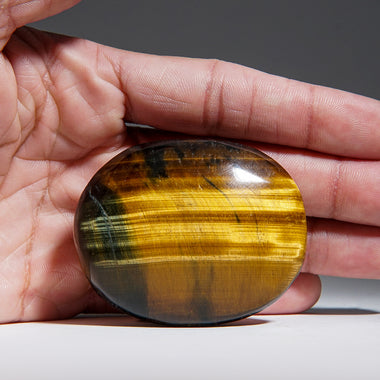
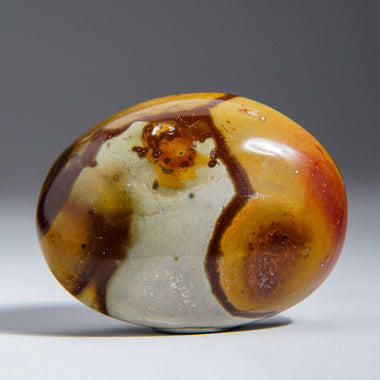
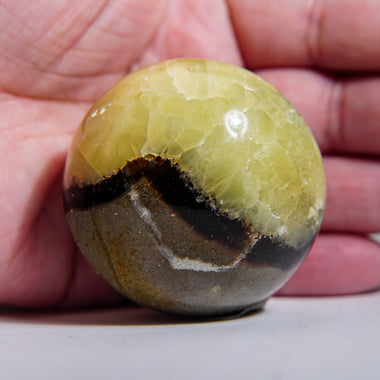
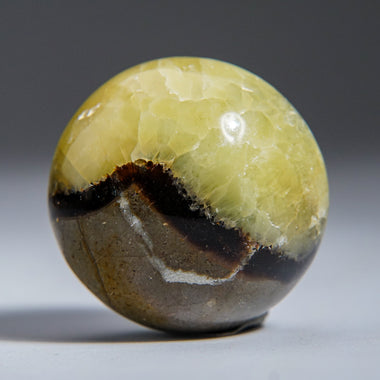
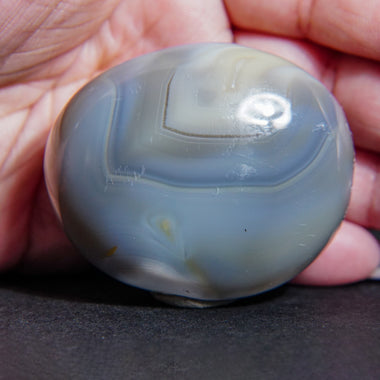
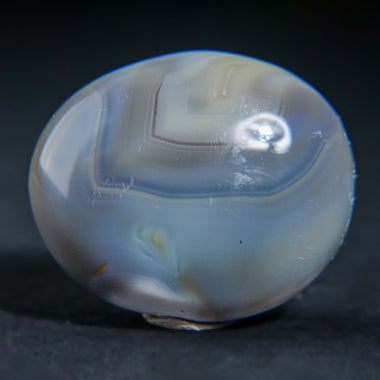
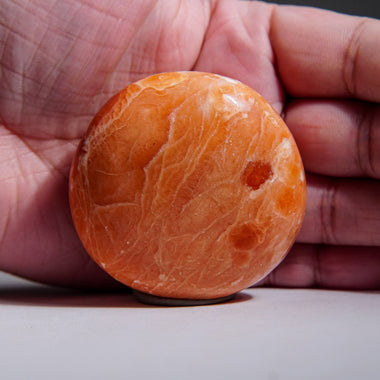
Tiger's eye, Moroccan cat's eye selenite, Chinese fluorite, Madagascan ocean jasper and gem obsidian, lapped flat and finished to a mirror.

Shop Polished Palm Stones Sized to the Hand, Species by Species

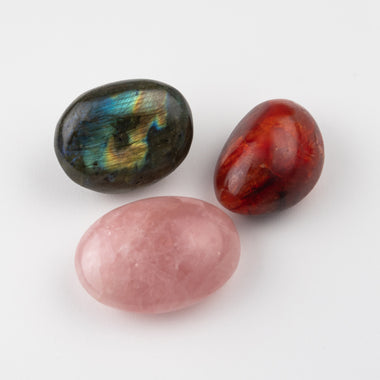
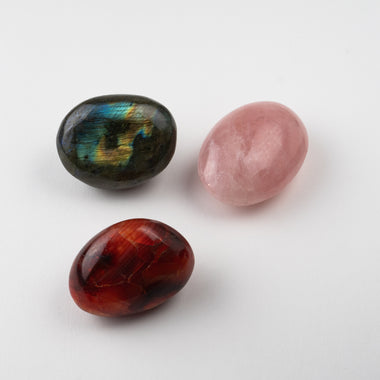
A palm stone is a flattened ovoid pebble worked to roughly two inches long and ten to fifteen millimetres thick, so it seats in a closed hand along the line of the thumb with no edge left to catch. Shoppers buy them by species, by hand size and by the depth of the final polish, and the 23 pieces catalogued here cover tiger's eye, carnelian, selenite, fluorite, ocean jasper, obsidian, peach opal and septarian. Astro Gallery of Gems buys the rough, commissions the cutting in batches, and weighs and photographs each finished stone before it goes online.

Worry Stone or Collector Pocket Piece?

Two quite different buyers reach this category, and the split decides which species and which size suits. One wants something to hold; the other wants a species represented in a form that travels safely.

The worry stone in daily useA stone carried in a pocket and rubbed under the thumb needs hardness above Mohs 6 and a shallow thumb dish. Tiger's eye, carnelian, dendritic agate and the jaspers survive keys, desks and years of handling without losing their surface or picking up scratches.
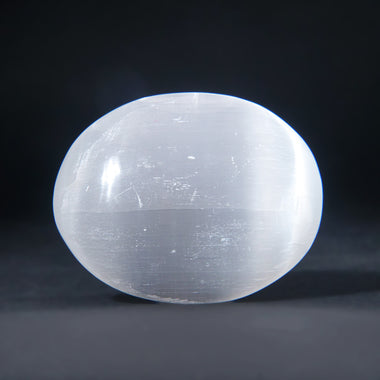
The species piece for a cabinetA soft stone bought for what it is rather than for handling belongs on a tray. Moroccan cat's eye selenite at Mohs 2 and Chinese fluorite at Mohs 4 show fibre and colour zoning that harder species cannot, and both mark instantly against a coin.

Which Palm Stone Actually Fits Your Hand?

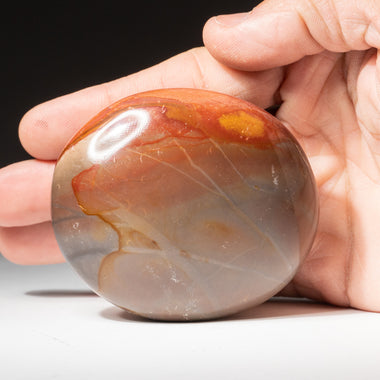
Sizing is the single question our team answers most often, because a photograph on a white background gives no scale. These four bands describe how the current cutting divides, measured across the long axis.

Size bandHow it sits and who it suits
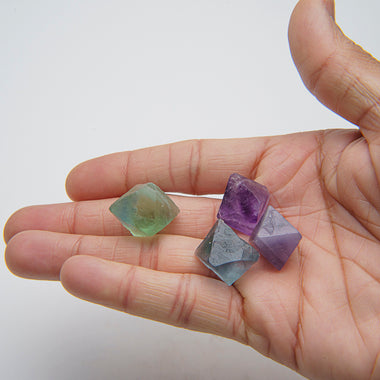
Small, under 45 millimetresFluorite and obsidian pieces that disappear inside an adult fist, sold in sets of two or four, and the right proportion for a child or a small hand.
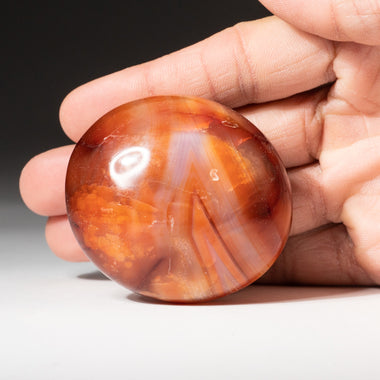
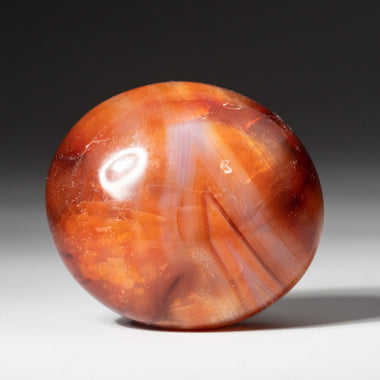
Medium, 45 to 55 millimetresCarnelian, lemon quartz and polychrome jasper at the standard weight of roughly sixty to ninety grams, which covers most hands and most gifting.
Large, 55 to 70 millimetresLarge carnelian, polychrome jasper and Moroccan selenite that fill a wide palm and reward a slow thumb stroke rather than a pocket.
Sets and multiplesThree piece and four piece groups cut from one species so colour, thickness and polish match, which buyers choose for gifts and for a tray display.

Which Species Should You Shop First?

Species governs colour, hardness and how the stone behaves in a working hand. These four groups carry most of what Astro Gallery cuts for this collection.

Quartz family from Brazil and MadagascarCarnelian, dendritic agate, lemon quartz and blue chalcedony are all cryptocrystalline or crystalline quartz at Mohs 6.5 to 7. They take a cerium oxide mirror, resist daily handling, and hold their colour under normal room light indefinitely.
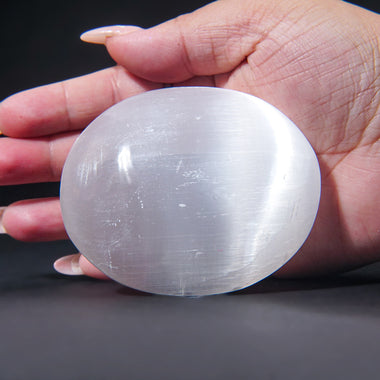
Cat's eye selenite from MoroccoFibrous gypsum, hydrated calcium sulphate, cut so a single silky band of light travels across the face as the stone turns. At Mohs 2 it scratches with a fingernail, so Astro Gallery ships these in a soft pouch and states the hardness on the listing.
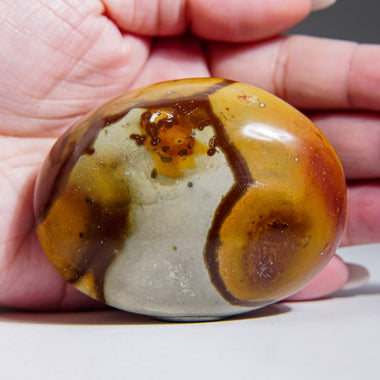
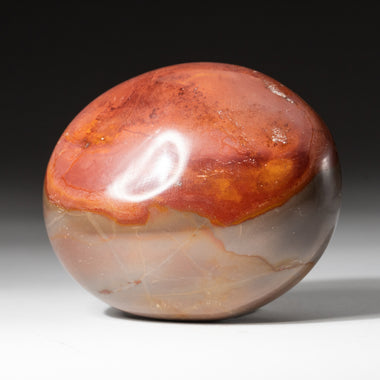
Jaspers from Marovato and MadagascarOrbicular ocean jasper carries circular growth rings in green, cream and rose, while polychrome jasper runs red, ochre and olive. Both are chalcedony at Mohs 6.5 to 7 and each stone resolves differently, so the photograph is the specification.
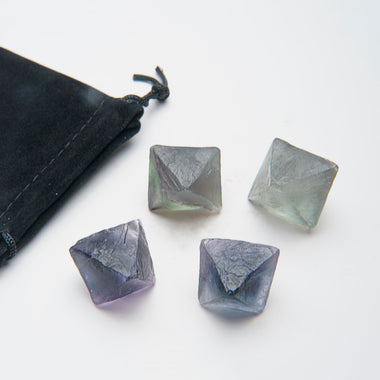
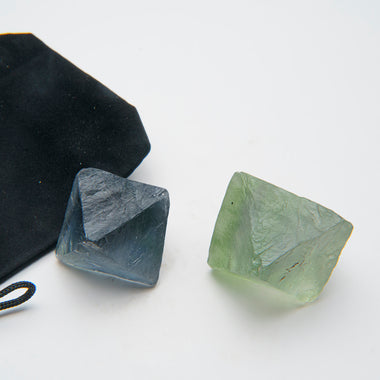
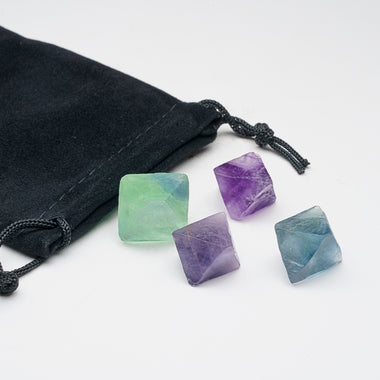
Fluorite from China and gem obsidianChinese fluorite is calcium fluoride at Mohs 4, translucent green and purple with visible colour banding and perfect octahedral cleavage. Obsidian is volcanic glass at Mohs 5, transparent enough in the gem grade to read print through a thin section.

What Does a Palm Stone Cost Right Now?

Palm stones carry the lowest entry pricing in the gallery, which is why buyers commonly order three or four at once. Each row below is a piece currently in stock at the price on the listing.

PieceDetailPrice
Genuine Polished Tiger's Eye Palm Stone See listing $ 32.00
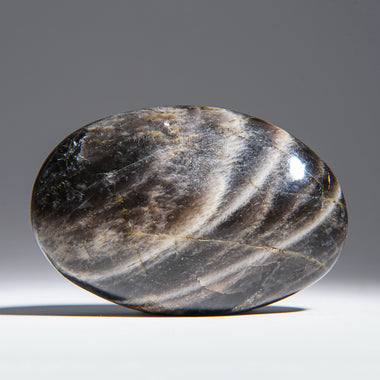
Genuine Polished Black Moonstone Palm Stone See listing $ 23.50
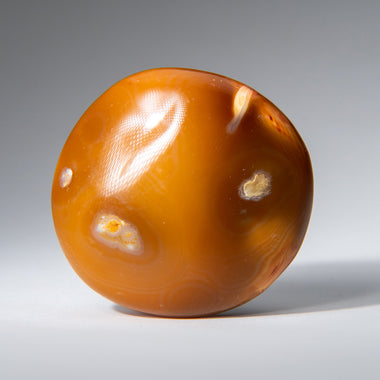
Genuine Polished Carnelian (Medium) Palm Stone Crystal Medium $ 25.00
Genuine Cats Eye Selenite Palm Stone from Morocco (Large) Large $ 29.00
Genuine Selenite Palm Stone with 7 Chakra See listing $ 25.00
Genuine Mandala Engraved Selenite Om Palm Stone See listing $ 25.00
Small enough to buy severalMultiple palm stones travel in one padded parcel at no extra freight, so a mixed order of species costs the same to send as a single piece.
Shop all 23 palm stones Ask about sizes

How Do You Tell a Good Polish From a Rushed One?

Finish is where cheap tumbling shows itself, and every one of these four faults is visible in a photograph taken under a single directional light.

Orange peel textureWatch a reflected highlight travel across the face. A stone finished properly through the grit sequence returns that line unbroken, while a rushed polish shows a dimpled surface where coarse scratches were buffed over rather than removed.
Edge and rim treatmentThe perimeter should be radiused smoothly into the two faces with no ridge left where the wheel stopped. Astro Gallery rejects stones with a sharp rim, because a palm stone with an edge stops being comfortable within a minute of holding it.
Symmetry and thicknessSet the stone on a flat surface and it should sit still rather than rock. Uneven thickness across the ovoid means the two faces were lapped at different rates, which unbalances the piece in the hand.
Natural colour through the bodyDyed agate and dyed howlite concentrate pigment in surface fractures and pale at any chipped edge. Astro Gallery buys undyed rough for this collection and names heat treatment on the lemon quartz, where colour comes from controlled heating.

What Do the Words on a Palm Stone Listing Mean?

ChatoyancyThe single moving band of light in tiger's eye and cat's eye selenite, produced by parallel fibres beneath the polished surface.
Thumb dishThe shallow concave depression ground into one face, which locates the thumb and defines a worry stone rather than a plain pebble.
OrbicularThe circular banded structure that defines ocean jasper, formed by radiating mineral growth and graded on orb roundness and contrast.
CryptocrystallineQuartz whose crystals are too small to see, the structure behind carnelian, chalcedony and every jasper in this collection.
CleavageThe plane along which a mineral splits cleanly, perfect and octahedral in fluorite, which is why fluorite palm stones chip rather than scratch.
Cerium oxideThe fine polishing compound used in the last stage of lapping, responsible for the mirror finish on quartz and jasper faces.

Who Are You Buying It For?

Palm stones account for most of the gift buying in the gallery, because the price sits below a bunch of flowers and the object outlasts everything else on the desk. Buyers pair a species with the person: carnelian for warmth, black moonstone for grounding, selenite for clarity, fluorite for focus. Engraved selenite pieces carrying the seven chakra sequence or an om mandala reach a metaphysical audience that shops by symbol rather than by mineral, and both registers describe the same lapped ovoid.

Astro Gallery records species, weight, dimensions and any treatment on each palm stone and makes no health, healing or energetic claim. Stating the vocabulary buyers actually type costs the gallery nothing; overstating what a mineral does would cost the trust built since 1961.

How Should a Palm Stone Be Cleaned?

Hardness sets the routine. Quartz species including carnelian, tiger's eye, dendritic agate and the jaspers wipe clean with a damp cloth and dry immediately, and skin oil from handling actually deepens their surface over time. Selenite governs the exceptions, because gypsum dissolves in water, so dust it dry with a soft brush and keep it away from a bathroom or a windowsill where condensation forms. Fluorite chips on impact rather than scratching, and obsidian is glass that will conchoidally fracture if dropped on tile. Store softer species separately rather than letting a tray of mixed stones grind against each other.

Rated everywhere we trade

How Does an Order Reach You?

Astro Gallery of Gems has traded polished stone since 1961 and packs this category to the same standard as a mineral specimen. We wrap each palm stone individually so faces never contact each other, box the parcel with void fill, and send every order tracked and fully insured with customs paperwork prepared for international destinations. Checkout runs through Shop Pay, PayPal, Apple Pay, Google Pay or card, an itemised invoice follows every purchase, and our returns policy together with the guarantee published on about us covers the parcel from dispatch to delivery.

Tell us the hand and we will match the stoneSend a rough hand width and the species you want, and our team photographs two or three candidates against a ruler before you order.
Browse the palm stones Email the gallery

What Else Do Buyers Ask Before They Purchase?

How big is a palm stone exactly?
Most measure between 45 and 70 millimetres along the long axis and 10 to 15 millimetres thick, weighing roughly 60 to 120 grams. Every listing carries the size band, and our team sends a photograph against a ruler for any stone you ask about.
Are these palm stones dyed or natural?
The stones in this collection are natural and undyed. Lemon quartz is the one exception, where colour comes from controlled heating, and Astro Gallery names that treatment in the description rather than leaving a buyer to guess.
What is the difference between a palm stone and a worry stone?
A worry stone carries a ground thumb dish on one face and is made to be rubbed, while a plain palm stone is a smooth flattened ovoid with two matched faces. Both terms describe the same object in most of the trade, and each listing shows whether a dish is present.
Which palm stone should I buy for everyday carrying?
Choose tiger's eye, carnelian, dendritic agate or one of the jaspers, all of which sit at Mohs 6.5 to 7 and shrug off keys and desk surfaces. Avoid selenite and fluorite for pocket use, since both mark under far less pressure than a coin applies.
Can I order several palm stones in one parcel?
Yes, and multiple stones ship together at no additional freight cost. We wrap each piece separately inside the same box so polished faces never touch during transit.
Is the exact stone in the photograph the one I receive?
For single pieces, yes. Where a listing shows a set of two or four, the photograph shows that specific group, and Astro Gallery cuts each set from one species so thickness, colour and polish match across the stones.
Do you ship palm stones internationally?
Yes. Every order leaves tracked and fully insured with customs paperwork completed before dispatch, and small parcels reach most destinations without a freight quote.
Can I return a palm stone that feels wrong in the hand?
Yes, and our returns page carries the terms that apply to a small parcel. Asking for a ruler photograph and the exact weight beforehand resolves the fit question for almost every buyer before a stone is shipped.

Where Do Palm Stones Sit Beside Spheres, Hearts and Carvings?

Buyers who like a stone in the hand usually want the same species in other worked forms, and the catalogue follows that instinct. Species pages carry the mineral across every cut, while the form pages carry the silhouette across every mineral.