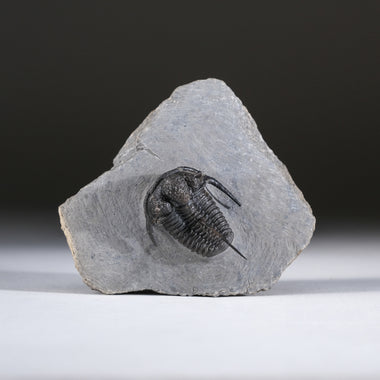
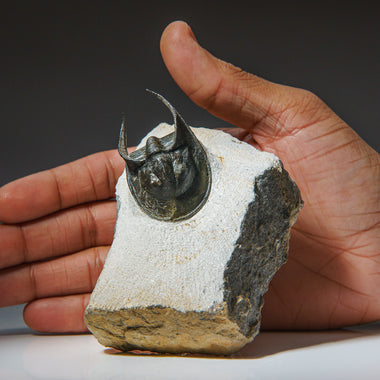
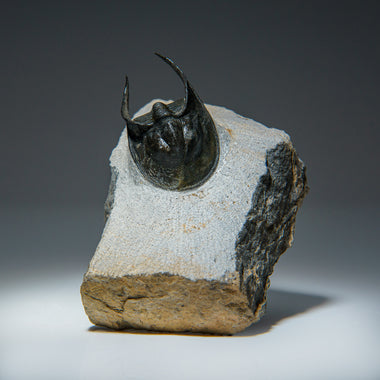
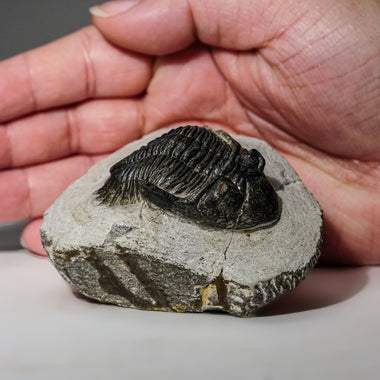
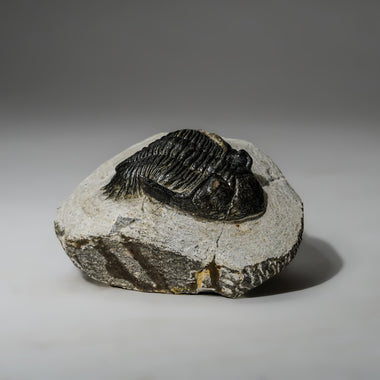
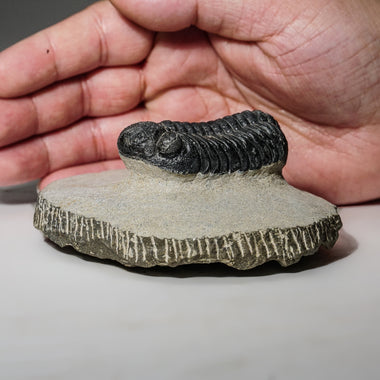
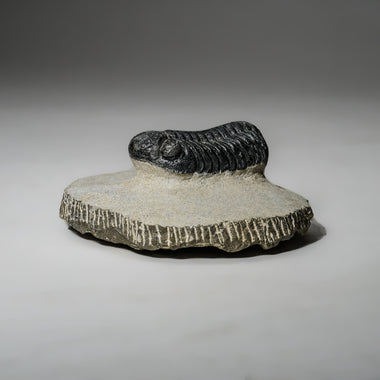
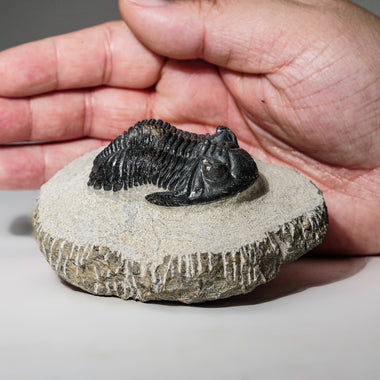
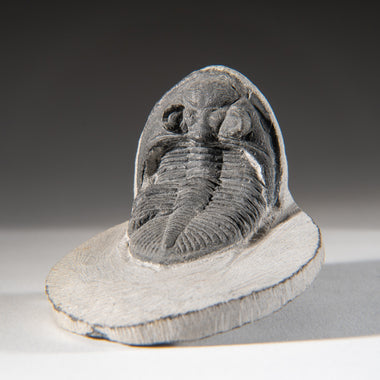
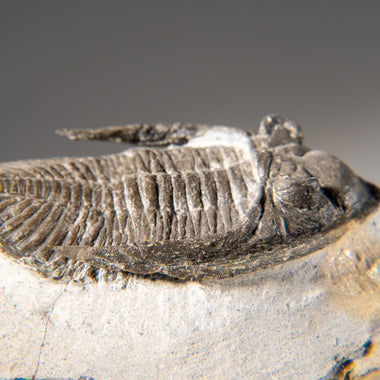
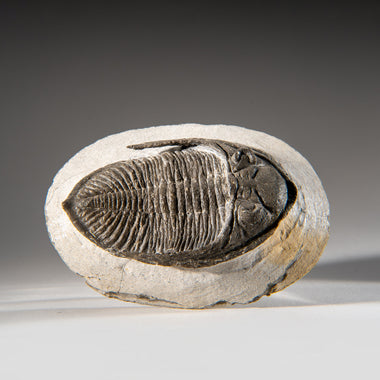
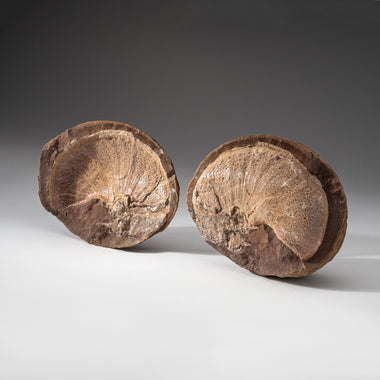
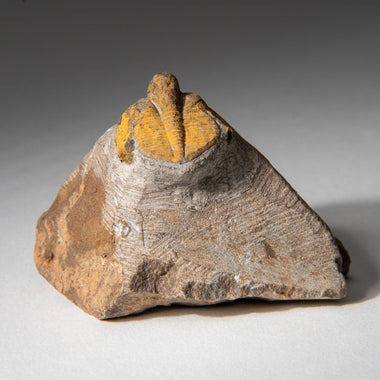
Sea creatures lifted whole out of Moroccan quarry stone, from Cambrian arthropods to Devonian horned species, alongside calcified ammonites from Madagascar.
Buy Aquatic Life for a Wall or a Shelf: Trilobite Plates, Ammonite Halves and Whole Sea Floor Slabs
Aquatic pieces are the animals of ancient seas preserved inside the sediment that buried them, and buyers shop this group by species, by the size of the slab the animal occupies, and by whether the piece arrives ready to stand on a shelf or ready to hang on a wall. Astro Gallery of Gems buys prepared marine plates from Moroccan and Madagascan sources, identifies each animal to genus or order where the preparation allows, weighs and measures every one of the 59 pieces here, and photographs the exact object that leaves the building.
Four Sea Floors Supply Everything Displayed Here
Marine material reaches this page from four distinct beds, and knowing which one produced a piece explains its colour, its posture and its price. Astro Gallery names the age and the species on the listing so a buyer can place the animal in time rather than treating it as decorative stone.
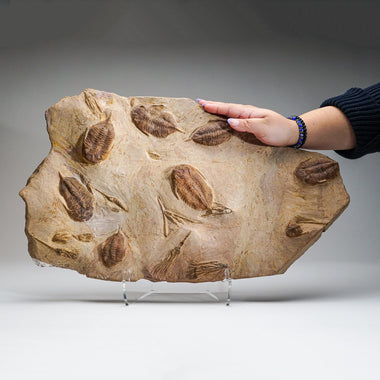
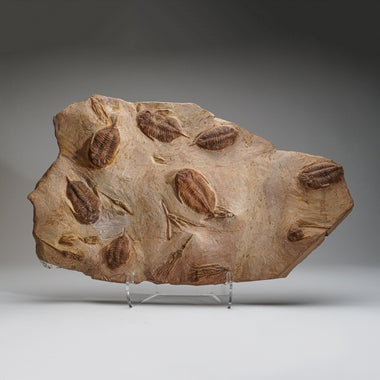
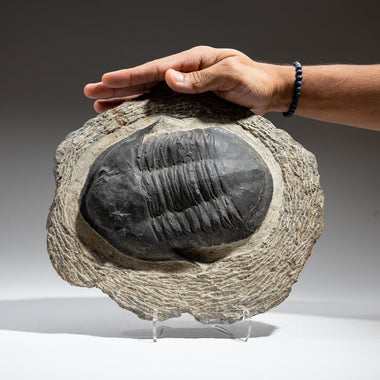
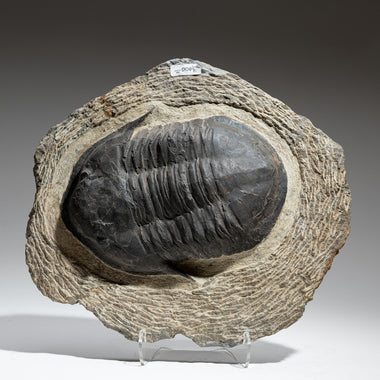
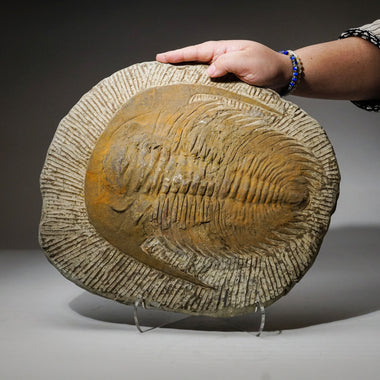
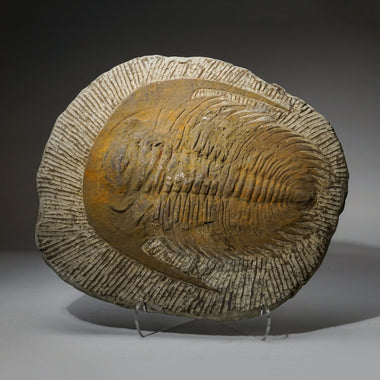
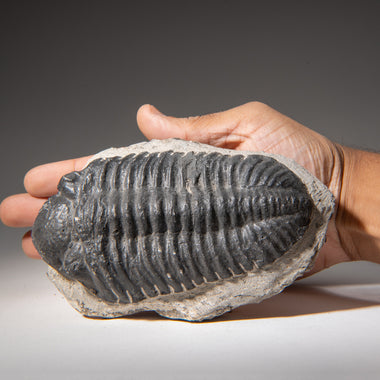
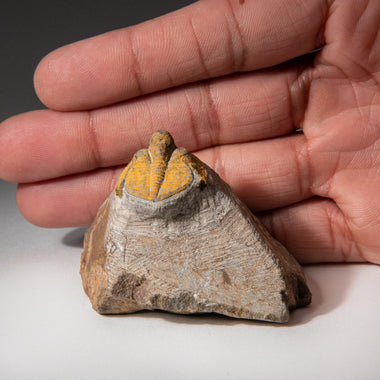
Middle Cambrian Moroccan bedsAcadoparadoxides, an extinct redlichiid genus in the family Paradoxididae, lived as a fast moving low level epifaunal carnivore roughly 505 million years ago. Iron oxidation inside the host rock gives these specimens a natural orange body against grey limestone, which is why they photograph so strongly on a pale wall.
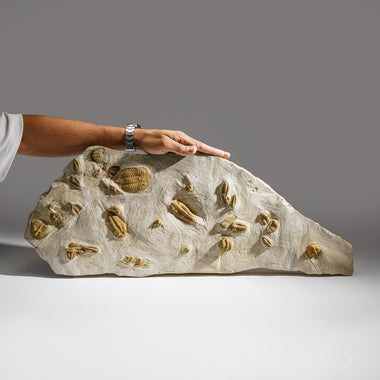
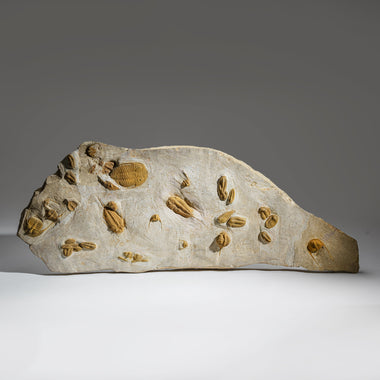
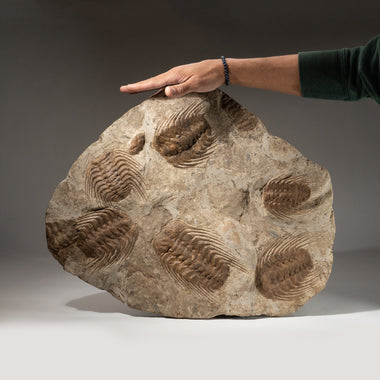
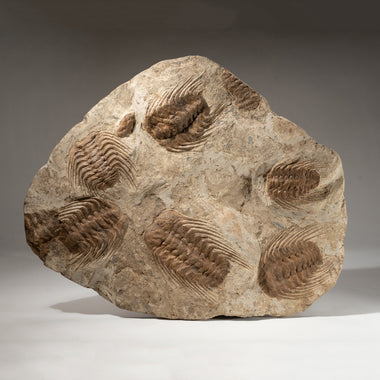
Cambrian cluster platesPtychopariida is the largest trilobite order, and Moroccan quarries release it in crowded plates where several animals died together on one bedding surface. Those slabs reach nineteen pounds and arrive with an acrylic display stand or a wall mount, so the buying decision becomes a wall decision.
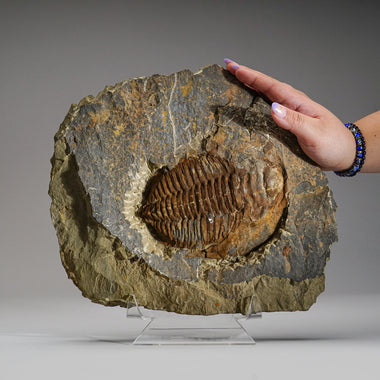
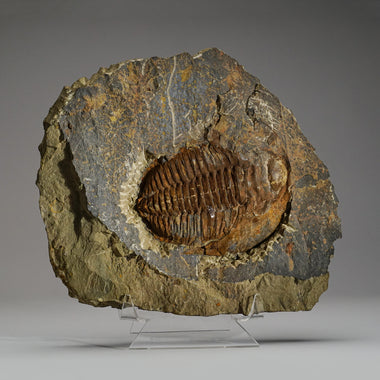
Ordovician matrix specimensAsaphus intermedius carries highly stalked compound eyes and an otherwise unornamented body, an adaptation for burying itself in sand rather than swimming from predators. Selenopeltis and Asaphus lepidurus come out of the same Ordovician sequence, the first bristling with long marginal spines.
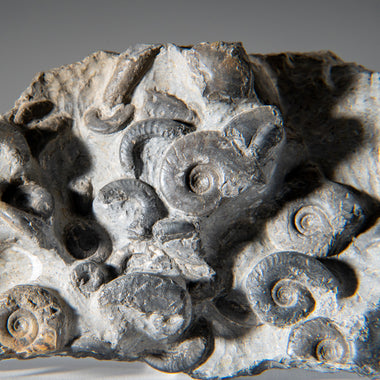
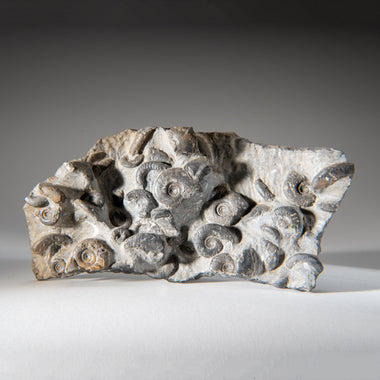
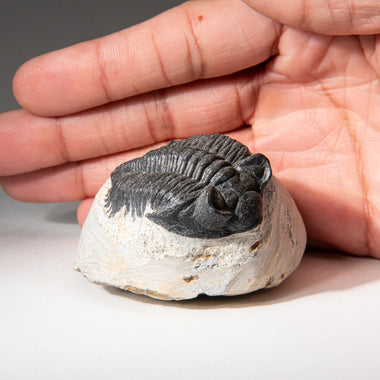
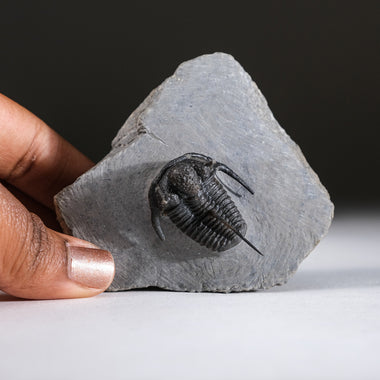
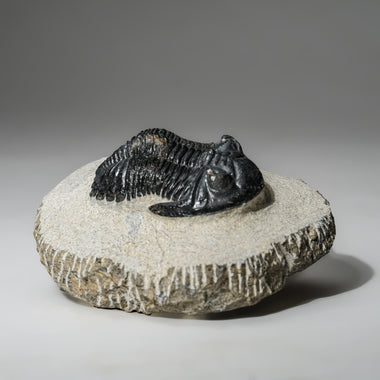
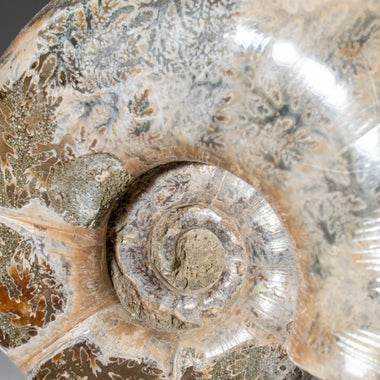
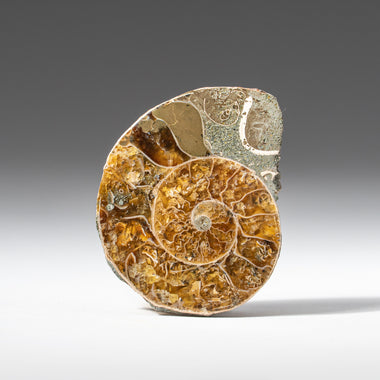
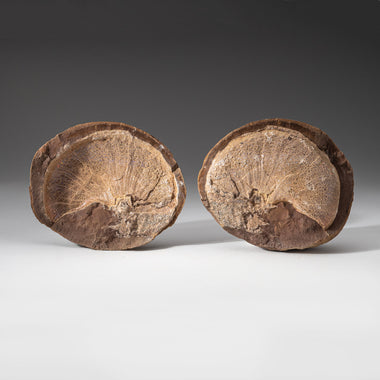
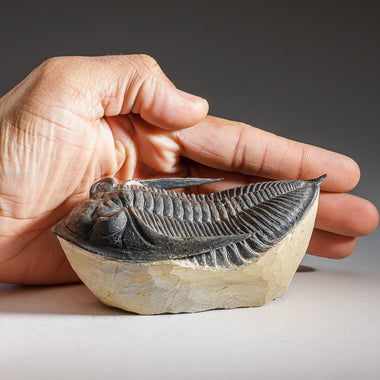
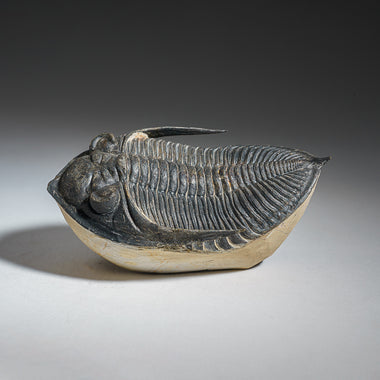
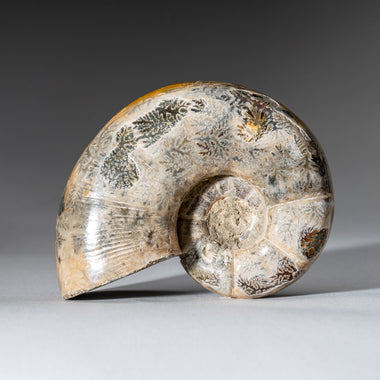
Devonian horned trilobites and Madagascan ammonitesCeratarges armatus and Ceratarges spinosus carry paired horns and free standing spines that only careful preparation exposes. Calcified ammonites from Madagascar arrive as halves and clusters, their chambered cephalopod shells cut and polished so the internal walls read at arm's length.
Plate Weight Settles the Wall Before the Species Does
Most buyers know the surface a marine piece has to occupy long before they know which animal they want on it. Weight and slab area decide whether a piece becomes a desk object, a shelf object or a hung panel, and Astro Gallery groups the current stock into five practical tiers.
| Tier | What occupies it and who buys at that level |
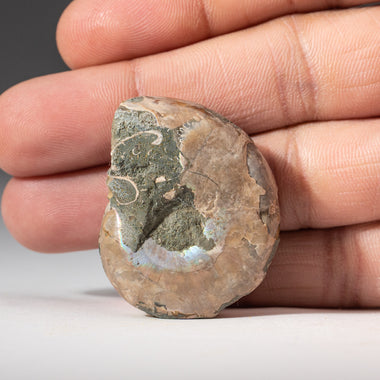
| Ammonite half, under 250 grams | Calcified Madagascan ammonites around five inches across, sawn and polished so the chambers open to view, which is the entry tier and the one that carries most gift buying on this page. |
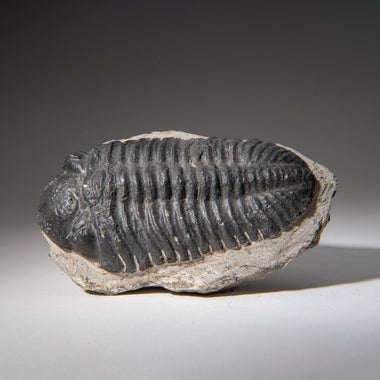
| Single trilobite, 180 to 460 grams | Ptychopariida and Ceratarges specimens on trimmed matrix small enough to sit between books, where the animal fills most of the slab and needs no stand at all. |
| Matrix specimen, 270 grams to 1.4 pounds | Asaphus intermedius and Asaphus lepidurus set in Moroccan limestone with enough surrounding rock that the stalked eyes and the body outline stay readable across a table. |
| Display plate, 2 to 13.4 pounds | Acadoparadoxides specimens and ammonite clusters supplied with an acrylic stand, the tier that anchors a console, a study shelf or a reception desk without needing wall fixings. |
| Cluster panel, 16.5 to 19 pounds | Multi animal Ptychopariida plates supplied with both an acrylic display stand and a wall mount, sized and priced as a centrepiece and hung like a framed picture. |
Shop Every Aquatic Piece at Its Live Listed Price
Each row below is one slab photographed exactly as it will arrive, with its price drawn straight from the catalogue rather than from a fixed schedule. A plate that sells drops out of this table instead of lingering as a listing nobody can buy.
No two bedding surfaces repeatAstro Gallery photographs each slab individually, states its weight, and includes a certificate of authenticity with the prepared trilobite plates.
View all 59 pieces
Request photographs
One Animal Against a Whole Sea Floor Community
The single specimenA lone trilobite or a halved ammonite reads as a portrait of one animal, and the eye goes straight to the cephalon, the spines or the chambered spiral. Collectors chasing species coverage build this way, one genus at a time, and the smaller slabs travel and rearrange easily as a cabinet grows.
The cluster plateA crowded Ptychopariida slab records a moment when a whole community was buried together, so the interest lies in overlap, orientation and density rather than in a single perfect body. Interior buyers choose these because a nineteen pound panel fills a wall the way a painting does and rewards viewing from a distance.
Four Checks That Settle an Aquatic Fossil Purchase
Composite and restorationMoroccan trilobites are sometimes assembled from parts of several animals or moulded in resin along a damaged flank. Study the shell texture where body meets matrix, since a genuine specimen keeps continuous pitting and a filled area goes flat and uniform.
Preparation qualityAir abrasive and needle work should follow the animal rather than the convenience of the preparator. Free standing spines on Ceratarges and Selenopeltis prove patient undercutting, while spines clipped short signal a rushed job on an expensive species.
Matrix integrity and mountingCheck that the slab carries no through crack behind the animal and that any acrylic stand or wall mount takes the load evenly. Astro Gallery states repair, backing and mounting in the description so nothing about the support arrives as a surprise.
Identification honestyAsaphus intermedius, Acadoparadoxides and Ceratarges spinosus are species claims; Ptychopariida is an order and covers many species. A listing that names the correct rank is telling you exactly how firm the identification is.
Cephalon, Pygidium, Suture and Septum Defined
CephalonThe head shield of a trilobite, carrying the eyes and the raised central glabella, and the first area a buyer should study for damage or restoration.
PygidiumThe fused tail plate at the rear of a trilobite. A complete pygidium with its margin intact separates a display grade animal from a partial one.
MatrixThe host rock the animal sits in. Moroccan limestone matrix is trimmed and levelled during preparation so the slab stands or hangs true.
EnrolledA trilobite preserved curled into a defensive ball rather than lying flat. Enrolled specimens are scarcer and read as sculpture from every side.
Suture lineThe frilled boundary where an internal ammonite wall meets the outer shell, exposed when a specimen is calcified and cut, and used to identify the animal.
SeptumOne of the dividing walls between gas chambers inside an ammonite shell, visible as a bright partition across a sawn and polished half.
Buy Marine Life for an Interior, a Gift or a Classroom
Three groups of buyers reach this page and the same documentation serves all of them. Interior designers hang a cluster panel where a canvas would go, or stand an ammonite half on a console beside coral and shell material for a sea themed room. Collectors work from genus and formation, filling gaps in a Cambrian to Devonian sequence. Teachers, parents and museum shops choose the small polished ammonites because a chambered shell explains cephalopod anatomy faster than a diagram does, and Astro Gallery keeps that tier stocked for exactly that reason.
Dust, Damp and Sunlight Around a Fossil Slab
Limestone matrix and calcified shell both dislike water, so dust a marine plate dry with a soft brush and keep household sprays away from the prepared surface permanently. Sunlight fades the orange iron staining that makes Acadoparadoxides specimens carry across a room, which puts them off a south facing sill. Free standing spines snap under a careless cloth, so brush along the animal rather than across it. Any slab above ten pounds concentrates its load on a small footprint, so mount wall panels into a stud and slip felt beneath a stand to protect a polished shelf.
Order a Mounted Plate and Track It to the Wall
Astro Gallery charges the price shown on the listing at secure checkout, where payment settles through Shop Pay, PayPal, Apple Pay, Google Pay, Visa, Mastercard, Discover or Diners Club. Ask our team beforehand for slab dimensions in inches, a raking light photograph across the spines, or a shot of the reverse and the mount, and they will send it the same working day rather than repeating the listing text back to you.
Astro Gallery of Gems has crated stone for transit since 1961, and marine plates get the treatment their brittleness earns. We face the prepared surface with cut foam, brace the slab so the weight never travels inside the carton, remove acrylic stands and pack them separately, and double box everything above a pound. Parcels leave tracked and fully insured at declared value with customs paperwork prepared before dispatch, and the heaviest cluster panels move by freight against an agreed quote. An itemised invoice, our returns policy and the guarantee published on about us cover every step of that journey.
Rated everywhere we trade
Answers Before You Purchase a Marine Fossil
How much does a trilobite plate cost?
Small calcified ammonite halves open the range, single trilobites on trimmed matrix occupy the middle, and multi animal cluster plates weighing sixteen to nineteen pounds sit at the top. The live table above carries the current figure for every piece in stock, priced as an individual object rather than by category.
Are these fossils real or reconstructed?
Every animal on this page is genuine fossil material, and Astro Gallery includes a certificate of authenticity with the prepared trilobite plates. Where a specimen carries repair, filling or a composite element, the listing description states it before you reach checkout.
What size wall does a cluster plate need?
Cluster panels of sixteen to nineteen pounds want a clear span of at least two feet and a fixing into a stud rather than plasterboard alone. Smaller display plates of two to thirteen pounds stand on a supplied acrylic mount and need only a level shelf.
Which trilobite species are stocked here?
Acadoparadoxides from the Middle Cambrian, Asaphus intermedius and Asaphus lepidurus and Selenopeltis from the Ordovician, Ceratarges armatus and Ceratarges spinosus from the Devonian, plus plates identified to the order Ptychopariida where the species cannot be fixed with confidence.
Does the photograph show the exact slab I receive?
Yes. Astro Gallery photographs each slab individually because no two bedding surfaces preserve the same arrangement of animals, so the posture, the colour and the matrix you see are the ones that arrive.
Does a fossil plate arrive ready to display?
The larger plates ship with an acrylic display stand, and several cluster panels include a wall mount as well. The listing names whichever support is included, and our team will confirm the fixing type before you order.
How do I clean a trilobite or ammonite?
Brush it dry with a soft artist brush, working along the animal rather than across it so free standing spines stay intact. Water and household sprays reach into the limestone matrix and dull the prepared surface permanently.
Can I return a marine fossil if it does not suit the room?
Yes, under the terms of our returns policy. Requesting exact slab dimensions and a scale photograph beforehand resolves the question for most buyers well before anything is packed.
Marine Pieces Beside the Wider Natural History Shelf
Buyers who arrive for one sea animal usually follow one of two threads afterwards, either deeper into fossil material or sideways into the living reef objects that share the same interior brief. Astro Gallery groups both routes below.
Reef and shoreline objects
Natural history from other worlds
Gifts and teaching pieces