Skip to content

Pyrite

Spanish cubes from Navajun, Peruvian pyritohedra from Huanzala, and combination ore plates out of Tuscany, Bulgaria and Tanzania.

Which Pyrite Do You Buy, a Navajun Cube or a Huanzala Cluster?

Pyrite is iron disulfide, an isometric sulfide at Mohs 6 to 6.5 with a specific gravity near five, and it crystallises as cubes, pyritohedra, octahedra or intergrown combinations depending entirely on the deposit that grew it. Astro Gallery of Gems buys pyrite at the mine and at the shows, weighs and photographs every piece before listing it, and names the working on each of the 63 specimens here, so you shop a mine rather than a country.
What Does Pyrite Cost to Buy Right Now?

Price settles most pyrite decisions, because the same species runs from a hundred gram Tuscan cluster to a twenty nine pound Spanish cube on matrix. Every row below is a single specimen photographed as it will arrive, and Astro Gallery draws these figures live from the catalogue instead of from a printed price list.

PieceDetailPrice
Pyrite From Gavorrano Mine, Gavorrano, Grosseto Province, Tuscany, Italy See listing $ 450.00
Pyrite From Merelani Hills, Lelatema Mts, Simanjiro District, Manyara Region, Tanzania See listing $ 12,000.00
Pyrite on Hematite From Rio Marina, Elba Island, Livorno Province, Tuscany, Italy See listing $ 900.00
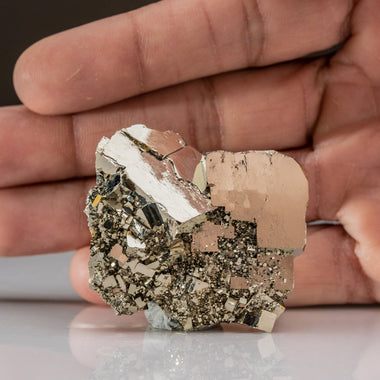
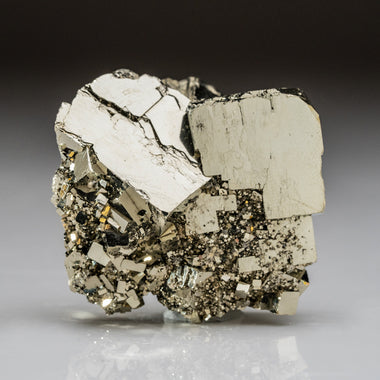
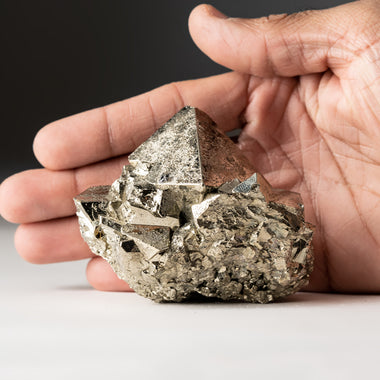
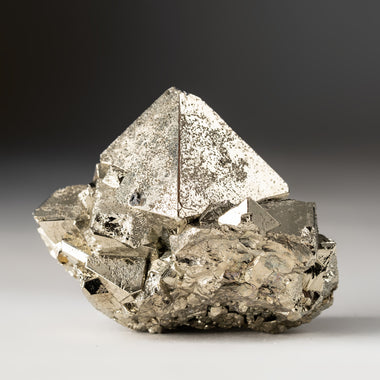
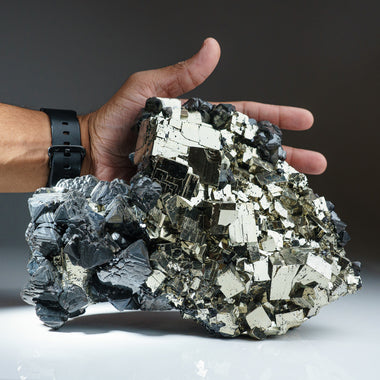
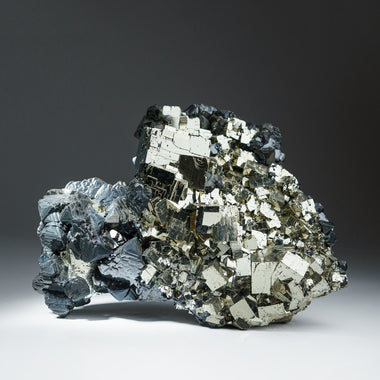
Pyrite from Huanzala Mine, Huallanca District, Huanuco Department, Peru See listing $ 400.00
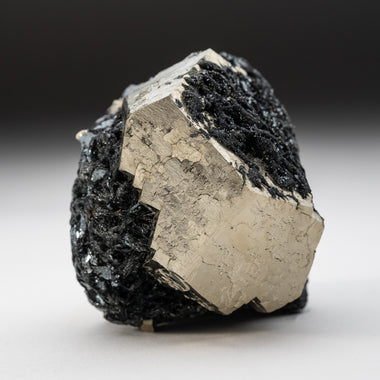
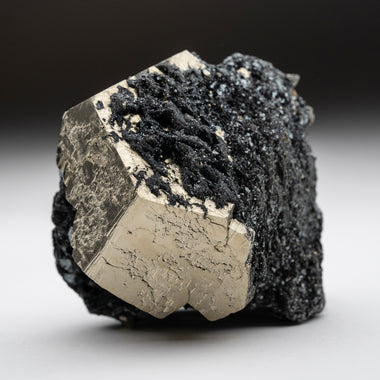
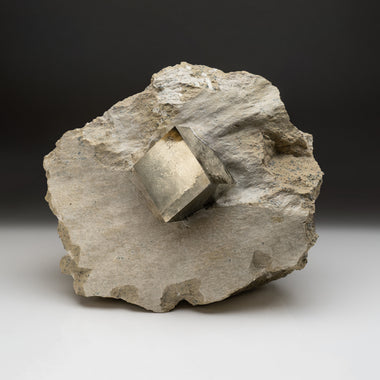
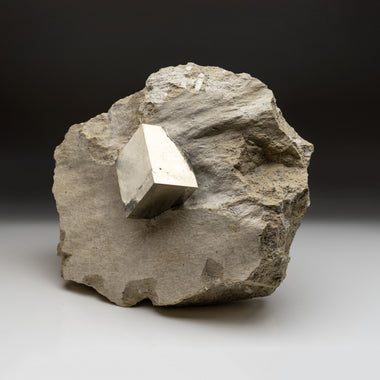
Large Pyrite on Matrix From Victoria Mine, Navajún, La Rioja, Spain See listing $ 12,000.00
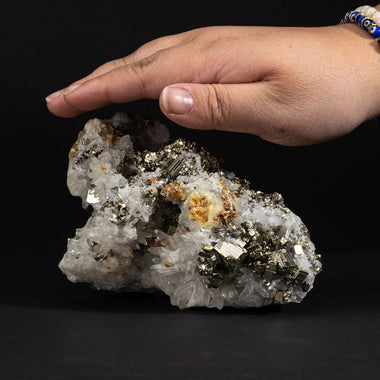
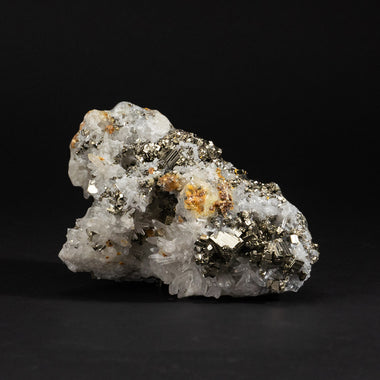
Pyrite on Quartz from Daye Mine, Hubei Province, China See listing $ 8,000.00
Buy a named locality, not a generic labelEvery pyrite here is one of one, in stock, with the mine recorded and the price on the listing tracking the catalogue in real time.
View all 63 pieces Request photographs

Which Mines Produced the Pyrite on This Page?

Pyrite forms in almost every deposit type on earth, and the crystal you end up owning depends on which one. Astro Gallery groups the stock by the four sources that supply it, because a Navajun cube and a Huaron ore plate are different purchases wearing one species name.

Victoria Mine, Navajun, La RiojaSpanish pyrite grows as free standing cubes inside a soft marl, which lets the crystals reach two and a half inches across with mirror flat faces and unbruised edges. Navajun sets the standard against which every other cubic locality gets judged.
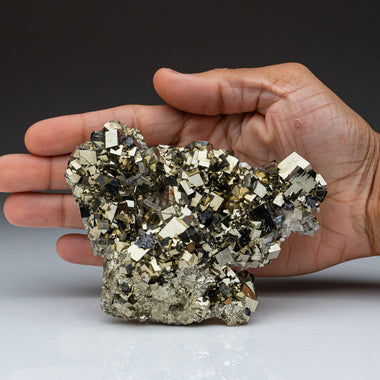
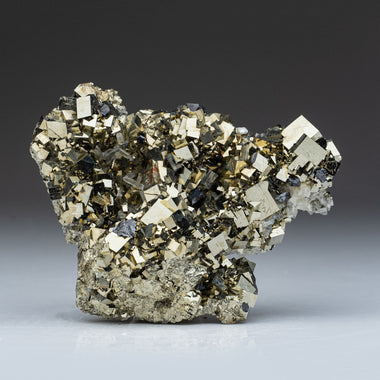
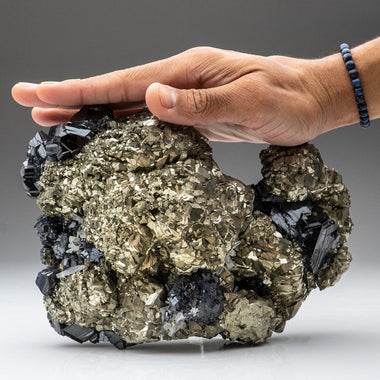
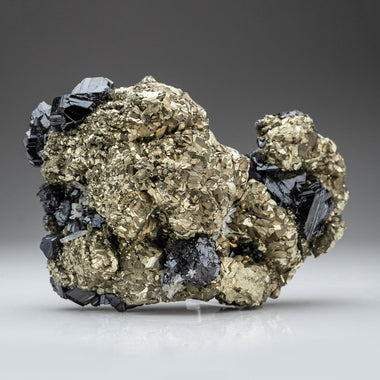
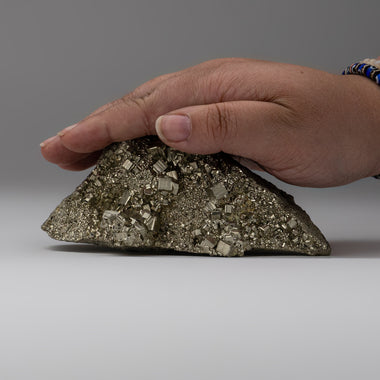
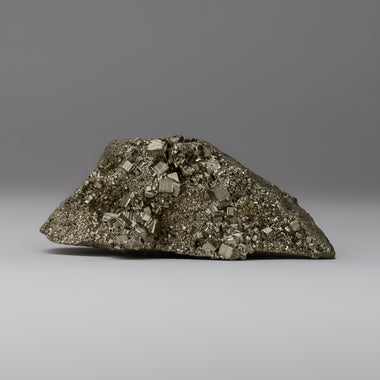
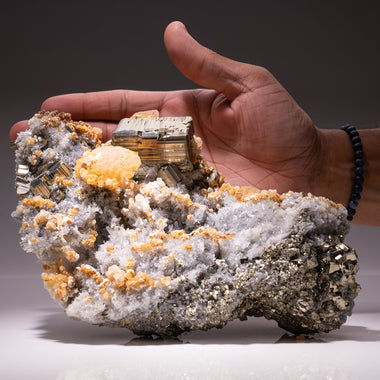
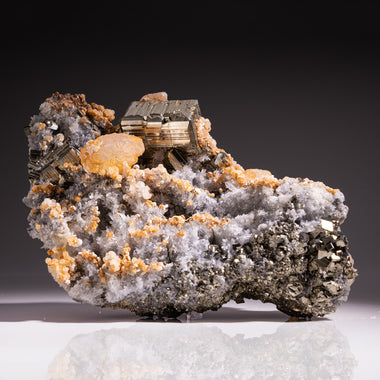
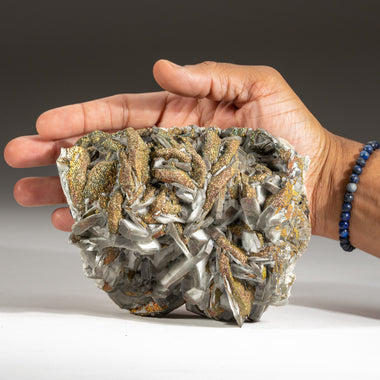
Huanzala Mine, Huallanca, HuanucoPeruvian pyrite from the Huanzala pockets builds golden pyritohedral and octahedral clusters with striated faces and a mirror luster, frequently dusted with crystallised sphalerite. These plates carry more crystal faces per pound than anything else here.
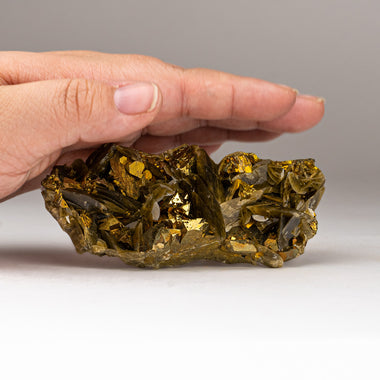
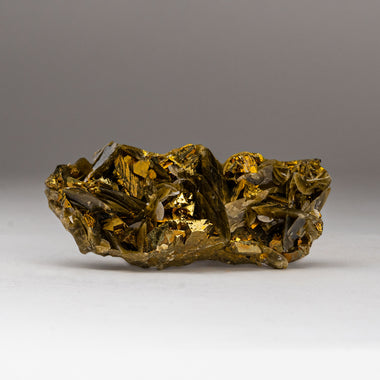
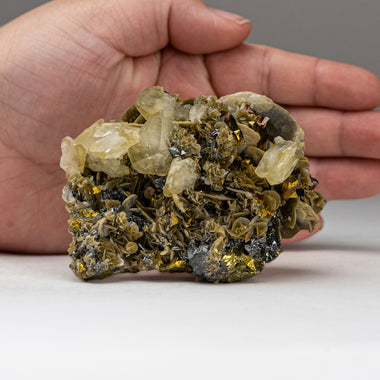
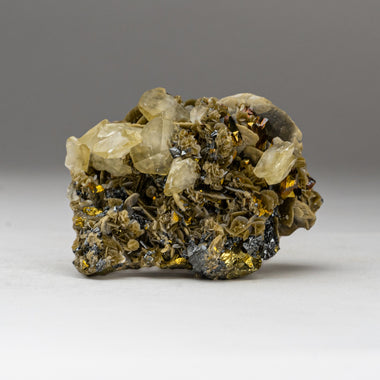
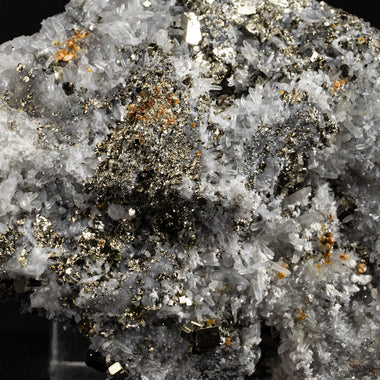
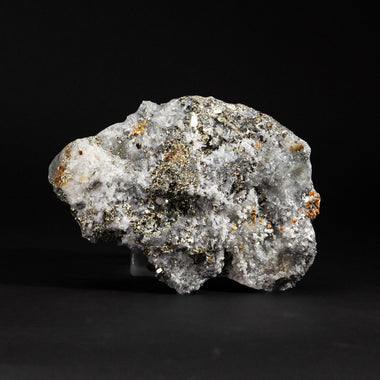
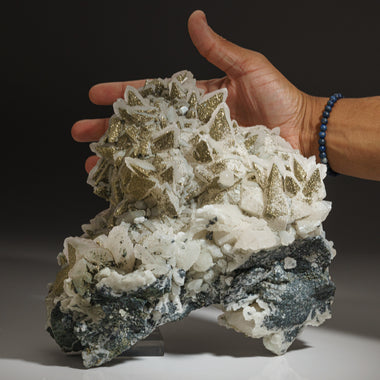
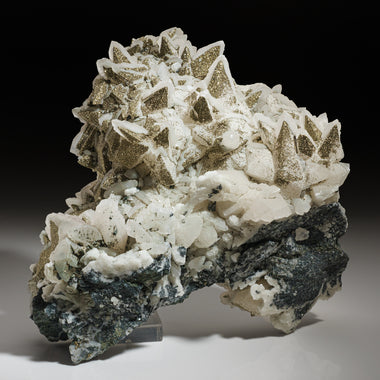
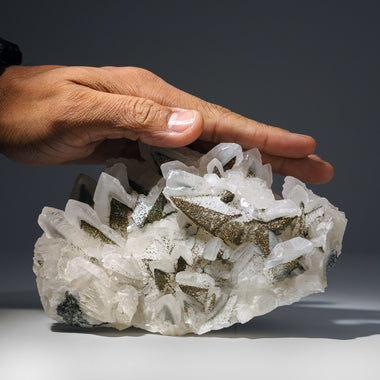
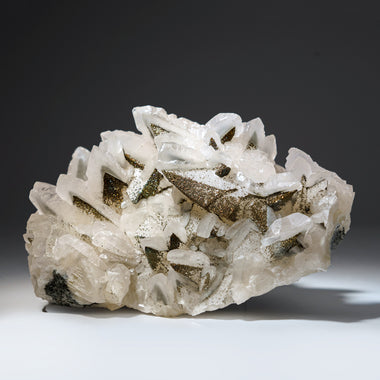
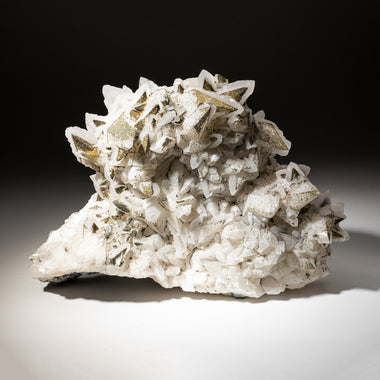
Huaron and Cerro de Pasco, PeruThe Alimon workings at Huaron yield combination ore specimens in which pyrite sits beside metallic chalcopyrite, jet black sphalerite, flat rhombic calcite and colourless quartz. Buyers who want several named species on one plate start with this material.
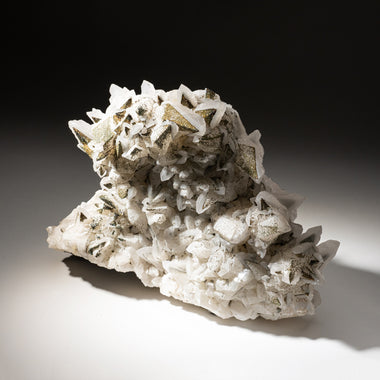
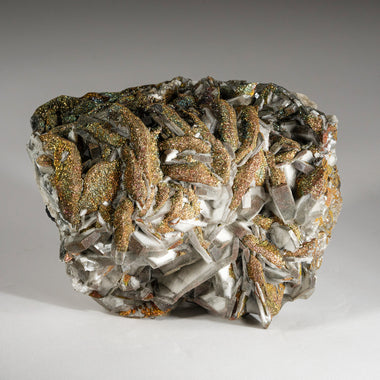
Gavorrano, Rio Marina and MadanTuscan pyrite from Gavorrano and from Rio Marina on Elba Island arrives as classic old European clusters on hematite matrix, while the Deveti Septemvri workings in the Bulgarian Rhodope grow pyrite over twinned sphalerite. Both of those classic European sources have narrowed sharply, so replacing a good plate now takes longer than pricing one.

Which Pyrite Crystal Habit Are You Looking At?

Habit is the single most useful word on a pyrite label, because it fixes the shape, the price band and the way a specimen photographs. These five terms cover the range that Astro Gallery currently stocks.

HabitWhat it looks like and where it comes from
CubeSix square faces meeting at right angles and striated in one direction across each face, the habit produced at Navajun in Spain and at the Daye Mine in Hubei.
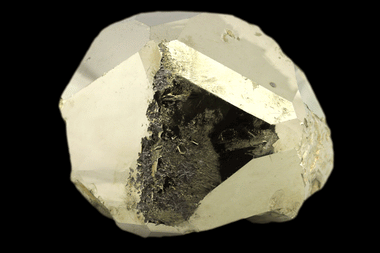
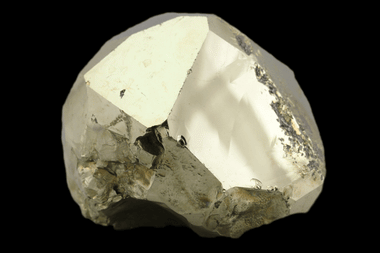
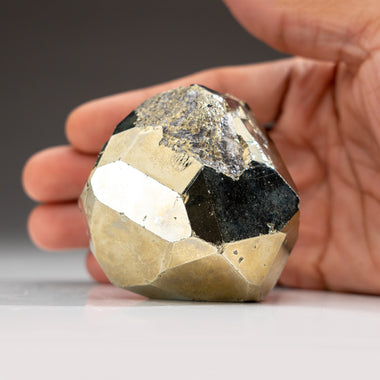
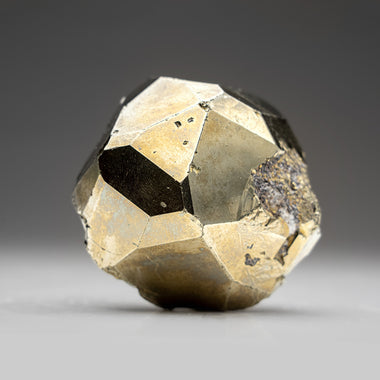
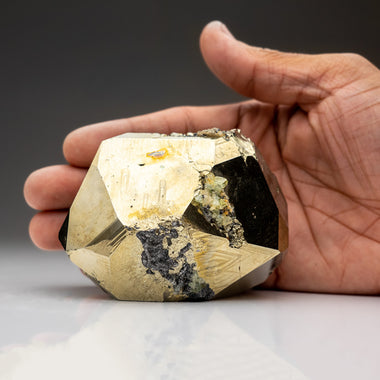
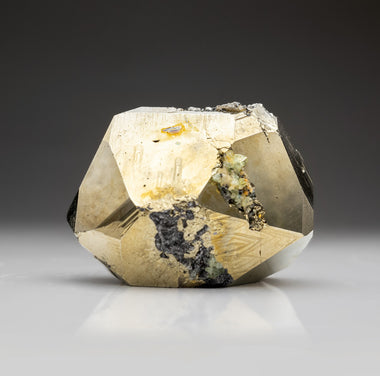
PyritohedronTwelve pentagonal faces that read as a rounded cube from across a room, common at Gavorrano in Tuscany and throughout the Peruvian pockets.
OctahedronEight triangular faces meeting at sharp opposing points, the scarcest single habit on this page and the one that photographs best on a small plate.
Diploid and combination formsFaces borrowed from several habits on one crystal, which the Merelani Hills material from the Simanjiro District in Tanzania shows at unusual size.
FramboidMicroscopic raspberry shaped aggregates that grow in sedimentary rock, a term you meet in mineralogy papers rather than on any cabinet specimen sold here.

What Should You Check Before You Pay for Pyrite?

Pyrite hides its problems better than most sulfides, and four of them account for nearly every disappointment after delivery.

Luster against tarnishFresh pyrite returns a hard mirror reflection, while a tarnished face goes brown and dull and never polishes back. Astro Gallery photographs each specimen under raking light so you can read the luster instead of trusting an adjective.
Edges, corners and contactsA cube loses value fastest at its corners, and a contact face where the crystal grew against rock is not damage. The listing photographs show both, so a bruised corner never arrives as a surprise.
Matrix, glue and restorationLoose cubes are sometimes reset into matrix they never grew in, which the trade calls a made specimen. Astro Gallery states any glue line, reattachment or trimming in the description, because that disclosure decides what a plate is worth.
Storage history and oxidationPyrite that has sat in damp storage develops a white sulfate bloom, a faint sulfur smell and crumbling edges. Every piece here is checked for that bloom before it goes online and again before it is packed.

What Do the Words on a Pyrite Label Mean?

PyritohedronA pyritohedron is a twelve faced pentagonal form unique to the pyrite group, and its edges meet at angles no cube can produce.
StriationsStriations are the parallel grooves running across a pyrite face, and their direction alternates between neighbouring faces, which is one proof the crystal grew naturally.
DiploidA diploid is a twenty four faced pyrite crystal that combines cubic and pyritohedral geometry, and collectors pay a premium for a well formed one.
FramboidA framboid is a microscopic spherical cluster of pyrite microcrystals resembling a raspberry, and it forms in sediments rather than in the open cavities that produce cabinet crystals.
ContactA contact is the dull face left where a crystal grew tight against rock or another crystal, and it is original growth rather than breakage.
ChalcopyriteChalcopyrite is a copper iron sulfide that grows with pyrite in Peruvian ore, and its brassier tone and lower hardness separate it from the pyrite beside it.

Should You Buy a Single Crystal or a Combination Plate?

Pyrite splits its buyers along a line that runs straight through the stock, because some want a single geometric crystal presented as an object while others want a plate recording what an ore body was actually doing underground. Astro Gallery describes each specimen from both angles, naming the habit and the accompanying species separately, so the choice stays with the person paying for it.

The single crystal on matrixA Navajun cube isolated on its marl block reads as sculpture, needs no explanation and survives being handled by visitors. Buyers choose it for a desk or a lit shelf where geometry, not mineralogy, does the work.
The combination ore plateA Huaron or Madan plate carries pyrite alongside sphalerite, chalcopyrite and calcite, and it rewards a collector who wants the paragenesis documented. These pieces reward close inspection and belong behind glass rather than on an open counter.

How Do You Keep Pyrite From Oxidising?

Pyrite is stable in dry air and vulnerable in humid air, so storage decides its future more than handling does. Above roughly sixty percent relative humidity, iron disulfide reacts with moisture and oxygen to form iron sulfates and sulfuric acid, and the specimen swells, crumbles and takes its label with it. Keep pyrite in a dry cabinet, add a sachet of silica gel to any closed case, and never wash a specimen or leave it in a bathroom or a basement. Dust it dry with a soft brush, avoid skin contact on the mirror faces because fingerprints etch the luster, and check stored pieces once a year for a powdery white bloom.

How Does Pyrite Read in a Room and What Do Crystal Sellers Call It?

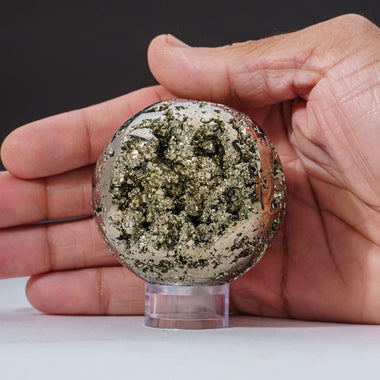
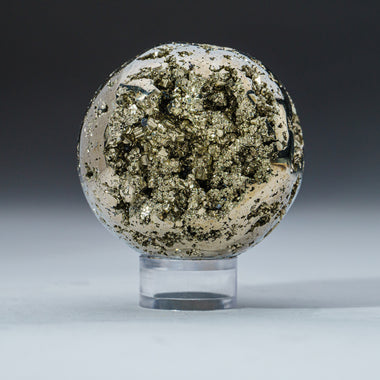
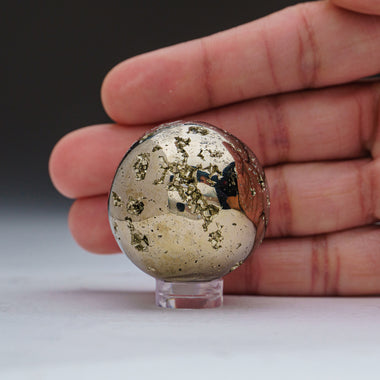
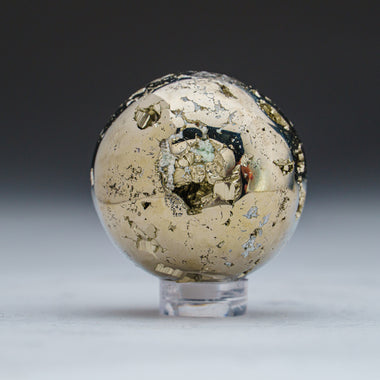
Interior buyers use pyrite as the metallic note in a shelf of matte stone, pairing a gold cube against black slate or walnut so the reflection carries across a room, and the polished Peruvian spheres do the same job in a smaller footprint. Metaphysical sellers describe the same material as a stone of protection, abundance and grounding, and buyers search for it under those words. Astro Gallery sells pyrite as mineral specimens and decor, documents locality, weight, habit and condition, and makes no health, healing or financial claim about any of it.

How Do You Order Pyrite and How Does It Travel?

Ordering runs the same way for a hundred gram Tuscan cluster and a twenty nine pound Spanish plate, since the price on the listing is the price charged and secure checkout settles through Shop Pay, PayPal, Apple Pay, Google Pay or card. Before you commit, ask for a measurement across the largest cube face, a photograph of the reverse, or a video showing how the luster travels under a moving lamp.

Astro Gallery has shipped sulfides since 1961 and packs them for the conditions they hate. We wrap each crystal group so no cube corner bears load, immobilise the matrix inside a cut foam bed, and double box everything above a pound with a moisture barrier inside the inner carton. Every parcel leaves tracked and fully insured with an itemised invoice and customs paperwork prepared in advance, and the heaviest Navajun plates travel by freight against a quote agreed beforehand. Our returns policy and the guarantee published on about us apply to each specimen listed here.

Rated everywhere we trade

See the luster before you commitAsk for raking light across the faces, a scale shot and the reverse of the matrix, and we send them the same working day.
Shop the pyrite specimens Email the gallery

What Else Do Buyers Ask Before Purchasing Pyrite?

How much should I expect to pay for a pyrite specimen?
Small Peruvian clusters and polished spheres open the range, Tuscan and Bulgarian plates occupy the middle, and large Navajun cubes and rare Merelani crystals sit at the top. The table above carries the live figure for everything in stock, so you buy against a current price rather than an estimate for the category.
Is pyrite the same thing as fool's gold?
Fool's gold is the old prospecting nickname for pyrite, earned because its brass yellow colour and metallic luster fooled panners at a glance. The two separate instantly in the hand, since pyrite is brittle at Mohs 6 to 6.5 with a greenish black streak, while gold is soft, malleable and almost four times denser.
Why are the cube faces striated instead of smooth?
Striations record the alternating growth of cube and pyritohedron faces during crystallisation, and their direction rotates ninety degrees between adjacent faces. Those grooves are one of the clearest proofs that a cube grew naturally rather than being cut and polished.
Are these pyrite cubes natural or carved?
Every cube on this page grew in the ground and none has been shaped on a wheel, which the striations, the growth contacts and the matrix all confirm. Astro Gallery states clearly when a piece has been polished, as with the Peruvian spheres, so cut material is never presented as crystal.
Which pyrite should I buy for a desk?
Choose a Peruvian cluster in the one to two pound range or a small Navajun cube on matrix, both of which tolerate being picked up by visitors. Combination ore plates from Huaron reward closer viewing and suit a cabinet shelf better than an open desk.
Will pyrite rust or fall apart over time?
Pyrite kept dry stays stable for decades, and the specimens sold here are checked for sulfate bloom before dispatch. Damp storage is the only real threat, so a dry cabinet and a silica gel sachet remove the risk entirely.
How is a heavy pyrite specimen packed and shipped?
Heavy plates are foam bedded, double boxed with a moisture barrier and sent tracked and fully insured with customs paperwork completed in advance. Anything at freight weight moves against a quote you approve before the piece leaves the gallery.
Can I return a pyrite specimen after it arrives?
Returns follow the terms published on our returns page, and the condition photographs supplied beforehand resolve most concerns before a parcel is ever sent. Ask for extra images of any face you cannot see clearly and we will supply them first.

Which Collections Do Pyrite Buyers Browse Next?

Pyrite sits at the junction of the sulfides, the ore suites and the metallic decor pieces, so buyers leave this page in three directions. Some follow the species into polished forms, some follow the ore into its companion minerals, and some follow the locality.