Skip to content

Large and Small Geode Specimens

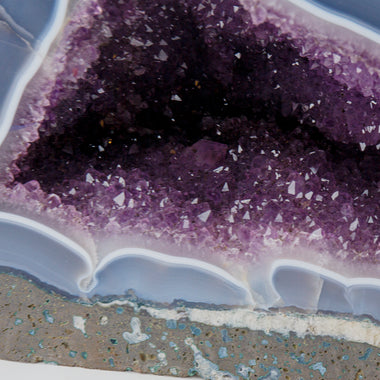
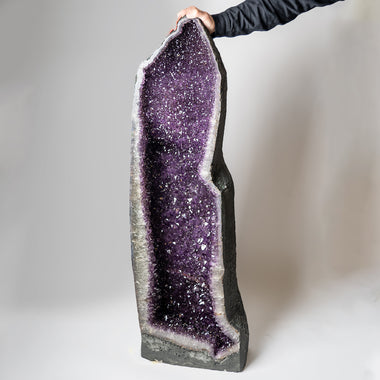
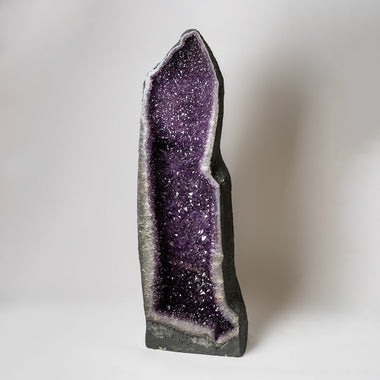
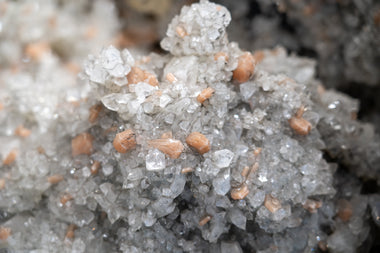
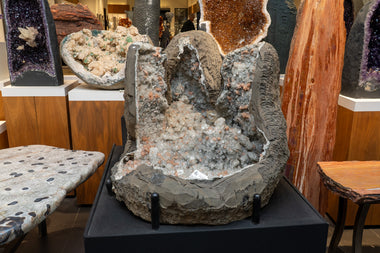
Amethyst from Rio Grande do Sul and Artigas, calcite from Morocco, celestite from Mahajanga and apophyllite from Maharashtra, opened along the seam.

Order Whole and Cut Geodes by Weight, Locality and Crystal Lining

A geode is a sealed cavity in volcanic basalt or sedimentary limestone that filled inward with crystal across millions of years, which puts the value in the lining rather than in the grey shell around it. Buyers order geodes by weight, by locality and by the density of that interior growth, and the 30 pieces catalogued here run from a five pound Moroccan calcite pocket to a Brazilian amethyst cathedral of two hundred and thirty four pounds. Astro Gallery of Gems buys this material at the mine face in Brazil and Uruguay, photographs each open cavity under raking light, and prices every piece as the single object it is.

Priced Today: Every Geode Currently in Stock

The table reads straight from the catalogue, so a geode that sells drops out of it rather than lingering as a listing nobody can buy. Weight in the title describes the piece itself before crating, and the figure beside it is the price on the listing that Astro Gallery charges at secure checkout.

PieceDetailPrice
Genuine Amethyst Cluster Geode from Brazil (17.5 lbs) 17.5 lbs $ 2,750.00
Large Amethyst Crystal Cluster with Purple Fluorite See listing $ 12,000.00
Genuine Amethyst Cluster Geode from Brazil (43.8 lbs) 43.8 lbs $ 2,500.00
Blue Celestite Cluster From Sankoany, Ketsepy Mahajanga, Madagascar (50.5 lbs) 50.5 lbs $ 5,500.00
Genuine Calcite Geode From Morocco (11 lbs) 11 lbs $ 350.00
Genuine Calcite Geode From Morocco (8 lbs) 8 lbs $ 250.00
One cavity, one price, one ownerEach geode is photographed open and lit, the weight appears in the title, and the price updates live from stock.
Shop all 30 geodes Request photographs

Where These Geodes Come Out of the Ground

Locality settles colour saturation, cavity size and total weight long before a geode reaches a price. Four mining regions supply almost everything on this page, and each of them produces an interior a practised eye recognises immediately.

Rio Grande do Sul, BrazilAmethyst cathedrals quarried from the Parana basalt flows, cut tall so deep violet points face outward, occasionally with stalactite growth on the rear wall. Brazilian material carries the heaviest weights in this collection and therefore the widest price spread.
Artigas, UruguayUruguayan amethyst grows darker and more concentrated than Brazilian material, with shorter points packed tightly against the agate rind. Astro Gallery buys Artigas pockets mainly as sliced halves mounted on steel stands, which suits a console rather than a floor position.
Ouarzazate region, MoroccoCalcite geodes lined with honey and amber rhombs, calcium carbonate measuring Mohs 3, arriving as compact pockets between five and seventeen pounds. Their modest weight and low entry pricing make them the easiest first geode to purchase.
Mahajanga, Madagascar and Maharashtra, IndiaSankoany celestite in pale strontium sulphate blue, alongside apophyllite and stilbite grown inside Deccan trap cavities. Both are collector material rather than decor, judged on termination quality and intact matrix instead of overall size.

Weight Tiers: What to Buy at Five Pounds, Fifty and Two Hundred

Weight is the honest proxy for scale in this category, because height depends entirely on how the cutter oriented the nodule before opening it. These four tiers describe everything Astro Gallery currently holds.

Weight tierWhat sits in it and where it goes
Five to twelve poundsMoroccan calcite pockets and small Uruguayan halves that an ordinary shelf carries without reinforcement, which is the tier most first geode buyers choose.
Thirteen to fifty poundsUruguayan amethyst slices on steel stands and mid weight Brazilian clusters, heavy enough that a console or sideboard replaces the bookshelf.
Fifty to one hundred poundsMadagascan celestite plates and Brazilian citrine cathedrals that stand on a floor or a plinth, and that two people should lift together.
One hundred pounds and aboveFull height Brazilian amethyst cathedrals approaching four feet, which travel by freight, arrive crated, and want a level floor with a cleared sight line.

Whole or Cut: Two Ways a Geode Reaches a Room

Every geode here went through one of two decisions at the mine, and that single decision governs what you see, what you pay and how the piece finally stands.

Cut and opened cathedralsA diamond blade opens the nodule along its long axis and a lapidary grinds the base square, so the piece stands unaided with the entire crystal wall facing the room. Cutting exposes every point at once, which is why opened Brazilian and Uruguayan amethyst commands the highest figures in this collection.
Whole nodules and natural halvesA whole geode keeps its grey chalcedony rind intact and shows its interior only through a small window or a natural break. Collectors value the contrast between rough exterior and crystallised cavity, and these pieces price well below a cut cathedral of equal weight.

Lining Quality: Four Checks Before You Pay

Crystal lining separates two geodes of identical weight and identical locality, and each of these four checks resolves clearly from the listing photographs alone.

Point coverageTrack your eye across the open cavity looking for bald patches of grey agate between the crystal fields. Astro Gallery photographs the full face rather than a flattering corner, so thin coverage shows before payment instead of after delivery.
Colour depth and zoningAmethyst takes its violet from iron impurities and natural irradiation, and that colour concentrates in the outer millimetre of each point. Compare the tips against the base of one crystal, because heavily zoned material pales under a warm domestic bulb.
Termination and damageAbraded or broken points are the commonest fault in transported geodes, and they are also the easiest to hide. Astro Gallery names chips, contacts and repaired sections in the description rather than angling a camera away from them.
Base grind and mountAn opened cathedral should stand square with no wedge underneath, and a mounted slice should sit tight in its steel cradle. Study the underside photograph for an even grind and for polish carried right to the edge of the rind.

Terms That Appear in Every Geode Description

CathedralA tall opened geode whose cavity forms an arch, standing on a ground flat base without any stand or external mount.
DruzyA carpet of sugar sized crystals coating a surface, common on Moroccan calcite walls and inside septarian cavities.
Agate rindThe banded chalcedony shell that formed first against the basalt wall, before quartz or amethyst grew inward from it.
StalactiteA tube of amethyst grown downward inside a cavity, sometimes sliced through to reveal a concentric eye on the cut face.
Polished faceThe rim of an opened geode buffed with diamond pads and cerium oxide, which frames the crystal and signals careful finishing.
MatrixThe host rock a crystal group sits on, prized on Indian apophyllite and Madagascan celestite because it proves the piece came out intact.

Geodes in a Room, and the Vocabulary Buyers Bring

Interior designers treat an opened cathedral as floor sculpture, angling it so a lamp rakes the cavity from one side and the points build depth instead of flattening under overhead light. Moroccan calcite pockets work better on a low table where people lift them, and two matched Uruguayan halves read stronger on a console than a single slice does. Geodes also carry a metaphysical vocabulary buyers search by name, with amethyst tied to calm, citrine to abundance and celestite to clarity.

Astro Gallery documents locality, weight, treatment and condition on every geode listing and makes no health or energetic claim about any of them. Naming the language the trade genuinely uses helps a buyer find the right cavity, while promising what a crystal does would undo sixty five years of straight dealing.

Dust, Light and Load: Keeping a Geode Right

Amethyst fades in direct sunlight, because the same natural irradiation that built the violet colour reverses under prolonged ultraviolet exposure, so keep a cathedral away from a south facing window permanently. Dust the points with a dry soft brush instead of a cloth, which snags on terminations and leaves fibres trapped between crystals. Moroccan calcite asks for more care again at Mohs 3, since a fingernail scratches it and any acidic household spray etches the surface. Weight carries the last risk, because a hundred pound cathedral concentrates its entire load onto a small footprint, so confirm the floor or plinth takes point loading before the crate is opened.

Ordering, Crating and Worldwide Freight

The price on the listing is the price charged, and secure checkout settles through Shop Pay, PayPal, Apple Pay, Google Pay or card against an itemised invoice issued for every order. Astro Gallery sends extra photographs, the exact height in inches or a short lit clip of the cavity on request, and our team answers those messages the same working day rather than pointing you back at the page.

Astro Gallery of Gems has moved heavy mineral material since 1961 and crates geodes accordingly. We foam block the crystal face so nothing bears against the points, brace the base so weight cannot travel inside the carton, and double box everything under fifty pounds. Larger cathedrals go out palletised by freight against a quote we agree with you beforehand. Every consignment leaves tracked and fully insured at declared value with customs paperwork prepared in advance, and the itemised invoice, our returns policy and the guarantee published on about us govern each one of those steps.

Rated everywhere we trade

See the cavity before you commitAsk for the open face under raking light, the base grind and a scale shot, and we will send all three before you buy.
Browse every geode Email the gallery

What Buyers Want to Know Before They Purchase

How much does a real amethyst geode cost?
Moroccan calcite pockets open the range at single figure weights, Uruguayan slices on stands occupy the middle, and full height Brazilian cathedrals sit at the top. The table above carries the live figure for everything in stock, and each price reflects that one cavity rather than a category average.
Are these geodes natural or dyed?
Every geode here is natural, uncoloured and undyed. Amethyst, citrine, calcite and celestite take their colour from trace chemistry and natural irradiation, and Astro Gallery states any heat treatment, stabilisation or repair in the listing description.
What is the difference between a geode and a crystal cluster?
A geode is a hollow cavity lined with crystal that grew inward from an agate rind, while a cluster is a plate of crystals grown on open matrix without an enclosing shell. Several pieces on this page are cut cathedrals, which are geodes opened along the long axis and ground flat to stand.
Which size should I buy for a living room?
Choose the thirteen to fifty pound tier for a console or sideboard, and the hundred pound tier only where a cleared floor position exists. Anything under twelve pounds belongs on a shelf or low table, where its scale reads correctly beside books and objects.
Do amethyst cathedrals need a stand?
No. Cathedrals are ground flat across the base and stand unaided on any level surface. Uruguayan sliced halves are the exception, and those arrive already fixed into the steel stand shown in the photographs.
Can you ship a two hundred pound geode overseas?
Yes. Heavy cathedrals travel palletised by freight, tracked and fully insured at declared value, with customs paperwork completed before dispatch. We quote that freight separately so you approve the cost before the order is confirmed.
Will the geode I order look like the photograph?
Yes. Every geode in this collection is one of one, photographed individually because no two cavities crystallise the same way. The violet depth, point length and rind pattern you see are the ones that arrive.
Can I return a geode after delivery?
Yes, and our returns page states the window that applies to a crated geode. Requesting additional photographs and precise dimensions beforehand settles the question for most buyers before any crate is built.

Geodes Beside Slices, Clusters and Cathedrals

Geodes overlap with several groups in the catalogue, so the useful question is whether the cavity, the species or the room decides for you. Buyers chasing amethyst follow the species across every form we cut, while buyers chasing scale move sideways into large decor.