Skip to content

Fossils

Moroccan trilobites, Kem Kem dinosaur teeth, mosasaur jaw sections and calcified ammonites, prepared by hand and weighed before listing.

Order Genuine Fossils: Trilobites, Ammonites and Vertebrate Teeth Graded on Preparation

A fossil is the mineralised remains or trace of an organism preserved in sedimentary rock, and its commercial value rests on three measurable things: which species it is, how completely it survived, and how skilfully a preparator freed it from the matrix. Buyers shop this collection across the whole natural history range rather than one animal, so the 173 pieces listed here run from Ordovician trilobites through Cretaceous dinosaur and mosasaur teeth to Eocene whale teeth. Astro Gallery of Gems buys prepared fossils from the diggers and preparators themselves, weighs every piece in grams or pounds, and declares repair and composite work inside the description.

Six Words Decide What a Fossil Description Is Telling You

MatrixThe sedimentary rock a fossil sits in. Left in place it proves the specimen was never assembled, and stripped too aggressively it carries anatomy away with it.
PreparationThe mechanical removal of rock from bone or shell with an air scribe and abrasive powder, which takes hours per specimen and sets most of the final price.
CompositeA specimen assembled from parts of more than one animal. Composite work is legitimate when it is declared and worthless as science when it is concealed.
RestorationSculpted filler standing in for missing material, measured as a percentage of the visible surface, which the gallery states rather than blending invisibly into the original.
EnrolledA trilobite fossilised curled into a defensive ball, scarcer than an outstretched specimen of the same genus and priced accordingly.
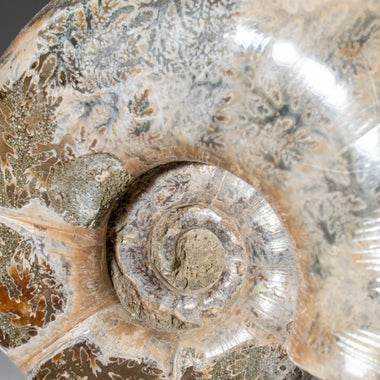
Suture lineThe intricate seam where an ammonite's internal chamber walls meet the outer shell, and the feature that identifies a species once that shell has gone.

Every Fossil on This Shelf Carries Its Own Figure Today

Each fossil listed below is one animal with its own recorded weight, and the amount beside it updates from stock rather than from a printed sheet. A specimen that sells leaves this table instead of remaining as a listing nobody can order.

PieceDetailPrice
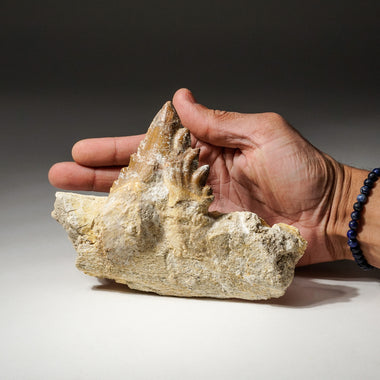
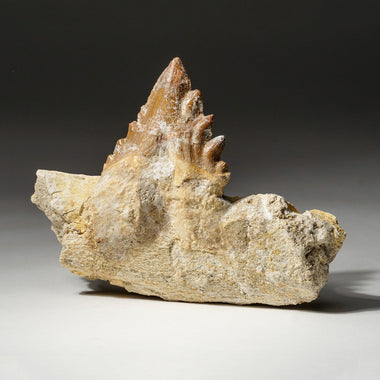
Genuine Mosasaur Tooth in a Fossilized Jaw bone (146.8 grams) 146.8 grams $ 835.00
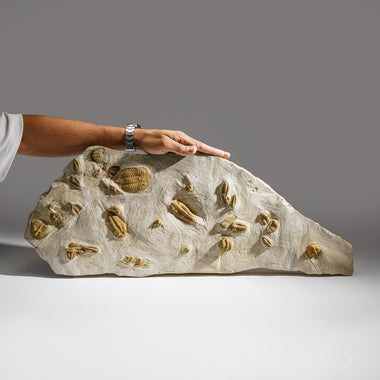
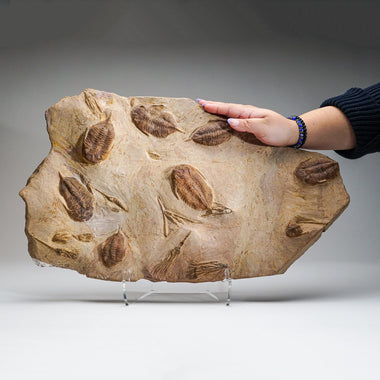
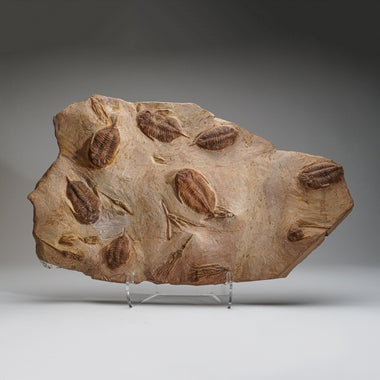
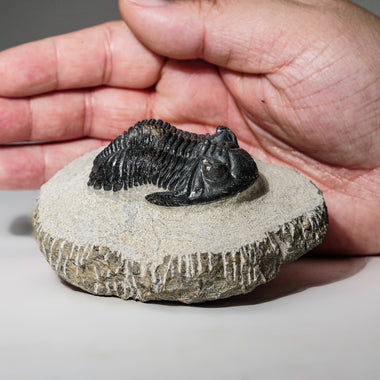
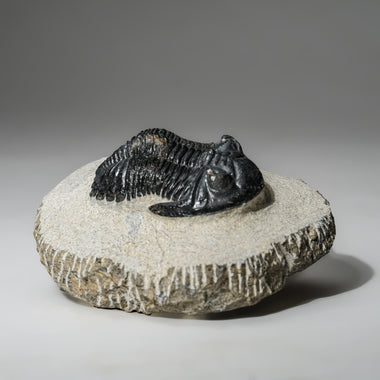
Psychopyge Trilobite on Matrix from Morocco (402.9 grams) 402.9 grams $ 600.00
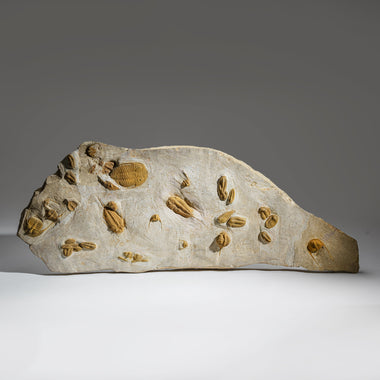
Two Asaphus Lepidurus Trilobites in Matrix from Morocco (389 grams) 389 grams $ 550.00
Genuine Mosasaurus Tooth in Display Case (51.9 grams) 51.9 grams $ 500.00
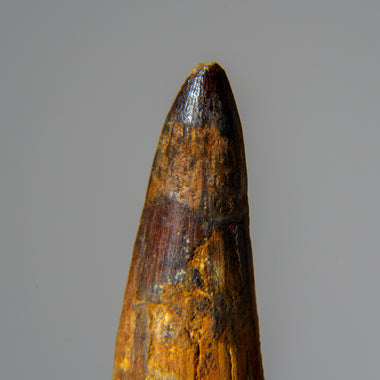
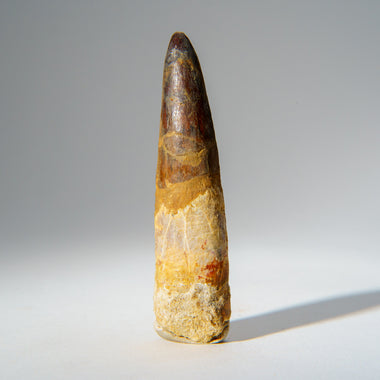
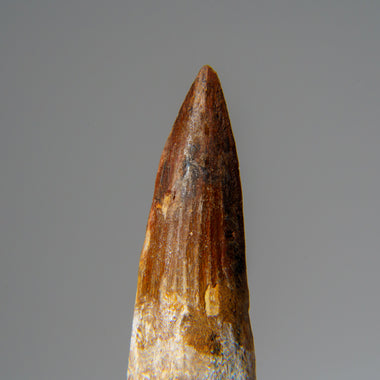
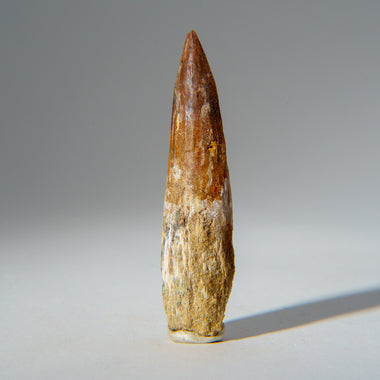
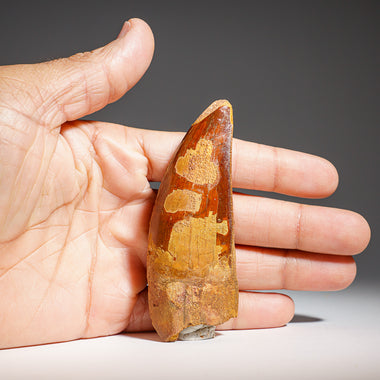
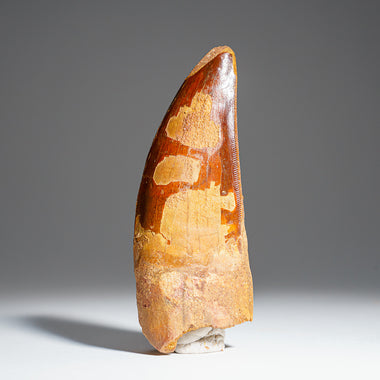
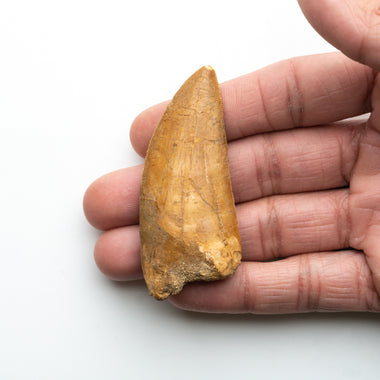
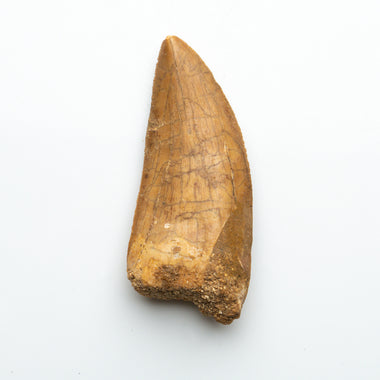
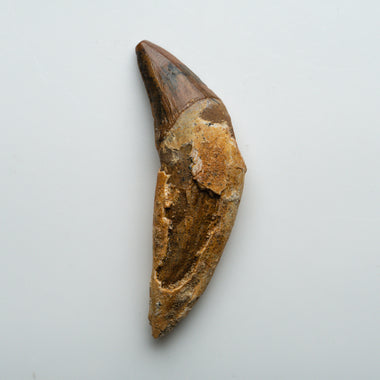
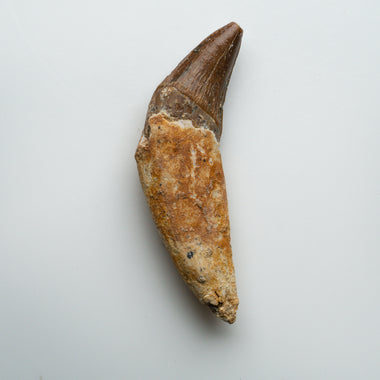
Genuine Carcharodontosaurus Tooth in Display Box (24.8 grams) 24.8 grams $ 375.00
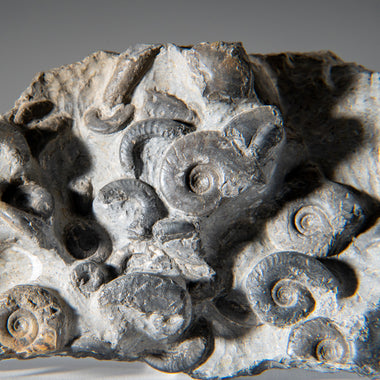
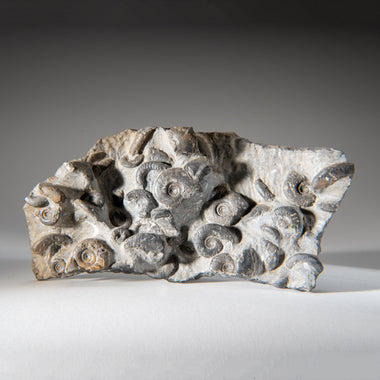
Genuine Natural Fossilized Ammonite Cluster (2 lbs) 2 lbs $ 1,400.00
Buy the animal in the photograph, never one resembling itEvery fossil here is one of one, weighed and photographed individually before its listing goes live.
View all 173 pieces Request photographs

Age Runs From the Ordovician Seabed to the Eocene Whale

Geological age governs what a fossil can be and what it costs, because older material is scarcer, more heavily mineralised and less often complete. These four classes cover the entire span currently on the shelf.

Age classWhat it covers and how it sells
Cambrian and Ordovician, 540 to 443 million yearsAsaphus and Ptychopariida trilobites from Morocco and the Russian platform, the oldest animals stocked, sold as single blades and as clustered plates reaching nineteen pounds.
Devonian, 419 to 359 million yearsPsychopyge and other spined Moroccan trilobites from the Atlas basins, where free standing spines make preparation slow and set the highest figures among the invertebrates.
Jurassic and Cretaceous, 201 to 66 million yearsAmmonites, Carcharodontosaurus and Spinosaurus teeth from the Kem Kem beds, and mosasaur teeth still seated in jaw bone, which carry most vertebrate demand.
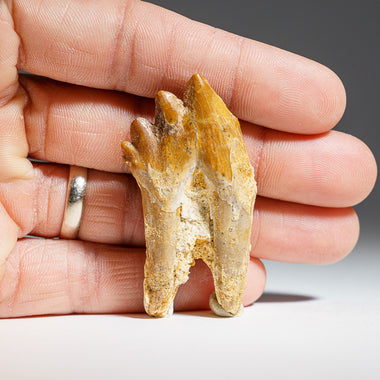
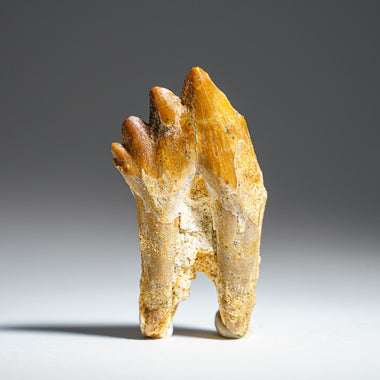
Palaeogene, 56 to 34 million yearsBasilosaurus whale teeth from the Eocene of North Africa, the youngest material listed and the least expensive route into vertebrate fossils.

Morocco and Madagascar Supply Most of What Reaches This Page

A handful of regions account for nearly every fossil here, and each brings its own extraction culture and preparation standard. Astro Gallery buys where the material is prepared instead of through a chain of intermediaries.

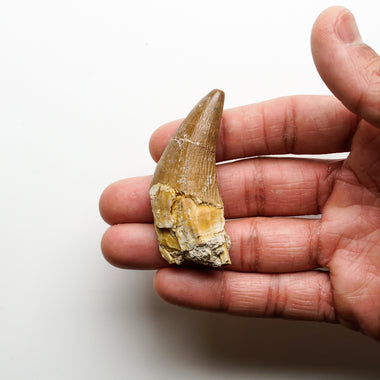
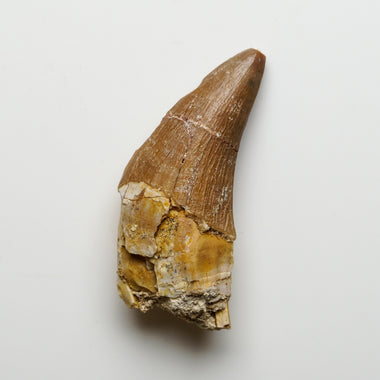
The Kem Kem beds, MoroccoThis Cretaceous river system in eastern Morocco yields the Carcharodontosaurus and Spinosaurus teeth listed here, shed naturally rather than dug from articulated skeletons. Enamel runs from chocolate to burnt orange according to the sediment, and surviving serrations set the price.
Alnif and the Atlas basins, MoroccoDevonian and Ordovician shales around Alnif and Erfoud produce the trilobites, air scribed locally over many hours. Astro Gallery buys from preparators whose work it has inspected, because Moroccan trilobites are the most widely faked fossils in the trade.
Khouribga and the Moroccan phosphatesThe Maastrichtian and Eocene phosphate beds near Khouribga and Oued Zem yield the mosasaur teeth, jaw sections and Basilosaurus whale teeth. Phosphate matrix stays soft, so this material emerges largely complete and needs only patient cleaning.
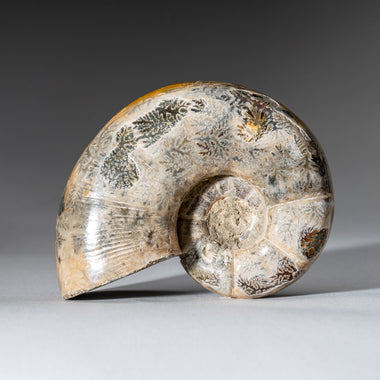
Madagascar and the Jurassic claysCalcified and pyritised ammonites arrive from the Mahajanga basin and from European Jurassic clay pits. Diameter, suture visibility and whether a shell was polished or left natural decide where each one lands on the price ladder.

Preparation Quality Decides What You Should Buy

Preparation separates a fossil worth owning from one that merely resembles it, and four checks catch nearly every problem before any payment is made.

Composite constructionA trilobite built from two animals, or a jaw fitted with a tooth collected elsewhere, is composite. Astro Gallery states composite assembly plainly, and the join generally shows as a change in colour or surface texture across a close photograph.
Restoration percentageFiller is normal on Moroccan material and should be quantified rather than hidden. The gallery names the restored areas, so you know whether you are paying for eighty percent original bone or for thirty.
Carved and moulded fakesWhole trilobites are carved from matrix and cast in resin in quantity. Genuine exoskeleton shows fine tubercles and granulation under a lens, while resin reads uniformly smooth and warms far too quickly in the hand.
Enamel, root and serrationsOn a dinosaur or mosasaur tooth the value sits in intact serrations and an unrepaired root. A repaired tip is acceptable once declared, and the gallery photographs every break line before the listing goes up.

Vertebrate and Invertebrate Buyers Shop the Same Shelf Differently

Two audiences buy fossils and they judge identical material by opposite criteria. Recognising which one you belong to shortens the search considerably.

The vertebrate buyerTeeth and jaw material pull people in through the animal itself, so a Spinosaurus or mosasaur tooth is judged on enamel condition, serration survival and length in millimetres. Boxed and case mounted teeth make the simplest gifts and the simplest first purchase.
The invertebrate buyerTrilobites and ammonites pull people in through form and craftsmanship, so a Psychopyge blade is judged on spine recovery, symmetry and how the animal is posed against its matrix. Clustered plates above eighteen pounds become room scale objects.

Fossils Teach, Furnish and Get Given as Often as They Are Collected

Fossils leave the collector market constantly. Schools and universities buy trilobites and ammonites as teaching material, because a suture line or a compound eye explains descent with modification in a way no photograph manages. Interior designers place a large trilobite plate or a paired polished ammonite as sculpture, since neither object needs explaining before it earns its wall or its console. Gift buyers dominate the lower tiers, where a boxed dinosaur tooth reaches a child or a graduate more effectively than almost anything else stocked. Astro Gallery documents species, formation, age and weight identically for all three audiences.

The gallery sells fossils as natural history specimens and claims nothing beyond what the material itself supports. Where an identification rests on a genus rather than a confirmed species, the listing says so instead of reaching for the more impressive name.

Pyrite Decay and Dry Heat Undo a Fossil Faster Than Handling Does

Fossils are stable rock and still fail in three specific ways. Pyritised ammonites oxidise in damp air, swelling and splitting across years, so keep them dry and below roughly fifty percent relative humidity. Consolidant and adhesive applied during preparation soften beside a radiator or a hot spotlight, which loosens repaired teeth and reset spines, so keep every specimen clear of direct heat. Moroccan shale absorbs water and delaminates, so brush a fossil dry and never wash one under a tap. Long exposure to sunlight also pales the enamel colour on teeth.

Ordering a Fossil Puts Paperwork and Insurance Behind It

Astro Gallery of Gems has invoiced natural history material since 1961, and the terms match for a boxed tooth and for a nineteen pound trilobite plate. The listed price is the price charged, checkout settles through Shop Pay, PayPal, Apple Pay, Google Pay or card, and an itemised invoice naming species, formation and weight follows every order. The gallery beds fossils in cut foam with spines and fragile tips isolated, double boxes anything above a pound, and despatches tracked and fully insured.

Customs paperwork is completed before despatch with a declared value matching your invoice rather than a rounded figure, and the heaviest matrix plates travel by freight against a quote agreed with you beforehand. Every fossil sold here falls under the returns policy and the guarantee published on about us, which extends to the authenticity of the species printed on that invoice.

Rated everywhere we trade

Purchase a fossil with its condition documented firstAsk for close photographs of the repairs, the serrations or the matrix join, and the gallery sends them the same working day.
Browse the fossils Email the gallery

Buyers Ask These Questions Before They Purchase a Fossil

Are these fossils real?
Yes. Every fossil listed is genuine mineralised material, and Astro Gallery declares any restoration, repair or composite assembly in the description. Carved and cast trilobites circulate widely, which is why the gallery buys only from preparators whose work it has inspected.
How much does a fossil cost?
Boxed dinosaur teeth open the range, single trilobites and ammonites occupy the middle, and large clustered plates and jaw sections sit at the top. The table above carries the live figure for each piece in stock.
What is the difference between repair and restoration?
Repair reattaches original material that broke during collection. Restoration replaces missing material with sculpted filler. Both are normal on Moroccan fossils, and the listing states which one applies and how much of the surface it affects.
How old are the fossils you sell?
They span roughly 540 to 34 million years, from Cambrian and Ordovician trilobites through Cretaceous dinosaur and mosasaur teeth to Eocene Basilosaurus whale teeth. Each listing names the period and, where the digger recorded it, the formation.
Which fossil should I buy as a gift?
A Carcharodontosaurus or Spinosaurus tooth in a display box needs no shelf preparation and arrives ready to hand over. Paired ammonites serve the same purpose at a lower weight and a lower figure.
Do fossils need a stand?
Large trilobite plates ship with an acrylic stand wherever the listing says so. Teeth in display cases stand unaided, and the gallery advises on mounting anything that will not sit level on its own.
Can I order a fossil for delivery abroad?
Yes. Every parcel leaves tracked and fully insured with export and customs paperwork completed in advance, and heavy matrix plates move by freight against a quote you approve first.
What if the fossil is not what the listing described?
Return it under the terms published on the returns page. The invoice names the species, formation and weight, so any discrepancy is checkable against a document rather than against a memory.

Fossils Connect Outward Into the Rest of the Natural History Catalogue

Fossils divide by animal across this catalogue, so teeth, marine invertebrates and ammonites each hold a page of their own. Collectors who buy across the whole range usually cross into minerals and meteorites within a season.