Skip to content

Amethyst

Veracruz matrix plates, Uruguayan druzy sections and Brazilian chevron points, weighed and catalogued one specimen at a time.

Buy Amethyst Specimens Graded on Colour Saturation, Zoning and Crystal Form

Amethyst is the purple variety of macrocrystalline quartz, silicon dioxide coloured by traces of iron and by natural irradiation underground, and collectors shop it along two axes: how deeply the purple saturates, and how the crystals stand on their matrix. Astro Gallery of Gems catalogues each of the 72 amethyst specimens on this page individually, recording locality, weight, colour zoning and any heat treatment, so a Veracruz plate and a Uruguayan druzy section are compared on stated facts rather than on photographic lighting.

Origin and Saturation: Where Amethyst Purple Actually Comes From

Purple in quartz depends on how much iron entered the growing crystal and how long the surrounding rock irradiated it, and both quantities change from one basalt flow to the next. Astro Gallery buys amethyst where the diggers who opened the cavity sell it, which is why the labels on this page name a district rather than a continent.
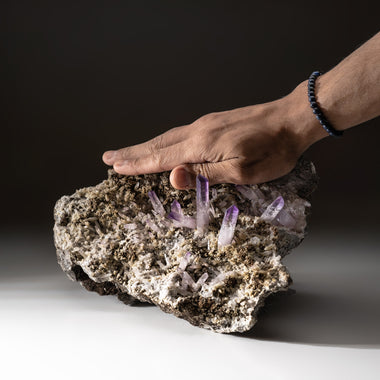
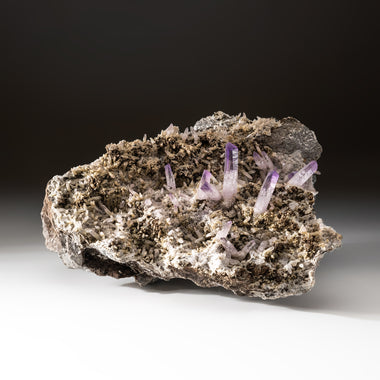
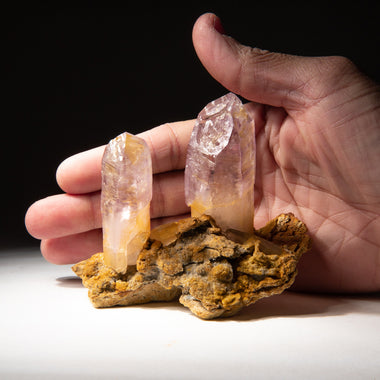
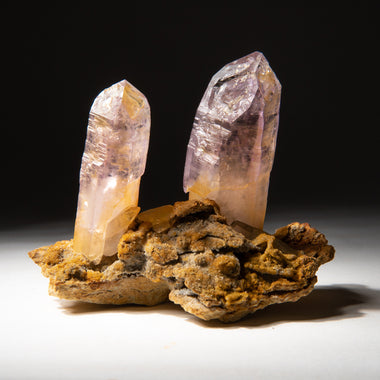
Las Vigas de Ramirez, VeracruzPiedra Parada in eastern Mexico grows glassy prisms that run nearly colourless at the base and concentrate deep purple through the top third, often with double terminations. That zoning explains why a Veracruz plate photographs darker from above than from the side.
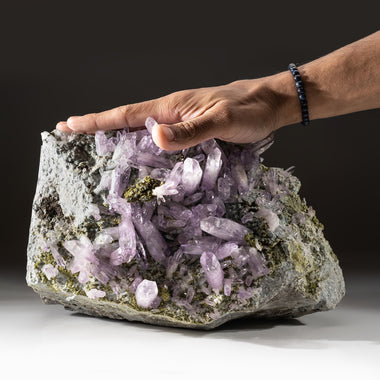
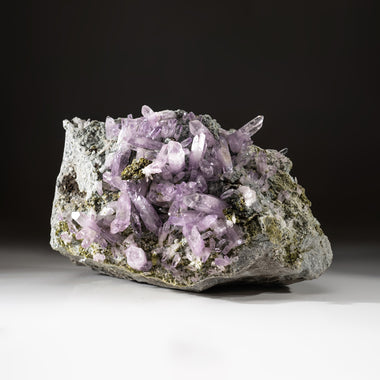
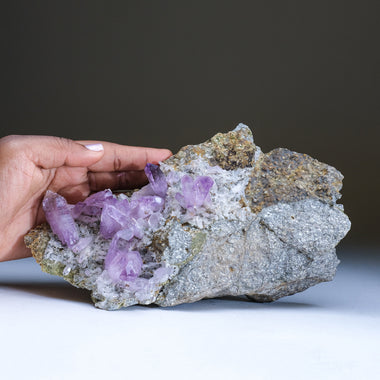
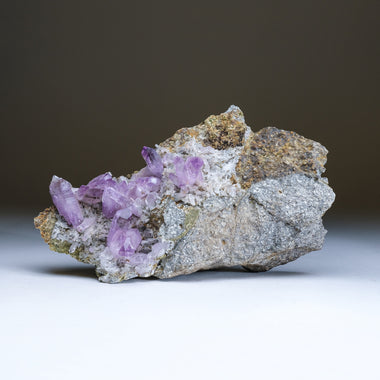
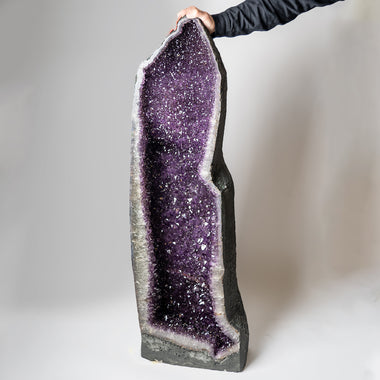
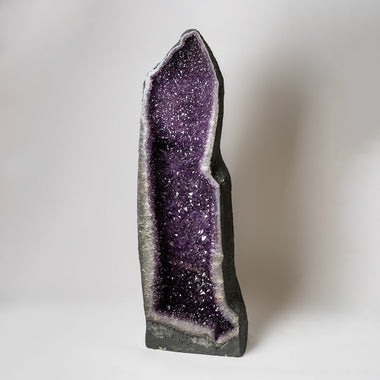
Artigas basalt flows, UruguayUruguayan cavities line thinly and saturate hard, producing short blocky crystals whose purple holds under dim indoor light. Sections cut from these flows keep a green celadonite skin and a grey agate rim that frames the druzy face.
Rio Grande do Sul, BrazilBrazilian geodes grow far larger than Uruguayan ones and pay for that size in saturation, so cathedrals from this state read lilac where Uruguayan material reads violet. The same state supplies the banded rough cut into chevron points.
Basalt cavities and celadoniteAmethyst on this page crystallised inside gas cavities in flood basalt, so the reverse of any cut section stays rough volcanic rock. Astro Gallery leaves that backing intact and describes its condition, because grinding a back flat destroys the evidence of origin.

Colour, Damage, Treatment: Four Amethyst Checks Before You Buy

Four questions settle almost every amethyst purchase, and all four resolve from photographs rather than from having the piece in hand.

Natural colour against dyeDyed quartz pools its purple inside fractures and along the outer skin, while natural amethyst carries colour in zones that follow the growth faces. Astro Gallery photographs each cluster under neutral light so the zoning reads honestly on a screen.
Termination conditionAmethyst terminates in rhombohedral faces that chip when a plate travels loose, and a fresh break shows white and sugary against the glassy face. Every chip on these specimens appears in the photographs instead of hiding behind a description.
Repair and reassemblyLarge plates sometimes leave a cavity in two halves and return to a workshop for joining. Astro Gallery states any repair, glue line or filled contact in the listing text, because an undisclosed join changes what a specimen is worth to the next owner.
Heat and disclosureAmethyst heated near five hundred degrees Celsius turns yellow or orange and is then sold as citrine, while gentler heating yields green prasiolite. Anything on this page that has been heated is named as heated in its own description.

Form and Weight: What Each Amethyst Tier Puts on a Shelf

Most buyers know the surface a specimen will occupy before they know which country it should come from, so weight and form decide the shortlist first. These five tiers cover everything currently catalogued.

TierWhat sits in it and who buys it
Chevron point, 85 to 140 gramsBrazilian banded rough cut and polished into a hand sized point, the lowest entry cost here and the tier most gift buyers choose.
Small matrix plate, 150 to 500 gramsVeracruz clusters a few inches across, sized for a desk or a shelf edge where a lamp can catch the terminations directly.
Cabinet cluster, 1 to 6 lbsThe tier collectors buy most often, heavy enough to hold a shelf on its own and still light enough to move with one hand.
Large matrix plate, 14 to 20 lbsVeracruz plates measuring close to a foot across the base, which want a console or low cabinet and a cleared sight line to read.
Druzy geode section, 25 lbs and upUruguayan basalt sections with polished edges and a celadonite rim, bought as sculpture for a room rather than as a cabinet mineral.

Weight, Detail and Price: Shop the Amethyst Listed Today

Every row below names one physical specimen carrying its own weight and its own photographs. Astro Gallery prices each piece at gallery rate, so a cluster that sells leaves this table rather than lingering as a placeholder nobody can add to cart.

PieceDetailPrice
Amethyst from Piedra Parada, Las Vigas de Ramirez, Veracruz, Mexico See listing $ 4,500.00
Amethyst from Piedra Parada, Las Vigas de Ramirez, Veracruz, Mexico See listing $ 7,500.00
Druzy Quartz Amethyst with Green Celadonite from Uruguay (30 lbs) 30 lbs $ 1,050.00
Amethyst from Piedra Parada, Las Vigas de Ramirez, Veracruz, Mexico See listing $ 500.00
Amethyst from Piedra Parada, Las Vigas de Ramirez, Veracruz, Mexico See listing $ 800.00
Amethyst from Piedra Parada, Las Vigas de Ramirez, Veracruz, Mexico See listing $ 1,200.00
Buy the specimen in the photographEach amethyst here is one of one, the weight is stated, and the price on the listing updates live from the catalogue.
View all 72 pieces Request photographs

Cabinet Cluster or Decorative Section: Two Amethyst Purchases

Two buyers arrive on this page with different questions. One wants the deepest purple obtainable at a given weight, the other wants an intact crystal structure worth putting behind glass. Astro Gallery reports saturation, zoning and condition separately on every listing so neither buyer has to infer the other one's answer.

Buying for colourSaturation buyers gravitate to Uruguayan sections and Veracruz terminations, accept smaller individual crystals, and judge a piece by how the purple survives a low indoor lamp rather than a photographic light. Total weight matters less to them than the depth of the top colour zone.
Buying for crystal formStructure buyers want complete rhombohedral terminations, undamaged contacts and clean matrix, and pay for a plate where every crystal across the face stands whole. Colour drops to a secondary concern once the count of intact terminations rises.

Zoning, Phantom, Cathedral: The Words an Amethyst Listing Uses

PhantomA phantom is the ghost outline of an earlier crystal face preserved inside later growth, and it appears as a faint pyramid suspended in otherwise clear quartz.
Colour zoningColour zoning describes how purple bands through a crystal, usually strongest at the termination, and it decides how a specimen reads from each viewing angle.
DruzyDruzy means a carpet of small sparkling crystal tips covering a surface, and it is the texture that defines the polished Uruguayan sections rather than the free standing clusters.
CathedralA cathedral is a tall geode segment cut flat at the base so it stands upright, named for its arched profile rather than for any difference in the amethyst itself.
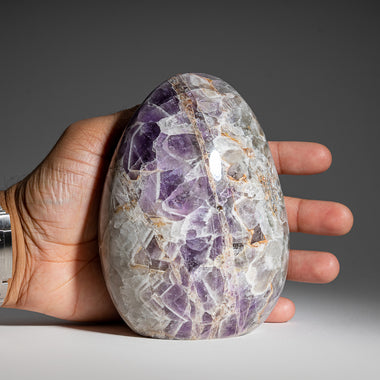
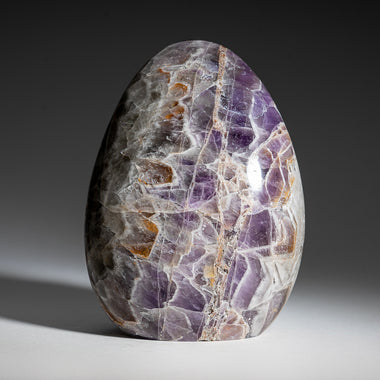
ChevronChevron amethyst alternates purple quartz with white quartz in V shaped stripes, and lapidaries cut it into points and palm pieces instead of selling it as raw crystal.
CeladoniteCeladonite is the green iron rich clay that coats the inside of Uruguayan basalt cavities, and its presence on a rim confirms where a section was mined.

Shelves, Gifts and Chakras: How Amethyst Is Used and Described

Amethyst reaches two audiences that rarely overlap. Interior buyers treat a polished Uruguayan section as sculpture, standing it where afternoon light rakes across the druzy face, and use smaller Veracruz plates to break a shelf run of books. Crystal buyers work from vocabulary rather than silhouette, asking for a cluster for the third eye chakra, a chevron point for meditation, or a February birthstone as a gift. Astro Gallery sells this material as mineral specimens and decor, documents locality, weight, zoning and treatment on every listing, and makes no health, healing or energetic claim about any piece.

Light, Heat and Handling: Keeping Amethyst Purple True

Amethyst sits at Mohs 7 and shrugs off dust, yet its colour does not survive strong light. Ultraviolet exposure destroys the iron colour centres that make quartz purple, so a cluster parked on a south facing sill pales measurably within a year and never recovers that saturation. Keep specimens out of direct sun and away from radiators, since a sudden temperature swing opens fractures that already run through a crystal. Dust dry with a soft brush worked from the matrix towards the terminations, and keep water off any plate carrying a celadonite rim, because damp clay stains the crystal faces permanently.

Payment to Doorstep: Order Amethyst and Watch It Travel

Buying works identically whether you choose a ninety gram chevron point or a twenty pound Veracruz plate, because the price on the listing is the price charged and secure checkout settles through Shop Pay, PayPal, Apple Pay, Google Pay or card. Ask for a photograph of the reverse, a measurement across the widest crystal, or a short clip filmed under moving light, and our team sends all three rather than pointing you back at the listing.

Astro Gallery has packed quartz for transit since 1961, and the method has changed little. We float terminations in cut foam so no pressure reaches a crystal tip, block the matrix so weight cannot shift inside the carton, and double box anything above a pound. Every parcel leaves tracked and fully insured with an itemised invoice and completed customs paperwork, while the heaviest geode sections move by freight against a quote agreed before dispatch. Our returns policy and the guarantee published on about us cover every specimen sold here.

Rated everywhere we trade

Order once the zoning is clear to youAsk for the reverse of the plate, the widest crystal measured and a clip under moving light, and we send all three the same working day.
Browse the amethyst Email the gallery

Before You Purchase: Eight Amethyst Questions Answered

How much does an amethyst cluster cost?
Brazilian chevron points open the range, Veracruz cabinet clusters occupy the middle, and large Uruguayan geode sections carry the highest figures on the page. The table above shows the live price for every specimen currently in stock, and each figure describes that individual piece rather than a category average.
Is Uruguayan amethyst darker than Brazilian amethyst?
Uruguayan amethyst usually saturates deeper because its cavities line thinly and grow short blocky crystals, while Brazilian geodes grow much larger and spread the same colouring agent across more quartz. Compare individual pieces under the same lighting before you buy, since single specimens cross that generalisation often.
Has this amethyst been heat treated?
Astro Gallery names heat treatment in the listing text whenever a piece has been heated, and describes untreated material as natural. Amethyst heated near five hundred degrees Celsius turns into citrine, so any orange zone inside a purple cluster gets disclosed rather than left for you to discover.
Why is my amethyst crystal clear at the base and purple at the tip?
Colour zoning records the growth history of the crystal, because iron and natural irradiation concentrated in the last zone to form. Veracruz material shows this most clearly, which is why those plates look far darker viewed down onto the terminations than from the side.
Which amethyst should I buy for a bookshelf?
Choose the one to six pound cabinet tier, which covers most Veracruz clusters and stands beside books without needing a separate mount. Anything above fourteen pounds becomes a console or floor piece and needs clearance around it before the crystal faces read properly.
Will amethyst fade in sunlight?
Amethyst fades under prolonged ultraviolet light because sunlight breaks down the colour centres that make quartz purple, and that loss is permanent. Keep a specimen out of direct sun and it holds its saturation indefinitely.
Do you ship amethyst specimens overseas?
Every order travels tracked and fully insured worldwide, with customs paperwork completed before dispatch and an itemised invoice enclosed in the carton. Heavy geode sections move by freight, and we agree that cost with you before you commit to the piece.
Can I return an amethyst specimen if the colour is not what I expected?
Returns run under the terms published on our returns page, and colour is the commonest reason any mineral goes back to a dealer. Requesting a photograph taken under ordinary room light before you order settles the question for most buyers first.

Beyond Purple Quartz: Where Amethyst Buyers Look Next

Amethyst borders several neighbouring pages, so the useful question is whether the purple or the form matters more to you. Buyers chasing colour move sideways into the other quartz varieties, while buyers chasing a silhouette follow amethyst into spheres, trees and polished points.