Skip to content

Indian Minerals

Apophyllite, stilbite, heulandite, scolecite, mesolite and okenite, lifted from gas cavities in the Deccan basalt across Maharashtra.

Indian Minerals from the Deccan Zeolite Pockets: Apophyllite, Stilbite and Heulandite Plates Priced Piece by Piece

Indian minerals in the specimen trade means the zeolite suite of Maharashtra, where apophyllite, stilbite, heulandite, scolecite, mesolite and okenite crystallised inside gas cavities in the Deccan flood basalts and were freed by quarry blasting near Poona, Jalgaon, Nasik and Mumbai. Astro Gallery of Gems buys these pockets from Maharashtra suppliers and again at Tucson and Munich, grades every plate for termination damage and repair, then photographs it against a scale. Each of the 36 specimens here is one plate with its own weight, dimensions and disclosed condition.

What Makes an Indian Zeolite Plate Arrive Intact?

Fragility settles more Indian mineral purchases than colour does. Apophyllite splits along a perfect basal cleavage, stilbite blades snap where the sheaf narrows, and okenite fibres flatten under a fingertip. Astro Gallery runs the four checks below before photographing any Maharashtra plate.

Cleavage flakes on apophylliteFluorapophyllite-(K) parts perfectly along its basal plane, so a knock lifts a mirror bright flake instead of chipping an edge. Astro Gallery photographs each pyramidal termination at an angle that exposes those flat scars, since a cleaved face vanishes in a straight-on shot.
Repair, glue and reattachmentMaharashtra plates pass through several hands before any dealer sees them, and reattached crystals occur across the trade. Astro Gallery states repair, reattachment and stabilisation inside the description, so the invoice describes the piece rather than flattering it.
Contact faces against the pocket wallA zeolite plate grown inside a basalt vesicle carries contact surfaces where crystals met the cavity wall, and those are natural rather than damage. Read the description for that distinction, since a contact face costs far less value than a broken termination.
Matrix integrity under the crystalsBasalt crumbles at the edges when a plate has been trimmed too aggressively, leaving crystals overhanging unsupported rock. Astro Gallery checks that every Indian plate seats on its own base without a wedge, and photographs the underside so the trim shows.

Which Maharashtra Quarry Produced This Indian Specimen?

Locality on an Indian mineral label points at a named basalt quarry rather than a region, and the quarry predicts colour, habit and price with real accuracy. Astro Gallery records the district on every listing because a Poona apophyllite and a Jalgaon apophyllite trade at genuinely different levels.

Pashan Hill Quarry, Poona DistrictPoona, now written Pune, produces the emerald green apophyllite the species is known for, in radiating groups with sharp pyramidal terminations and highly reflective faces. Bi-coloured crystals with green mid zones and colourless tips come from this quarry and carry the strongest premiums.
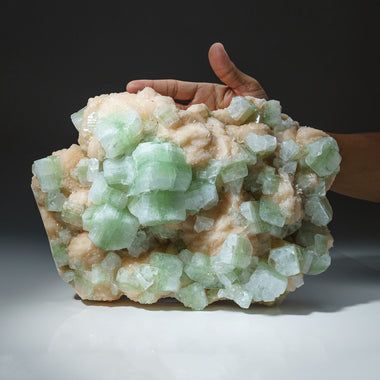
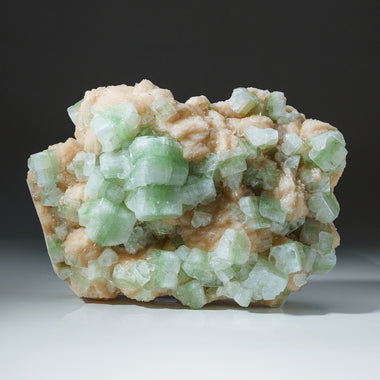
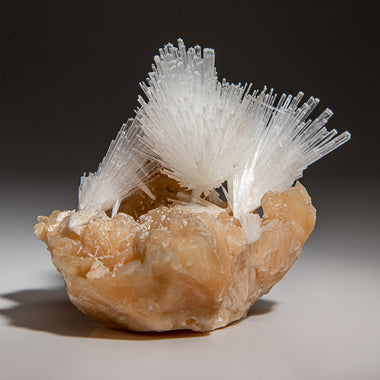
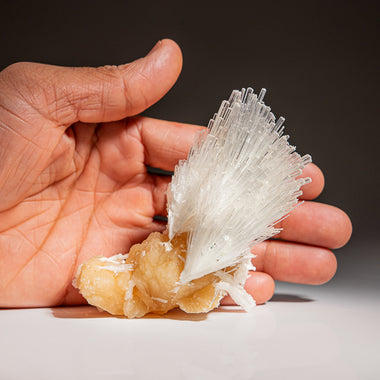
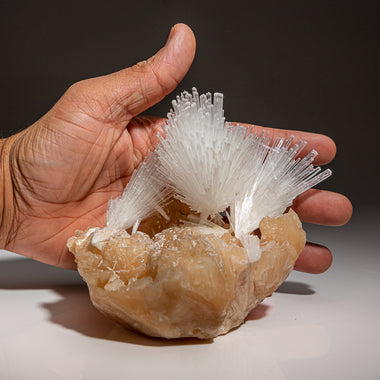
Jalgaon and Aurangabad DistrictJalgaon pockets deliver the classic Indian association, gem green apophyllite standing on beds of pink stilbite in wheat sheaf aggregates. These plates reach large cabinet scale past twenty pounds and seventeen inches, which puts Jalgaon material at the top of this price range.
Nasik District and SawdaNasik yields colourless scolecite sprays and chocolate brown to pinkish red heulandite fans on powder blue druzy chalcedony. Sawda adds stalactitic chalcedony beneath the heulandite, giving a two texture plate that photographs far better than a single species specimen.
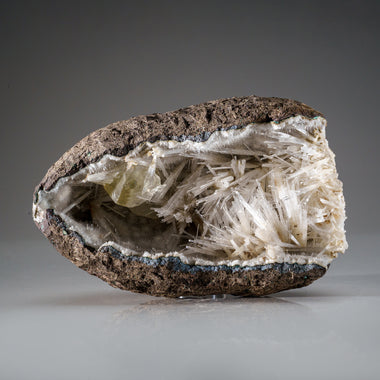
Bombay Quarry, MumbaiThe Mumbai workings produce hemispherical geodes of hair thin okenite and needle like mesolite, often lined with golden rhombohedral calcite. Astro Gallery buys these geodes closed and whole, because a trimmed okenite ball loses the hemisphere that carries most of its value.

Which Zeolite Species Sits on the Basalt, and What Does It Change?

Species governs both the look and the handling risk of an Indian plate, and a buyer who learns five names can read almost every listing on this page. Hardness, habit and water content vary sharply across the Maharashtra suite, and each variation changes what the specimen costs.

Species and chemistryHabit, hardness and what it changes for the buyer
Apophyllite, fluorapophyllite-(K)Glassy tetragonal prisms capped by pyramidal terminations at Mohs 4.5 to 5, with perfect basal cleavage. Emerald Poona groups and bi-coloured Jalgaon crystals draw the highest bids here.
Stilbite, hydrated calcium aluminosilicatePink to peach blades gathered into wheat sheaf aggregates at Mohs 3.5 to 4, forming the bed beneath apophyllite. A plate keeping both species undamaged is worth considerably more than either alone.
Heulandite on chalcedonyTabular monoclinic crystals in chocolate brown or pinkish red, double terminated and splayed into fans at Mohs 3.5 to 4. Nasik and Sawda pockets set them on druzy chalcedony, which supplies contrast without competing.
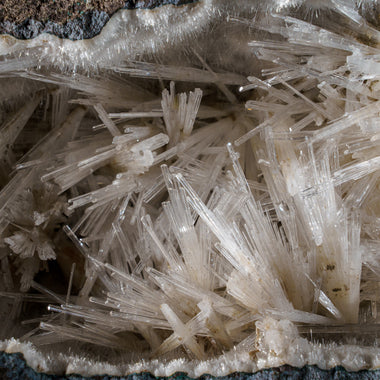
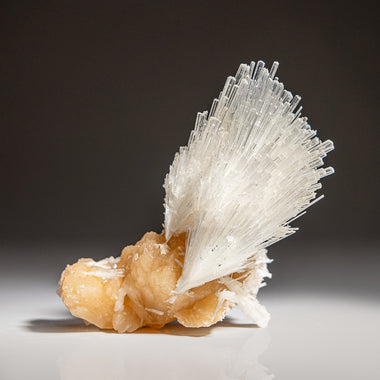
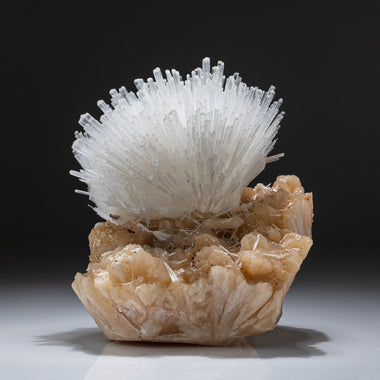
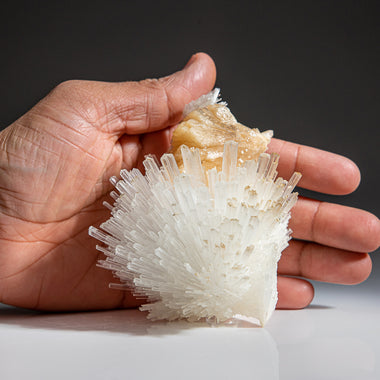
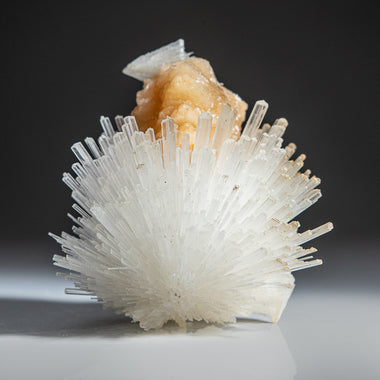
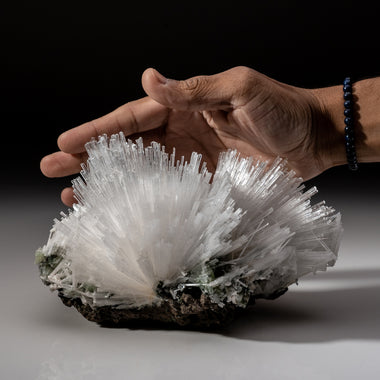
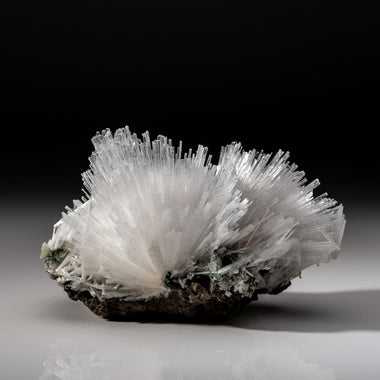
Scolecite and mesoliteColourless fibrous zeolites in radiating sprays and hair thin needles at Mohs 5 to 5.5. Both read as light catchers on a shelf, and both suffer instantly from a brush or a careless thumb.
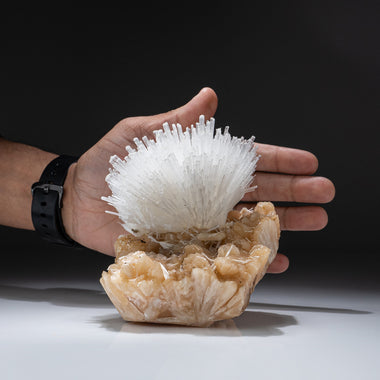
Okenite with calciteSilky white fibre balls formed inside basalt geodes, commonly lined with golden rhombohedral calcite at Mohs 3. The fibres compress permanently on contact, so display always beats handling here.

Which Indian Minerals Are Available Today, and at What Price?

Each row names one plate photographed exactly as it will arrive, and the figure beside it comes live from the catalogue. Astro Gallery prices Indian zeolites at gallery rate, so a sold plate leaves this table rather than lingering as an entry nobody can buy.

PieceDetailPrice
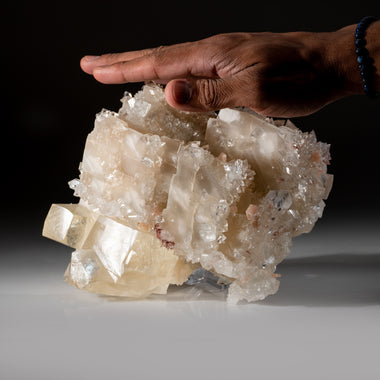
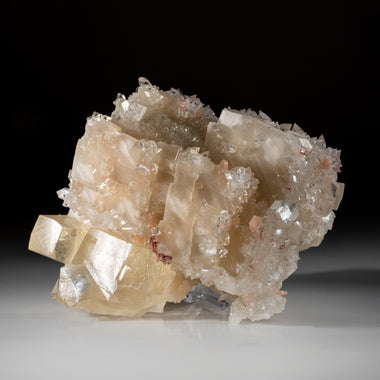
Calcite with Apophyllite from Jalgaon, Maharashtra, India See listing $ 11,000.00
Chocolate Heulandite on Chalcedony matrix Sawda, Maharashtra, India See listing $ 4,000.00
Gem Apophyllite From Pashan Hill Quarry, Poona District, Maharashtra, India See listing $ 15,000.00
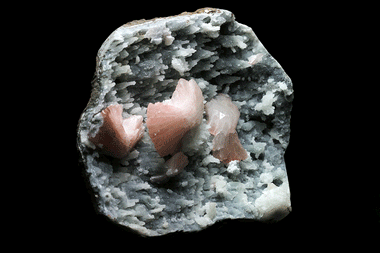
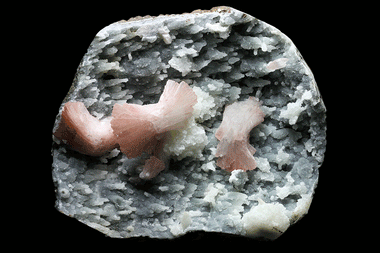
Gem Calcite with Apophyllite From Nasik District, Maharashtra, India See listing $ 1,200.00
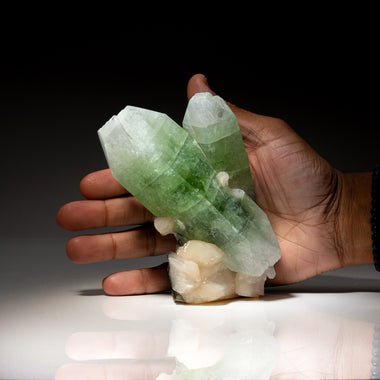
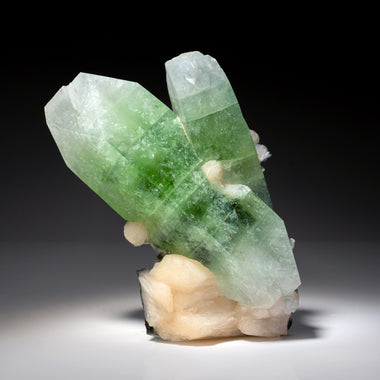
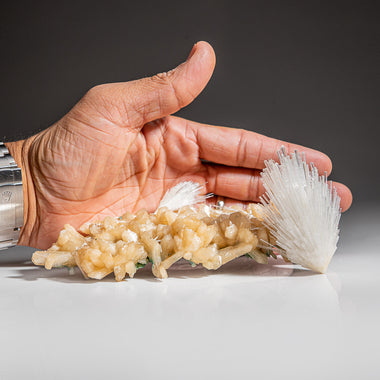
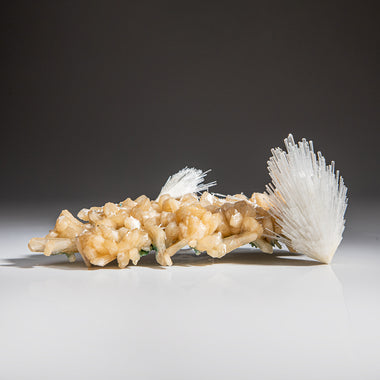
Gem Green Apophyllite with Stilbite from Jalgaon, Aurangabad District, Maharashtra, India See listing $ 7,800.00
Gem Green Apophyllite with Stilbite from Jalgaon, Aurangabad District, Maharashtra, India See listing $ 20,000.00
Every Indian plate on this page is one of oneAstro Gallery photographs each specimen from several angles, states weight and dimensions, and holds the figure you see through checkout.
View all 36 pieces Request photographs

Rated everywhere we trade

One Gem Crystal or a Full Indian Matrix Plate?

The full matrix plateA matrix plate keeps apophyllite, stilbite and calcite in the arrangement the basalt cavity built, and advanced collections reward that intact association. Plates here run from six to seventeen inches across, need a deep cabinet with front clearance, and carry the higher prices because undisturbed association survives rarely.
The single species specimenA Nasik scolecite spray or a small apophyllite group at a few hundred grams gives one clean form and travels with far less risk. Buyers opening a zeolite shelf, or closing a gap in a species run, take this entry level route first.

What Do the Terms on an Indian Zeolite Listing Mean?

ZeoliteA family of hydrated aluminosilicates that crystallise in basalt cavities and hold water inside an open framework, which is why Indian zeolites react so badly to heat and dry air.
Wheat sheafThe bundled, waisted aggregate stilbite builds, splaying at both ends from a narrow middle, and the single most recognisable habit on any Jalgaon plate.
AmygduleA gas bubble trapped in cooling basalt and later filled by minerals; every Maharashtra zeolite pocket began as one, and its size caps the size of the crystals inside.
Basal cleavageThe flat plane along which apophyllite parts cleanly, producing a mirror bright surface that a grader reads as damage rather than as a natural crystal face.
Double terminatedA crystal finished at both ends because it grew suspended rather than attached, common among Nasik heulandite fans and priced above singly terminated material.
Druzy chalcedonyThe powder blue crust of microscopic quartz lining many Nasik and Sawda cavities, which forms the matrix beneath heulandite and supports it during transit.

How Do You Stop an Indian Zeolite from Drying Out?

Zeolites hold water inside their crystal framework, and that single fact governs how a Maharashtra specimen keeps its condition. Direct sun through glass, a radiator or a bone dry winter room drives that water off, and dehydrated stilbite and heulandite turn from glassy to chalky with no route back. Keep a plate in stable indoor air away from windows and heat, and light it with a cool lamp. Dust with a soft blower rather than a cloth, which drags across apophyllite terminations and flattens okenite fibres permanently. Water and ultrasonic tanks ruin every species here.

Where Does a Poona Apophyllite Plate Live Once It Arrives?

Collectors size Indian zeolites on the standard trade ladder, from thumbnail through miniature and small cabinet up to large cabinet and museum scale. A scolecite spray at a few hundred grams belongs in a glass case with its label showing, while a ten pound Jalgaon plate wants an open shelf and a light above it. Interior buyers treat a green apophyllite plate as sculpture, one saturated object in a neutral room.

Metaphysical buyers reach the same species through a separate vocabulary, calling apophyllite a high vibration or crown chakra stone, stilbite a calming stone and scolecite a stone of peace. Indian zeolites move heavily as gifts under those names. Astro Gallery documents species, locality, weight and condition on every listing and makes no health or energetic claim, because asserting an effect the gallery cannot evidence would cost the record built since 1961.

How Does a Fragile Indian Plate Reach Your Door?

Payment settles through Shop Pay, PayPal, Apple Pay, Google Pay or a Visa, Mastercard, Discover or Diners Club card, and the listed figure becomes the figure on an itemised invoice. Ask for extra photographs, a measurement across the longest apophyllite crystal or a video under raking light, and our team sends them the same working day.

Astro Gallery packs Maharashtra zeolites the way sixty five years of handling cleavage minerals taught the gallery to pack them. Each plate floats on cut foam so no pressure reaches a termination, the matrix is blocked against movement, and anything above a pound goes out double boxed. Parcels leave tracked and fully insured worldwide with customs paperwork completed before dispatch, under our returns policy and the guarantee published on about us.

Ask before the plate shipsAstro Gallery will photograph the underside, the trim line and every contact face on an Indian specimen before you decide.
Browse the Indian shelf Email the gallery

Indian Mineral Questions, from Repair Disclosure to Customs

How much does an Indian apophyllite specimen cost?
Small scolecite and apophyllite pieces at a few hundred grams open the range, mid size Nasik and Sawda plates occupy the middle, and large Jalgaon apophyllite with stilbite sits at the top. The table above carries the live figure for each piece in stock, and every figure reflects that individual plate rather than a species average.
Are these Indian minerals natural or treated?
Every specimen here is natural crystal recovered from basalt cavities in Maharashtra, with no dye, no coating and no synthetic growth. Astro Gallery discloses trimming, cleaning, repair and stabilisation inside the description, so the listing text and the invoice describe the same object.
What is the difference between apophyllite, stilbite and heulandite?
Apophyllite forms glassy prisms with pyramidal tips at Mohs 4.5 to 5, usually green or colourless. Stilbite builds pink bladed wheat sheaves at Mohs 3.5 to 4. Heulandite grows as tabular chocolate brown or pinkish red crystals, and Maharashtra pockets regularly produce all three species on a single plate.
What size Indian plate suits a display cabinet?
Specimens between two and four pounds, roughly six to eight inches across, fit a standard glass cabinet with the label still visible. Plates above ten pounds run past twelve inches and need an open shelf with clearance in front, because the crystals project and must never touch glass.
Will you tell me if a crystal has been repaired?
Yes. Astro Gallery states repair, reattachment and stabilisation in the body of the listing rather than in a footnote, and our team will identify every contact face and cleave scar on request before you pay.
Is the specimen in the photograph the one I receive?
Yes. No two Deccan pockets produce the same arrangement of apophyllite, stilbite and calcite, so Astro Gallery photographs each plate individually against a scale and ships the exact piece shown.
How should I clean an Indian zeolite specimen?
Use a soft blower or short bursts of canned air and nothing wet. Water, ultrasonic cleaning and household sprays damage stilbite, heulandite and okenite, and a cloth flattens okenite fibres and scratches apophyllite faces permanently.
Do you ship Indian specimens abroad, and can I return one?
Yes to both. Every order travels tracked and fully insured to any destination with customs paperwork prepared in advance, and returns run under the terms published on our returns page. Heavy Jalgaon plates are quoted for freight so the cost is agreed before dispatch.

Zeolite Species and Shelves That Border Indian Minerals

Buyers who arrive for Indian zeolites leave in one of two directions, either following a single species across every locality producing it, or crossing into the Chinese and Pakistani shelves. Both routes start below.