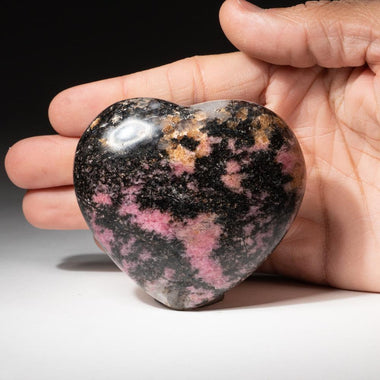
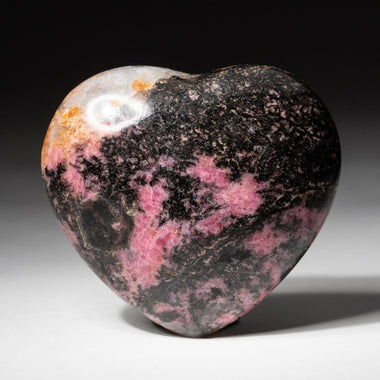
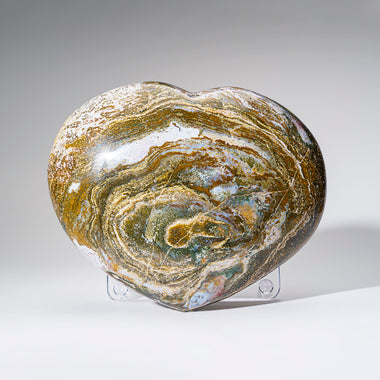
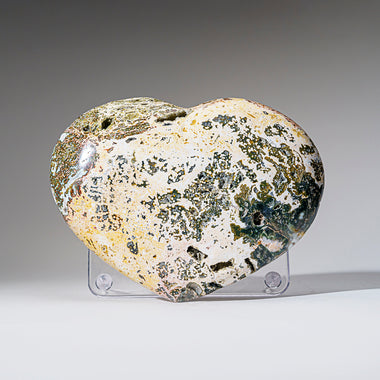
Uruguayan amethyst clusters, Madagascan septarian and Brazilian mookaite reach the wheel as sawn blanks and leave it as hearts.
Shop Hand Carved Crystal Hearts, From a Sixty Gram Pocket Piece to an Eighteen Pound Console Carving
A carved crystal heart is a block of mineral sawn into a flat blank, ground to two lobes and a central cleft on a wheel, then carried through a descending grit sequence until the surface returns light without haze. Shop the 53 hearts catalogued here by species, gram weight and finish, because Astro Gallery of Gems states on each listing whether the photograph shows that exact carving or a representative piece from the same run of blanks.
Turning a Sawn Blank Into a Finished Heart
Every heart on this page passes through the same five operations. A slabbing saw reduces the rough to a blank of even thickness. A cutter then pencils the long axis and the cleft onto the face, and a silicon carbide wheel takes the two lobes down to that line. Surface work runs from an eighty grit shaping stage through two hundred and twenty, six hundred and twelve hundred, then finishes on a felt lap charged with cerium oxide. Skipping a grit leaves scratches the buff cannot remove, which is why a rushed carving looks milky at a shallow viewing angle.
Sourcing the Rough These Hearts Are Carved From
Four supply regions cover the whole page, and each one sets a different hardness, a different pattern and a different price band before a cutter touches anything.
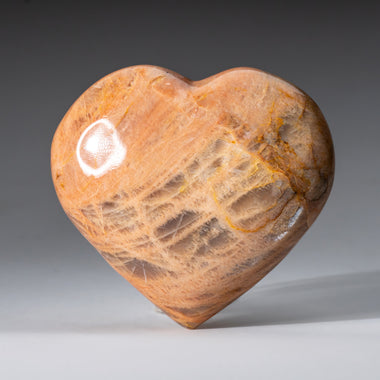
Brazilian rose quartz and mookaiteMinas Gerais supplies macrocrystalline rose quartz, silicon dioxide at Mohs 7 clouded pink by microscopic rutile. Brazilian mookaite is a silica rich jasper banding red, mustard and pink at the same hardness, and both hold a crisp cleft under the wheel.
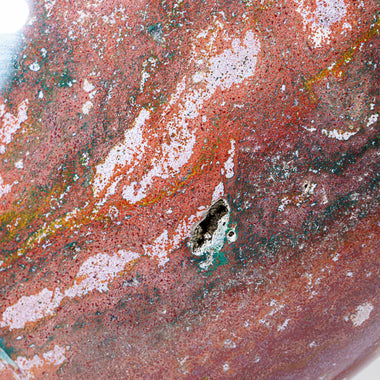
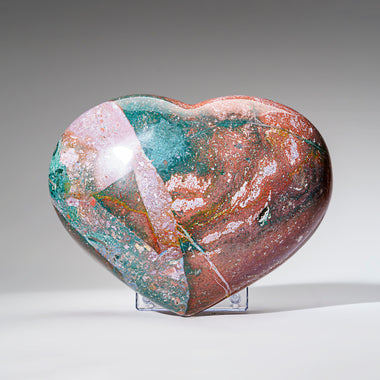
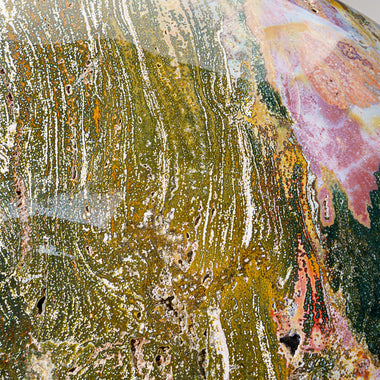
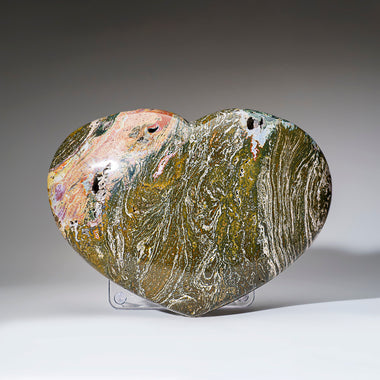
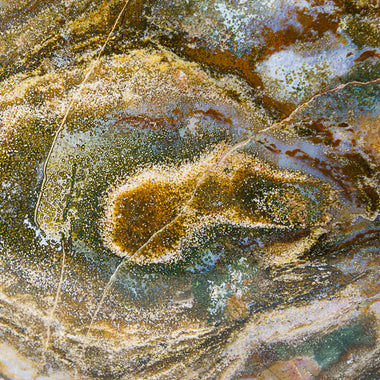
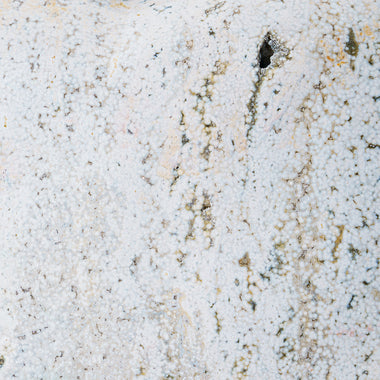
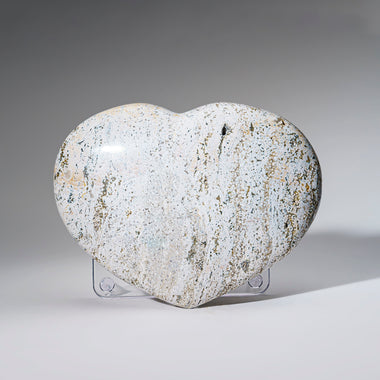
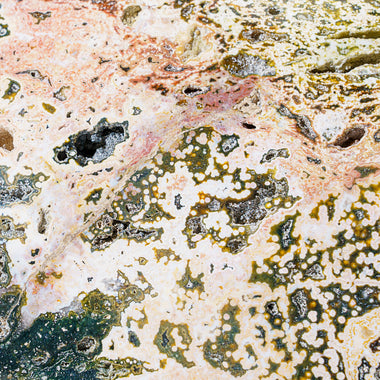
Madagascan jasper, rhodonite and septarianMadagascar sends the widest range on this page. Orbicular ocean jasper from the Marovato coast and polychrome jasper carve at Mohs 6.5 to 7, imperial rhodonite is a manganese silicate at Mohs 5.5 to 6.5, and septarian nodules combine calcite, aragonite, limestone and barite in one blank.
Uruguayan amethyst geode wallArtigas in northern Uruguay produces the geode material behind the cluster hearts. A cutter shapes the agate wall into the outline, polishes that rim to a band, and leaves the deep grape amethyst crystal faces inside completely untouched by any wheel.
Indian ruby in quartz and lithium micaIndia supplies the ruby in quartz, where corundum at Mohs 9 sits inside quartz at Mohs 7, so the two minerals abrade at different rates and the ruby finishes slightly proud. Lepidolite, a lilac lithium mica at Mohs 2.5 to 3.5, carves quickly and bruises just as quickly.
Shopping the Weight Ladder From Pocket Piece to Console Piece
Weight decides more of this purchase than species does, because it settles whether a heart travels in a coat pocket, sits on a bedside table or occupies a console on its own. These four bands cover everything currently carved.
| Weight band | What sits in it and who buys it |
| Pocket heart, 55 to 100 grams | Uruguayan amethyst cluster hearts and the smaller mookaite carvings measure around two inches across and close inside one hand, which makes this band the entry point to the collection. |
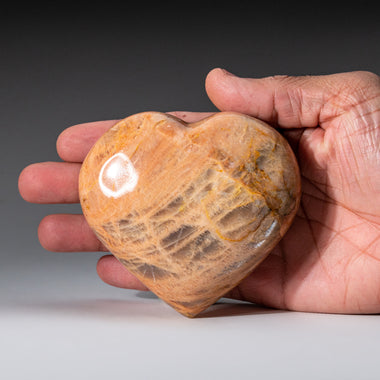
| Palm heart, 100 to 200 grams | Lepidolite, lemon quartz and Brazilian rose quartz reach roughly two and a half inches at this weight, and most gift buyers settle here because the mass registers in the hand without demanding shelf space. |
| Two hand heart, 300 to 430 grams | Imperial rhodonite, chevron amethyst, polychrome jasper and ruby in quartz run between three and four inches across, heavy enough to hold a desk or a bedside table as an object rather than an ornament. |
| Console heart, 8 to 19 pounds | Madagascan ocean jasper and septarian druzy carvings reach twelve inches wide at this weight and need a cleared surface, a shelf rated for point loading and a felt pad beneath the base. |
Checking a Carving Before Paying for It
Four faults account for almost every complaint about a carved heart, and all four read clearly in listing photographs rather than needing the piece in hand.
Cleft depth and centringThe notch between the lobes is the slowest cut to grind, so a shallow scooped cleft placed off the long axis marks a carving that left the wheel early. Astro Gallery photographs the cleft straight on so its depth and position stay verifiable before payment.
Lobe balance across the axisFold the outline along the vertical axis in your mind and the two lobes should mirror each other in width and height. Uneven lobes usually mean the blank was thinner on one side and the cutter chased the flaw rather than resawing.
Relief on mixed hardness blanksRuby in quartz and septarian contain minerals of different hardness, so the harder mineral finishes proud of the softer one. That relief is normal and should feel like a gentle step, not a gouge, and the polish should carry over both minerals evenly.
Tip and rim conditionThe point at the base of a heart is its thinnest section and takes any knock first, so study it under magnification for a bruised edge. On a cluster heart the polished agate rim should run right up to the crystal line without a dulled band.
Buying Each Heart at the Figure Its Own Listing Carries
The rows below draw straight from the catalogue, so a carving that sells drops out of the table instead of sitting there as a figure nobody can act on.
Weights and photographs sent before you commitAsk for the gram weight, the depth of the cleft or a second angle on any carving and our team will send it the same working day.
View all 53 pieces
Request photographs
Choosing Between a Solid Heart and a Crystal Lined One
The solid carved heartMookaite, rhodonite, rose quartz and polychrome jasper carve from one homogeneous block, so both faces get worked and the outline finishes symmetrical. This is the safer choice for a gift because nothing on the surface can catch a sleeve, and a wipe with a soft cloth restores the whole object at once.
The crystal lined heartUruguayan amethyst cluster hearts and Madagascan septarian druzy carvings keep a natural cavity, so only the rim or the back reaches the polishing lap. Sharp crystal terminations reward a front facing position under a lamp, and they collect dust that a dry artist brush lifts out better than any cloth.
Reading the Words a Carved Heart Listing Uses
BlankThe flat slab of even thickness that a slabbing saw produces before any shaping begins, and the stage at which a cutter decides where the pattern will land.
CleftThe notch ground between the two lobes at the top of a heart, and the single clearest indicator of how much wheel time a carving received.
LobeEither of the two rounded shoulders that meet at the cleft, judged on whether they mirror each other across the vertical axis of the carving.
Grit sequenceThe descending series of abrasives, commonly eighty through twelve hundred, that removes the scratch pattern left by the previous stage before the final buff.
DruzyA crust of small sparkling crystals lining a natural cavity, left unpolished on septarian and amethyst cluster hearts because grinding it would destroy the terminations.
Undercut reliefThe slight step that forms where a hard mineral and a soft mineral meet on one blank, since the softer material abrades faster under the same wheel pressure.
Giving, Placing and Naming a Carved Heart
Three buyers reach this form by separate routes. Gift buyers arrive on an anniversary or a bereavement and want a weight that posts easily, which puts them in the palm band. Interior buyers treat a heart as a horizontal counterweight against a shelf of vertical spines, or set the eighteen pound ocean jasper carving where a low wide object breaks a run of tall ones. Collectors follow the species instead, adding a rhodonite or a ruby in quartz heart to a group of the same mineral in other cuts.
Metaphysical buyers use a fourth vocabulary entirely, calling rose quartz a heart chakra stone, lepidolite a calming stone and amethyst a protective one, and searching for a crystal heart rather than a carving. Astro Gallery of Gems catalogues these pieces as decorative mineral objects, records species, weight, locality and any treatment against each one, and states no health or energetic effect for any stone on this page.
Cleaning Lepidolite, Septarian and Quartz Hearts
Hardness sets the routine, and this page spans a wide stretch of it. Lepidolite at Mohs 2.5 to 3.5 and the calcite inside a septarian nodule at Mohs 3 both mark under a fingernail, so each takes a dry soft brush and nothing wet. The quartz species sit at Mohs 7 and accept a barely damp cloth followed immediately by a dry one. Rose quartz and amethyst both pale across months on a south facing sill, so position either away from direct sun.
Ordering a Heart and Following It to the Recipient
Buying works identically at every weight here: the figure on the listing is the figure charged, and secure checkout settles through Shop Pay, PayPal, Apple Pay, Google Pay or card. Astro Gallery issues an itemised invoice naming the species, the gram or pound weight and the locality of each carving, so the description you bought from is recorded on paper rather than left inside an email thread.
Astro Gallery of Gems has packed carved stone for transit since 1961, and the method reflects that. Our packers wrap the tip and the cleft first, because those two places chip before anything else does, then block the base and double box every carving above a pound. Each parcel leaves under tracking and full insurance, and the heaviest Madagascan pieces travel on a freight quote agreed with you first. The returns policy and the guarantee published on about us cover each of those steps.
Rated everywhere we trade
Order a matched pair or a single carvingTell us the species and the weight band you want and we will photograph the candidates together before anything is dispatched.
Browse the hearts
Email the gallery
Answering What Carved Heart Buyers Ask Us
How much does a carved crystal heart cost?
Pocket weight amethyst cluster hearts from Uruguay open the range, palm sized lepidolite and rose quartz carvings hold the middle, and the large Madagascan ocean jasper and septarian pieces close it. Every figure in the table above updates straight from the catalogue, so the amount displayed is the amount charged at checkout.
Will the heart I receive be the one photographed?
Each listing answers that in its own description. Astro Gallery marks a photograph as representative where a run of blanks was carved to one pattern, and the large ocean jasper and septarian carvings are single objects shown exactly as they will arrive.
What size heart should I buy as a gift?
Order from the hundred to two hundred gram band, which covers lepidolite, lemon quartz and Brazilian rose quartz at roughly two and a half inches across. That weight fills a palm, posts safely inside a padded carton and asks for no shelf space at the other end.
Is the lemon quartz heart a natural colour?
No. Lemon quartz, known in the trade as Oro Verde, is quartz heated with iron to produce the yellow, and Astro Gallery names that treatment in the description rather than leaving a buyer to find it later. Every other species on this page carries its own natural colour.
Can I order two hearts that match each other?
Yes, within the limits of the material. Astro Gallery can pair two carvings from the same species and weight band and photograph them side by side before dispatch, though mookaite, polychrome jasper and ocean jasper pattern differently in every blank.
How do I clean a lepidolite or septarian heart?
Dust both dry with a soft brush and nothing else. Lepidolite is a lithium mica at Mohs 2.5 to 3.5 and septarian contains calcite at Mohs 3, so water lifts the flakes on one and acids etch the other, and neither belongs near a household spray.
Will you ship an eighteen pound heart overseas?
Yes. Astro Gallery double boxes the console weight carvings, blocks the base so the mass cannot shift inside the outer carton, and sends every parcel under tracking and full insurance with customs documents completed before dispatch.
Can I return a carved heart that suits neither the room nor the recipient?
Yes. Our published returns terms cover precisely that situation. Asking for extra photographs, the exact weight or the depth of the cleft before you purchase settles the question for most buyers without a parcel travelling twice.
Browsing Carved Hearts Against the Other Hand Cut Forms
Buyers split between the silhouette and the species, so the useful question is which of the two brought you here. Chasing the shape moves you sideways into the other heart pages, while chasing the stone follows rose quartz or ocean jasper across every cut we work it in.