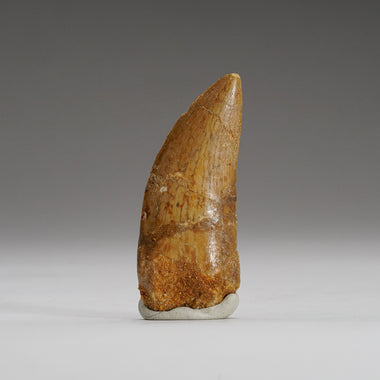
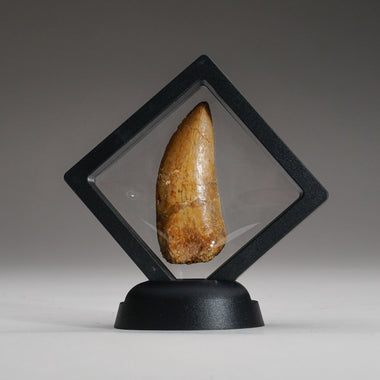
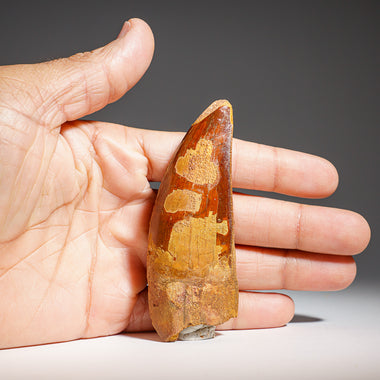
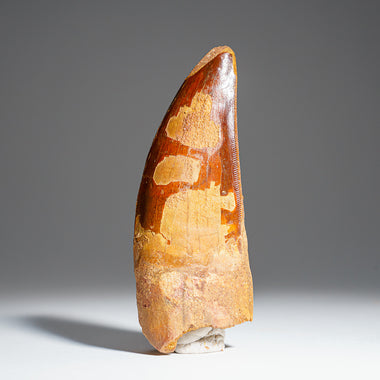
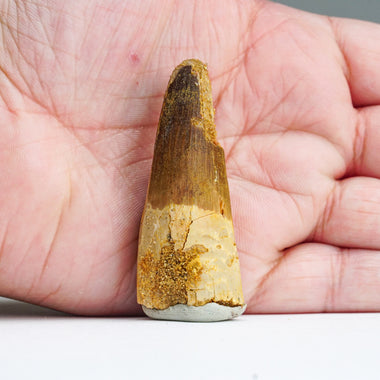
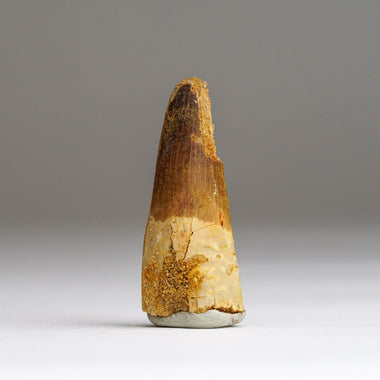
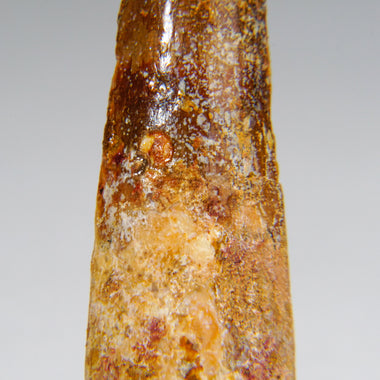
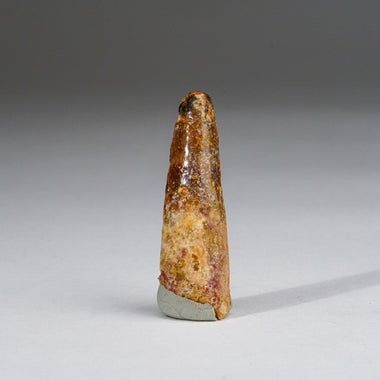
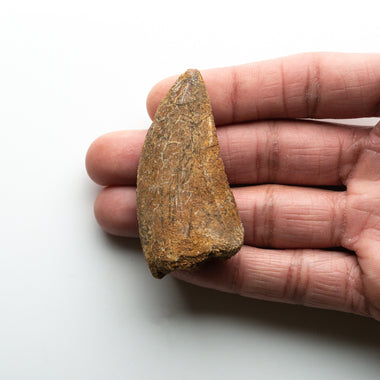
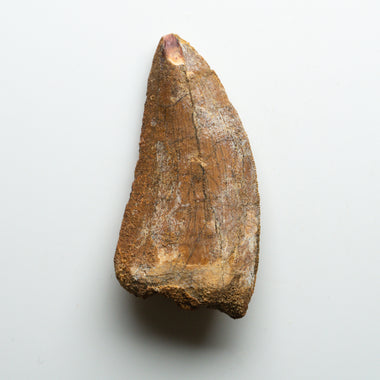
Fossil teeth at Astro Gallery
Buy Fossil Teeth Online — Dinosaur, Mosasaur and Shark Teeth, Identified and Weighed
A tooth is the part of a predator most likely to survive it. Enamel is the hardest tissue an animal makes; buried and mineral-replaced over millions of years, it keeps serration counts and wear facets intact long after bone has gone. Astro Gallery of Gems — trading natural-history specimens from 417 Fifth Avenue since 1961 — has 91 fossil teeth in stock, each identified to animal and weighed individually.
Three Eras, Three Kinds of Predator
Every tooth on this page belongs to one of three chapters of deep time, and knowing which one you are holding is most of what separates a curiosity from a collection.
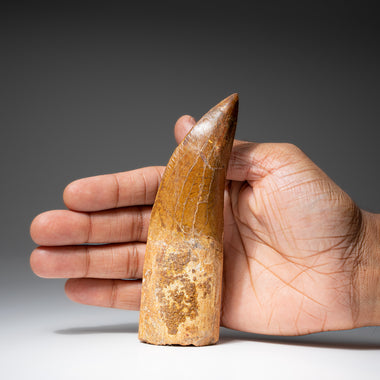
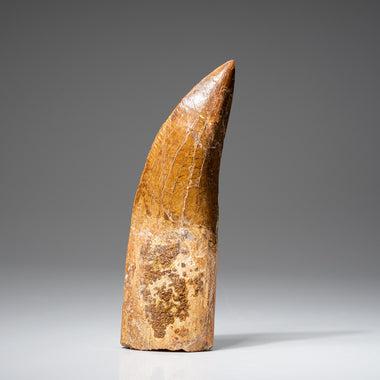
145–66 MaCretaceous · landThe last act of the dinosaur age. North African river systems fed predators large enough to leave teeth the size of a hand — the Carcharodontosaurus and Spinosaurus material that leads this collection.
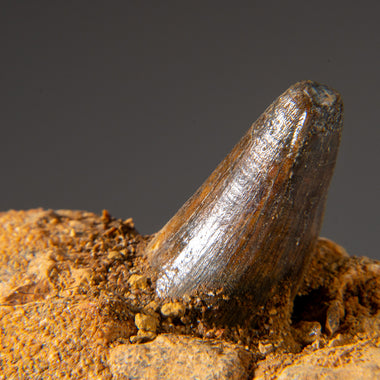
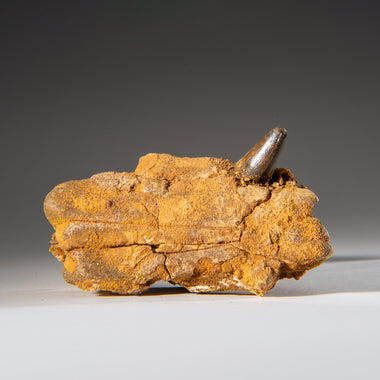
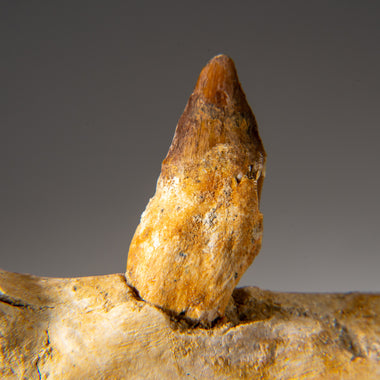
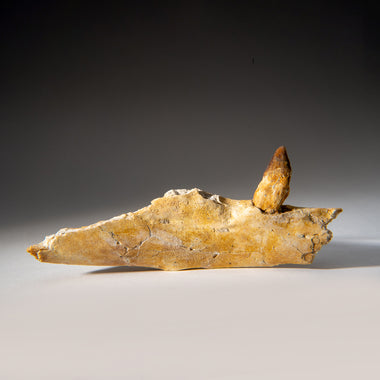
100–66 MaLate Cretaceous · seaWhile dinosaurs held the land, mosasaurs ruled shallow seas that covered much of the continent. Their conical teeth turn up still seated in sections of fossil jaw.
23–3 MaNeogene · oceanFar younger, and the reason most people know fossil teeth at all: megalodon and its relatives, whose serrated blades cut through whale bone.
The Animals, Tooth by Tooth
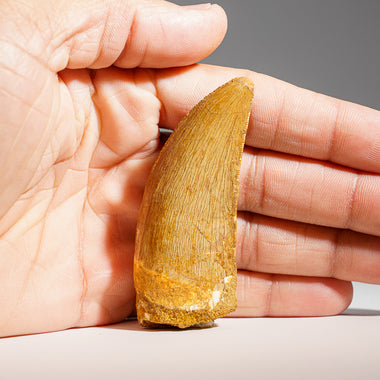
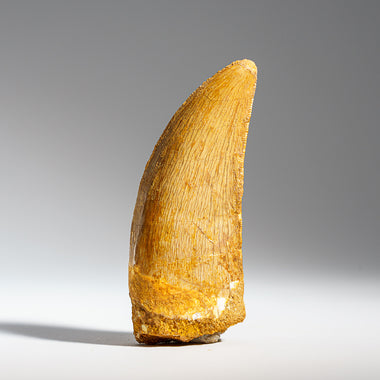
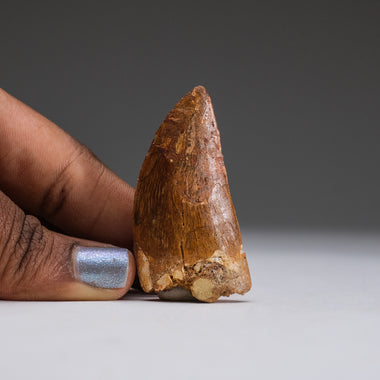
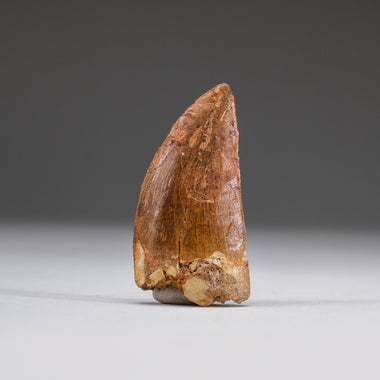
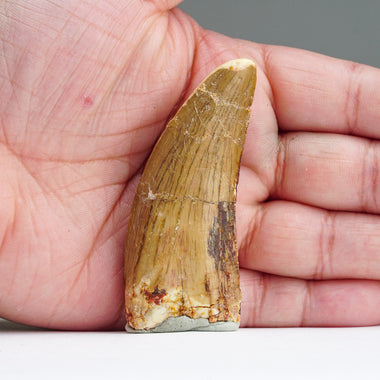
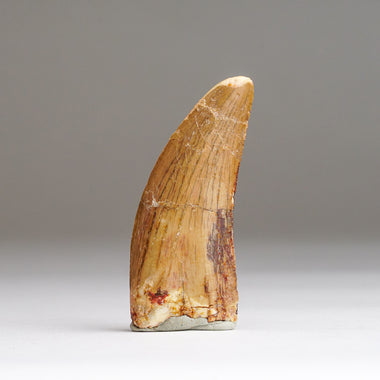
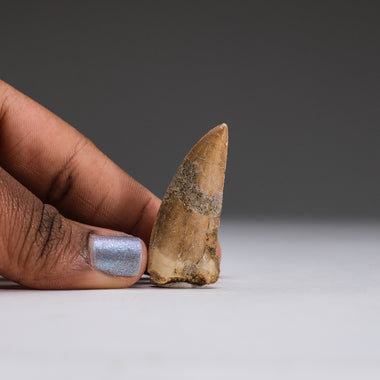
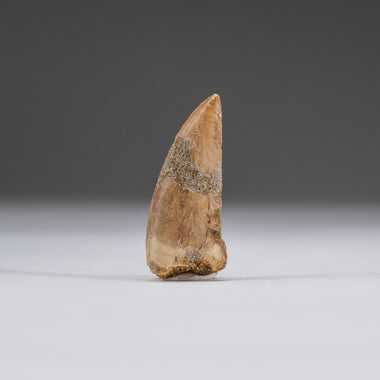
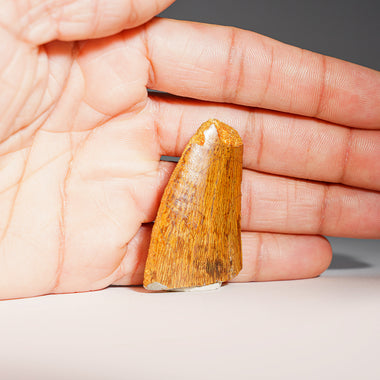
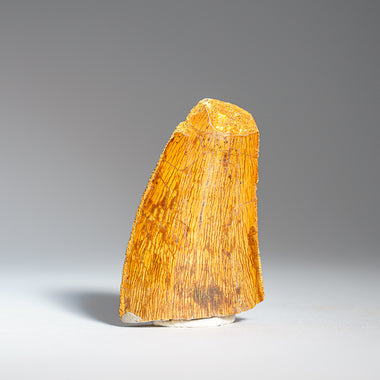
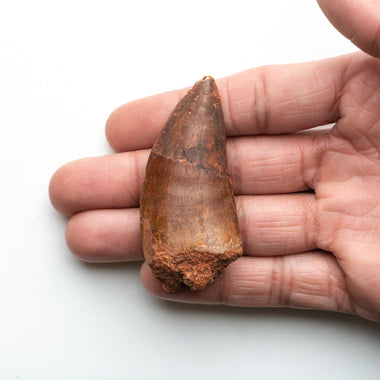
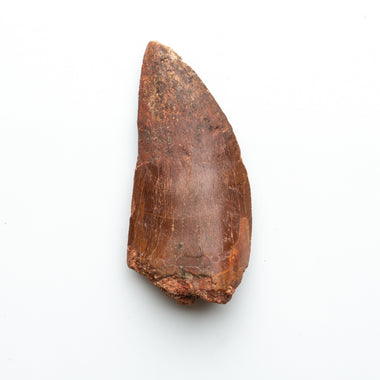
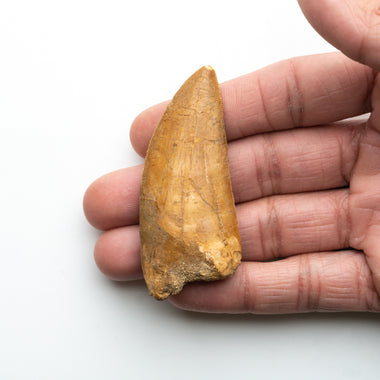
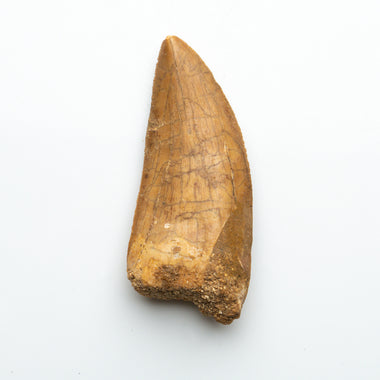
Carcharodontosaurus“shark-toothed lizard”A theropod rivalling T. rex in size, hunting in what is now Morocco. Its teeth are blades: flattened, recurved, and serrated front and back for slicing rather than crushing. The largest examples here pass 100 grams and ship in fitted display boxes.25listings
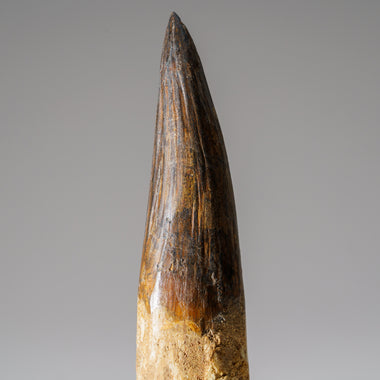
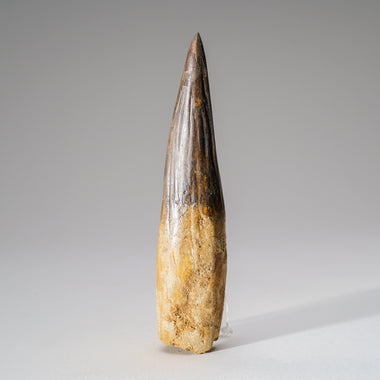
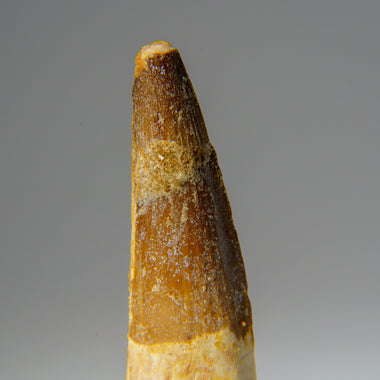
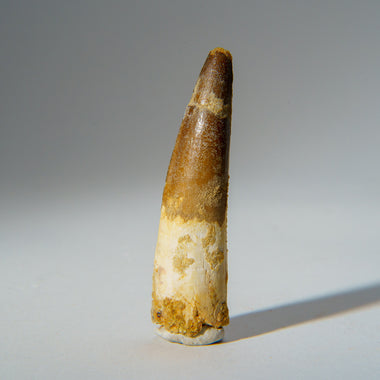
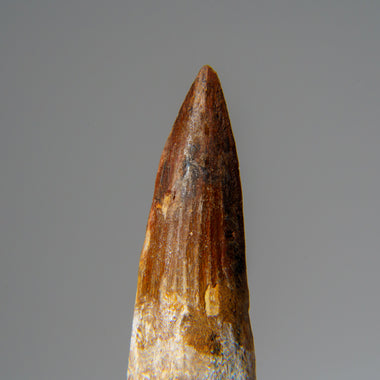
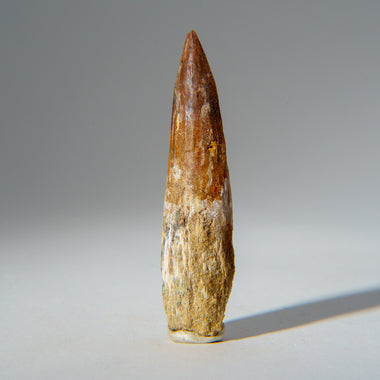
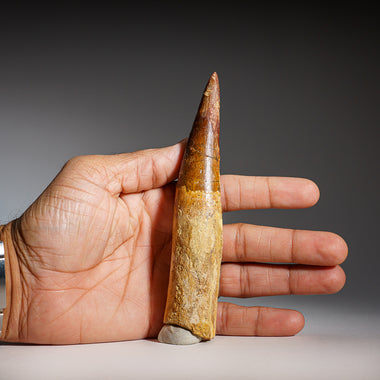
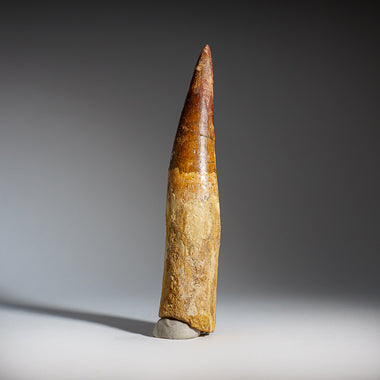
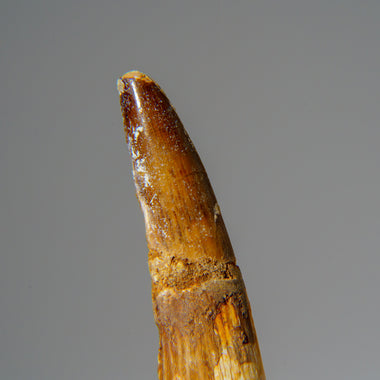
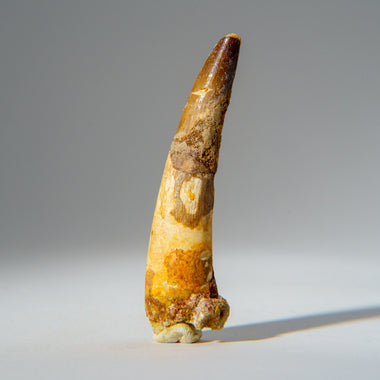
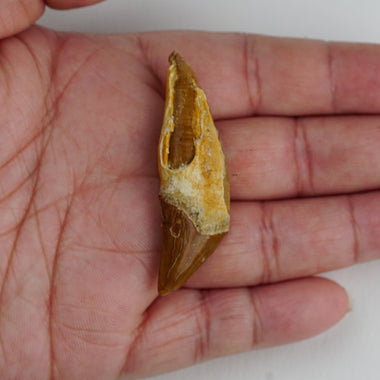
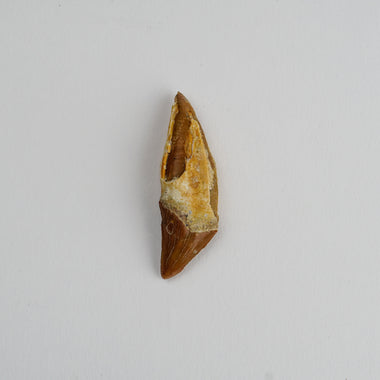
Spinosaurusthe river hunterSail-backed, semi-aquatic, and built for fish: the teeth are conical and finely striated rather than serrated — grippers, not knives. Anyone comparing the two genera side by side learns the shape-follows-diet lesson in about ten seconds.17listings
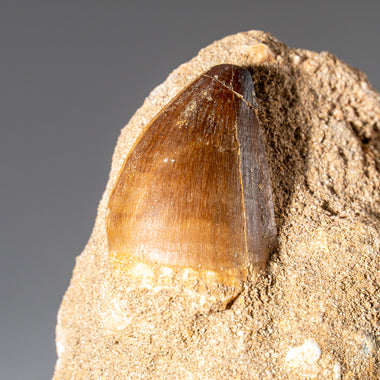
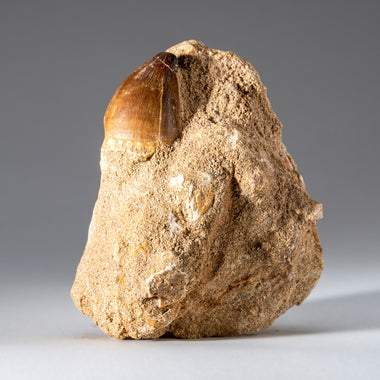
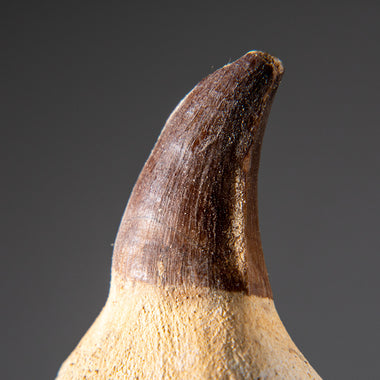
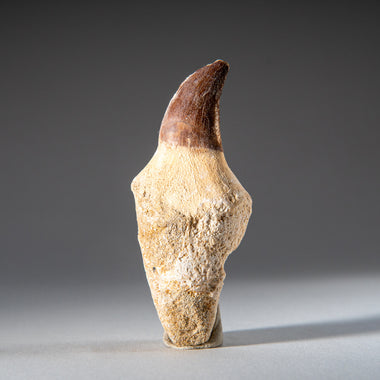
Mosasaurmarine lizard, not dinosaurApex predators of the Late Cretaceous seas, more closely related to monitor lizards than to anything on land. Several pieces here remain set in a section of fossilised jaw bone — tooth and animal together.15listings
Sharks, to megalodonNeogene oceansShark teeth are shed and replaced by the thousand across a lifetime, which is why they are the most abundant vertebrate fossil on earth — and why a large, undamaged megalodon blade with intact serrations still commands attention.7listings
Fossil Teeth for Sale — Live Prices
Each tooth below was catalogued and weighed by the gallery’s own staff before listing. What you see is what ships: a 109-gram Carcharodontosaurus in a display box is one tooth, from one animal, at one price — and once someone takes it home the listing disappears for good.
How to Buy Real Fossil Teeth: What to Ask Before You Order
Fossil dealing runs on disclosure, and the questions below are the ones worth asking anywhere — not only here. Astro Gallery’s listings name condition plainly rather than hiding it behind adjectives, and a specialist will answer any of these on a specific tooth before you commit.
“Has it been restored?”Most fossil teeth are stabilised in some way — consolidant on a fragile root, a repaired tip. That is normal preparation. What matters is that the seller tells you, and by how much.
“Is the enamel original?”Glossy, unbroken enamel with visible growth texture is the display grade. Composite or heavily patched enamel is not automatically a problem — undisclosed patching is.
“What do the serrations look like?”On serrated genera, crisp denticle rows survive only in good preservation and are the first thing a collector inspects under magnification.
“Does it keep its root?”A tooth with root, or one still seated in jaw bone, carries more of the animal’s anatomy and prices above a bare crown of the same length.
“What does it weigh?”Every listing states grams. Two teeth of the same genus and grade can then be compared honestly, price against mass.
Fossil Tooth Anatomy and Terms
CrownThe business end. Its shape says slicer, gripper or crusher — and therefore what the animal ate.
Serrations (denticles)Steak-knife rows along the cutting edges. Present on Carcharodontosaurus, absent on Spinosaurus.
RootThe section that anchored the tooth in the jaw. Often lost; valuable when kept.
Matrix / in jawHost rock or fossil bone the tooth still sits in — context that cannot be added later.
Feeding wearChipping and polish from use in life. History rather than damage, and worth knowing about.
Display boxFitted presentation case, stated in the title where included — shelf-ready on arrival.
How Fossil Teeth Are Prepared for Sale
Between the ground and a display box sits work most buyers never see. A tooth comes out encased in sediment; a preparator removes matrix mechanically — scribes, air abrasion, patience — because chemistry that dissolves rock also attacks enamel. Fragile roots are consolidated with reversible adhesive so the piece survives handling; genuine breaks are rejoined along their own fracture lines. All of this is normal, accepted practice in palaeontology, and none of it makes a tooth less real. What separates honest preparation from misrepresentation is disclosure, which is why the gallery states what was done to a given specimen when you ask.
Fossil Teeth as Gifts and First Collections
A fossil tooth is an unusually good gift because it needs no explanation: the animal, the era and the size are the whole story, and a boxed tooth arrives ready to shelve. For a young collector, shark teeth are the traditional entry — abundant, affordable, unbreakable in normal handling — while a boxed dinosaur tooth is the piece that gets brought to school. For an adult, the pairing that lands hardest is a serrated Carcharodontosaurus blade beside a striated Spinosaurus cone: one animal cut, the other gripped, and the difference is legible in ten seconds. Tell the gallery the recipient and budget and it will shortlist accordingly.
Caring for a Fossil Tooth and Buying Terms
These are stone, and stone is patient: no humidity control, no special light, no maintenance. The only real risk is a knock — enamel edges and serrations chip — so handle over a soft surface and keep the piece where it will not be picked up absent-mindedly. Dust with a dry brush; skip solvents entirely.
If a tooth arrives and it is not what you pictured, you have fourteen days to postmark it back in its original packing; the refund follows within two weeks of it landing, or store credit the moment it does. Return postage is yours, and anything broken in transit should be reported the next business day. Prefer to inspect first? Any tooth can also be seen at 417 Fifth Avenue, where the gallery has sold natural-history specimens for three generations — a firm profiled in Mineralogical Record Vol. 47 No. 4.1.
Rated everywhere we trade
Fossil Teeth FAQs: Authenticity, Cost & Identification
Are these real fossil teeth?
Yes — genuine fossil material, identified to animal, with weights stated per tooth. Fossils are commonly stabilised for sale; the gallery describes the condition and any restoration of a specific tooth honestly when you ask, which is exactly what you should demand of any fossil seller.
How are these teeth identified?
By anatomy: crown shape, serration pattern, enamel texture and size band differ by genus, which is how a serrated blade reads Carcharodontosaurus while a striated cone reads Spinosaurus. Every listing states the identification and the weight.
What do fossil teeth cost?
Each tooth is priced on genus, size, completeness and condition, from around $60 for a shark tooth to four figures for a large boxed dinosaur tooth. Prices are live on every listing, and the gram weight in each title lets you compare like with like.
Is a mosasaur a dinosaur?
No — mosasaurs were giant marine lizards that ruled Late Cretaceous seas while dinosaurs held the land. Their teeth are conical and often beautifully preserved; several here are still set in fossil jaw bone.
Are fossil teeth cleaned or repaired before sale?
Usually, and legitimately: matrix is removed mechanically, fragile roots are consolidated, and genuine breaks are rejoined. That is standard preparation across palaeontology. Ask about a specific tooth and the gallery will tell you what was done to it.
Is a fossil tooth a good gift for a child?
Shark teeth are the classic first fossil — affordable, robust and genuinely ancient. Boxed dinosaur teeth suit slightly older recipients who will handle them carefully. Say the age and budget and a specialist will pick options that survive real-world handling.
How do returns work on fossils?
Postmark within 14 days, original condition and packaging with packing slip, refund within two weeks of receipt or immediate credit, return shipping on the buyer, arrival damage reported within one business day.
Can I see the teeth before buying?
Yes — ask for specific listings at 417 Fifth Avenue and compare them side by side. (212) 889-9000 books it.
Fossil Teeth in the Natural-History Catalogue
Teeth are the doorway to the fossil wing: fossil bones sit alongside them, and the wing neighbours the meteorite and mineral halls under one gallery standard — different sciences, same disclosure.