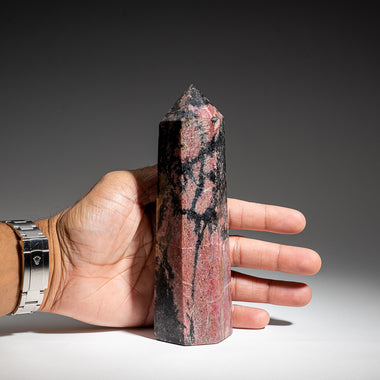
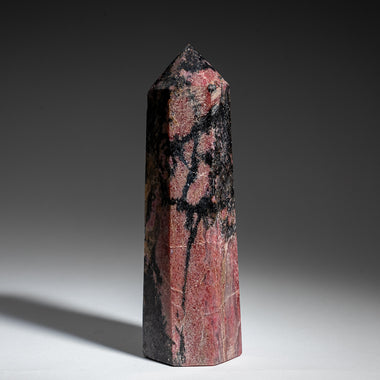
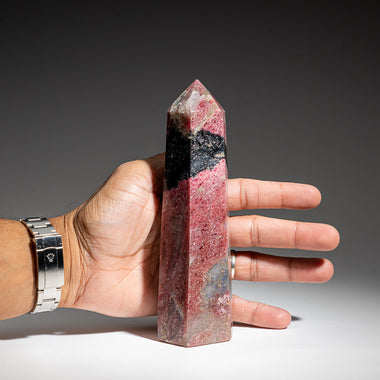
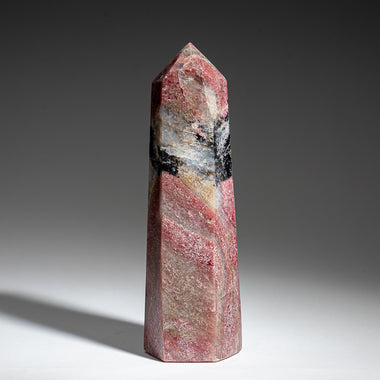
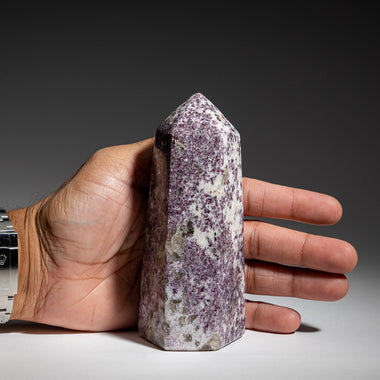
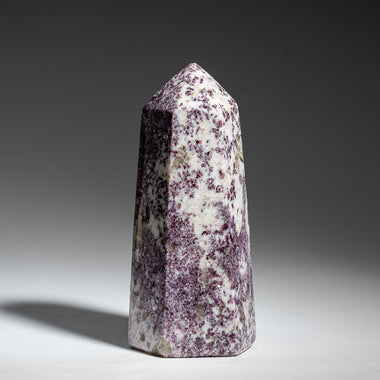
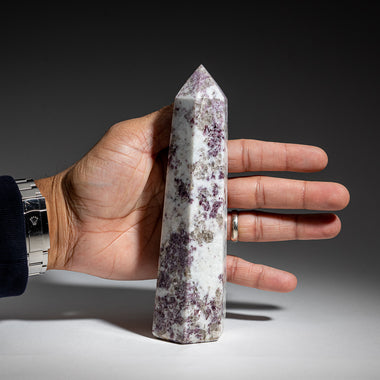
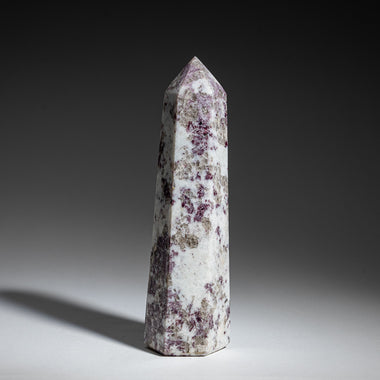
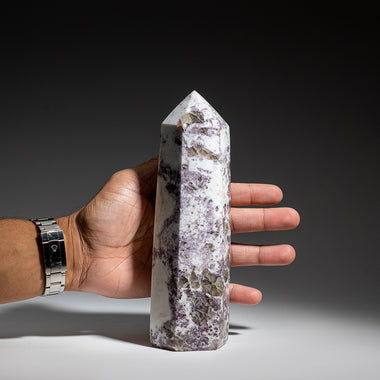
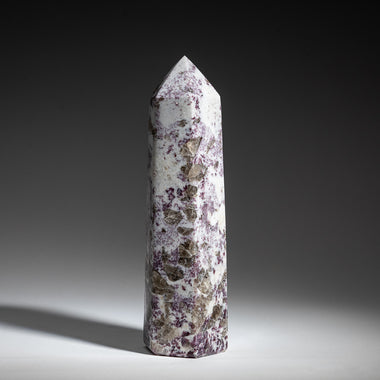
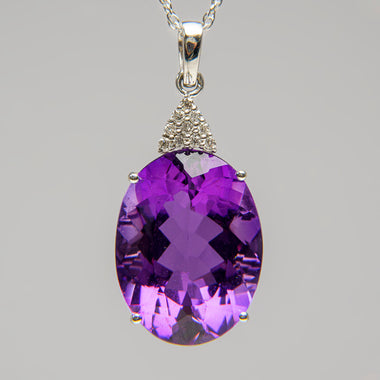
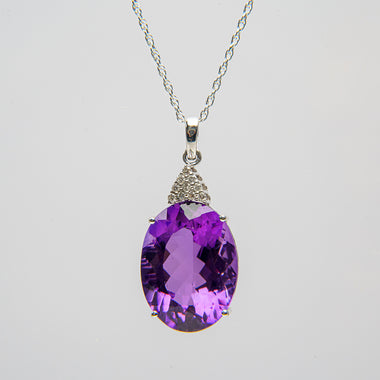
Corundum at Mohs 9: polished ruby points from Madagascar, ruby in quartz from India, anyolite from Tanzania and stones set in gold.
Order Ruby by Carat Weight, Locality and Disclosed Treatment
Ruby is red corundum, crystalline aluminium oxide coloured by chromium, and at Mohs 9 it is the hardest material a buyer can purchase after diamond. Astro Gallery of Gems handles ruby in two streams, polished specimen material from Madagascar, India and Tanzania and faceted goods cut for the jewellery bench, then weighs, photographs and rates each of the 10 pieces on this page on its own merits rather than by the parcel.
Ruby You Can Buy Today, Priced Piece by Piece
Each row below updates itself from the catalogue rather than repeating a printed range. Astro Gallery weighs specimen ruby in grams and pounds and faceted ruby in carats, at 0.2 grams to the carat, so the figure beside a piece answers a different question depending on which of the two you are reading. Once a stone sells it disappears from these rows rather than sitting there unavailable.
Shop Ruby by Grade, from Matrix Specimen to Faceted Stone
Grade in ruby means four things at once: colour, clarity, cut and the treatment history sitting behind all three. Astro Gallery divides the catalogue into the five bands below, because a collector chasing a red crystal locked in host rock and a buyer chasing a clean faceted oval are never competing for the same stone.
| Grade and weight | What the band contains and who buys it |
| Ruby in matrix, gram to pound weights | Opaque hexagonal ruby crystals seated in their host rock, bought as mineral specimens where crystal form and contrast against the matrix decide the figure. |
| Ruby in quartz, 1 to 3 lbs | Indian and Malagasy material threading red corundum through white to grey quartz, hand polished into six sided points and hearts for display. |
| Ruby in zoisite, cabinet sizes | Tanzanian anyolite setting opaque ruby against green zoisite and black hornblende, carved and polished for shelf display rather than for setting. |
| Cabochon ruby, 1 to 20 carats | Translucent to opaque material cut with a domed top, the band that produces star ruby whenever rutile silk throws a six rayed asterism. |
| Faceted ruby, under 1 carat upward | Transparent stones cut and calibrated for setting, rated per carat against colour and clarity, and offered set in gold on the jewellery side. |
Mogok, Andilamena, Karnataka and Longido: Where Ruby Is Won
Origin does more to a ruby figure than any other single fact, because each district produces a recognisable colour and a recognisable set of inclusions. Astro Gallery names the locality on every listing where the source is documented and leaves it out where it is not, which serves a buyer better than a confident guess.
Mogok, BurmaThe Mogok Stone Tract in upper Burma set the reference for fine ruby colour, the saturated red the trade calls pigeon's blood, grown in marble host rock with fine rutile silk. Mogok goods command the highest per carat figures in the market.
Chanthaburi and Trat, ThailandThai ruby from Chanthaburi and Trat runs darker and more garnet toned because of higher iron content, and those two towns became the cutting and heat treatment centre of the trade. Almost every faceted ruby a buyer meets has passed through Thai hands.
Andilamena and Vatomandry, MadagascarMalagasy deposits at Andilamena, Vatomandry and Ilakaka yield both faceted rough and the opaque red material polished into points. Astro Gallery buys the Malagasy polished work direct from cutters, which keeps six sided display points within reach.
Karnataka, India, and Longido, TanzaniaIndian ruby in quartz from Karnataka and Tanzanian ruby in zoisite from Longido are matrix materials rather than gem rough. Buyers take both for crystal form and colour contrast, and both are weighed in grams and pounds instead of carats.
Ruby weighed, photographed and disclosed before you commitAstro Gallery states weight, locality where it is documented and any known treatment on every listing, and the figure beside a piece is the figure charged.
View all 10 pieces
Ask for a condition report
Purchasing Ruby Safely: Heat, Flux and Glass Filling
Ruby is the most heavily treated coloured stone in the trade, and the treatments differ sharply in what they do to durability and to value. Astro Gallery discloses what it knows about each stone in the listing text, and the four checks below are the ones that decide a purchase.
Heat treatmentHeating ruby towards 1600 degrees Celsius dissolves rutile silk and lifts colour, and the trade treats it as routine on faceted goods. Unheated stones carrying laboratory documents command a premium, so establish which of the two a listing describes.
Lead glass fillingComposite ruby has surface reaching fractures filled with lead glass, which masks breaks and inflates apparent clarity. A jeweller's torch, an ultrasonic tank or household acid destroys that filler permanently, and a low figure is the first warning.
Flux healing and diffusionFlux residue left inside healed fractures and lattice diffusion of beryllium both change what a buyer is paying for. Under magnification flux reads as white feathered veils, while diffusion concentrates colour along the facet junctions.
Matrix integrityOn ruby in quartz and on anyolite, run a fingernail across the boundary between crystal and host rock. Astro Gallery states any repair, stabilisation or reattachment, and an undisclosed glue line catches the nail where a natural contact does not.
Ruby in Zoisite Against Ruby in Quartz
Ruby in zoisiteTanzanian anyolite pairs opaque ruby with grass green zoisite and black hornblende, delivering three colours in one polished slab and a strong sculptural read at cabinet size. The ruby crystals hold their hexagonal outline clearly against the green. Collectors choose this material when contrast matters more than transparency.
Ruby in quartzIndian and Malagasy ruby in quartz threads red corundum through white to grey quartz, which admits light and lifts the red from inside the piece rather than against a dark ground. Astro Gallery finishes this material as six sided points and as polished hearts. It carries the lighter weights and the gentler figures of the two.
How to Read the Terms on a Ruby Listing
CorundumThe mineral species behind both ruby and sapphire, aluminium oxide, which is called ruby only where chromium has coloured it red.
Pigeon's bloodA trade colour term for saturated red with a faint blue undertone and strong fluorescence, applied most often to Burmese goods.
SilkFine rutile needles crossing a stone, which soften colour, argue against heavy heating and produce a star when they lie dense enough.
AsterismThe six rayed star crossing a cabochon when rutile silk lies in three directions and a domed cut gathers the reflection into rays.
AnyoliteThe mineralogical name for ruby in zoisite, a rock of green zoisite, black hornblende and opaque ruby quarried at Longido.
CaratThe gem weight unit of 0.2 grams, used for faceted and cabochon ruby, while specimen ruby is quoted in grams and pounds.
Ruby Worn, Given and Set on a Shelf
Ruby carries the July birthstone and the fortieth wedding anniversary, which is why so much of it changes hands as a gift rather than as a collection piece. At Mohs 9 the species takes daily wear in a ring better than almost any alternative, and that same hardness makes a loose stone a sensible thing to keep. Display buyers work at the other end of the range, choosing a polished ruby in quartz point for a desk or an anyolite carving for a shelf where green and red read across a room. Crystal sellers link ruby to the heart chakra and to vitality; Astro Gallery records species, weight, locality and treatment, and makes no health claim.
Caring for Ruby at Mohs 9
Hardness protects ruby from scratching but does nothing about a knock, since corundum still parts under a heavy blow against an edge. Warm soapy water and a soft brush clean an untreated or heated stone completely. Keep glass filled ruby away from ultrasonic tanks, steam cleaners, acids and a jeweller's torch, because the filler degrades where the corundum will not. Store faceted stones apart from softer gems, as a Mohs 9 edge scratches emerald, opal and every quartz sharing a pouch with it. Wipe ruby in quartz and anyolite with a damp cloth and keep abrasive pastes away from the polished faces.
Ordering Ruby, Packing and Insured Delivery
Astro Gallery charges the figure shown on the listing, and secure checkout accepts Shop Pay, PayPal, Apple Pay, Google Pay and every major card, with an itemised invoice raised against each order. Before committing, ask the gallery for the weight in carats or grams, a photograph taken under daylight and again under incandescent light, or a note on what is known about heat, and the team replies within the working day.
Astro Gallery of Gems has shipped gem material since 1961. Loose and set stones travel in gem paper inside a rigid box, specimen ruby is blocked in cut foam and double boxed, and each consignment travels tracked and insured in full against a declared value, with customs documents raised before it leaves. Every ruby sold falls under the returns policy and under the guarantee shown on about us.
Buy a ruby with the paperwork settled firstAsk for weight, locality and treatment in writing before you commit, and Astro Gallery answers in writing rather than pointing you back at the listing.
Browse the ruby collection
Message the gallery
Rated everywhere we trade
Ruby Questions Buyers Send Before They Order
How much does a ruby cost?
Ruby in quartz points and hearts open the range at specimen weights, anyolite and cabochon material holds the middle, and faceted stones set in gold reach the top. The table above shows live figures for what is in stock, and faceted goods are rated per carat while specimen pieces are rated as single objects.
Is this ruby natural or lab created?
Every ruby on this page is natural corundum. Astro Gallery does not offer synthetic ruby as natural stone, and any laboratory grown or composite material would be named as such in both the title and the description.
Has the ruby been heated or glass filled?
Astro Gallery states the treatment it knows of in the listing text. Heat is routine on faceted ruby and carries no durability penalty, whereas lead glass filling does, and the gallery identifies filled material instead of rating it as untreated stone.
What exactly is ruby in zoisite?
Ruby in zoisite, known mineralogically as anyolite, is a rock from Longido in Tanzania built from opaque red ruby, green zoisite and black hornblende. Buyers purchase it for colour contrast and carving quality rather than for transparency.
How many carats is the ruby in a piece of jewellery?
Each jewellery listing gives the carat weight of the centre stone and of any diamond accents. Ask the gallery for a photograph of the reverse of the setting if you want to see how the stone is held before you decide.
Can I order a ruby as a July birthday gift?
Yes. Ruby is the July birthstone and the fortieth anniversary stone, and Astro Gallery packs any piece for gifting on request at no additional charge.
Do you ship ruby internationally?
Yes. Astro Gallery ships worldwide tracked and fully insured, with a declared value and customs paperwork completed before dispatch. Duties raised in the destination country remain the responsibility of the buyer.
Can I return a ruby whose colour looks different in person?
Yes. The returns page states the window and the condition a stone must come back in. Requesting photographs under daylight and under incandescent light before you buy settles most colour questions, because ruby shifts noticeably between light sources.
Ruby Beside the Rest of the Coloured Stone Catalogue
Some buyers follow the species across every form it takes, from a matrix specimen to a set stone, while others want a red gem in a particular format. The groups below serve both approaches.
Regions that produce ruby