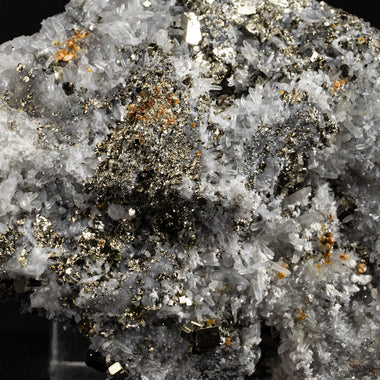
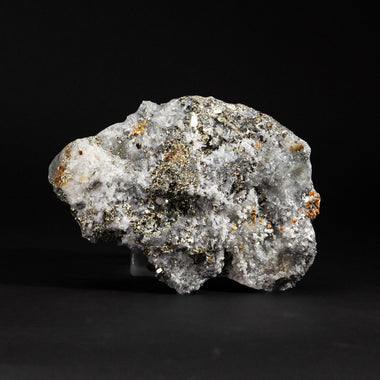
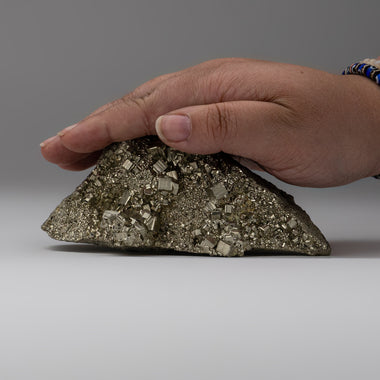
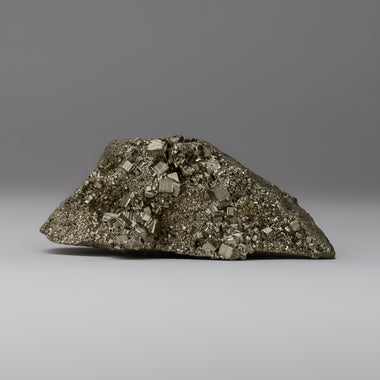
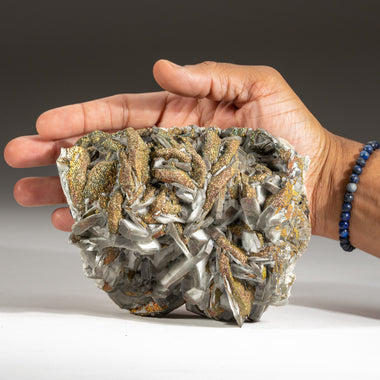
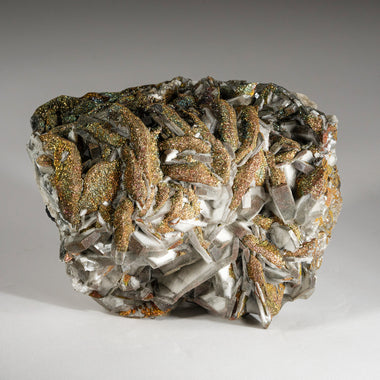
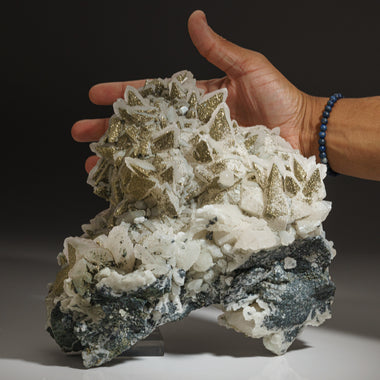
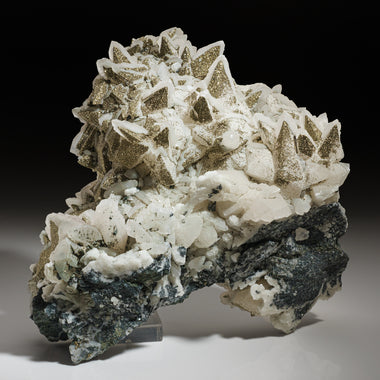
Pyrite at Astro Gallery of Gems
Buy Pyrite Online: Peruvian Clusters, Chinese Concretions and Classic Cubes on Matrix
Fool's gold fooled nobody who ever held it: pyrite is heavier, sharper and more architectural than gold ever bothers to be. Astro Gallery of Gems has 66 pyrite and pyrite family pieces live in this collection, with the Huanzala mine in Huanuco, Peru supplying the brass bright clusters that dominate the count, and the Dongchuan district of Yunnan, China supplying the strangest objects on the page: spherical concretions ringed like small planets. Around them sit the European classics, Spanish cubes from Navajun, Italian pyritohedra from Elba and Tuscany, plus iridescent chalcopyrite from Hubei and rare gem pyrite from Tanzania's Merelani Hills. Live prices are shown on every listing, and the accessible end starts at pocket money for a mirror polished sphere. This page explains the crystal forms, the two great localities and how to keep iron sulfide happy indoors.
66Pyrite pieces live now
FeS2Iron sulfide, brass bright
14 daysReturn window
1961Trading on Fifth Avenue since
Huanuco or Dongchuan: The Two Localities That Define the Page
Huanzala, Huanuco, Peruthe cluster tradition
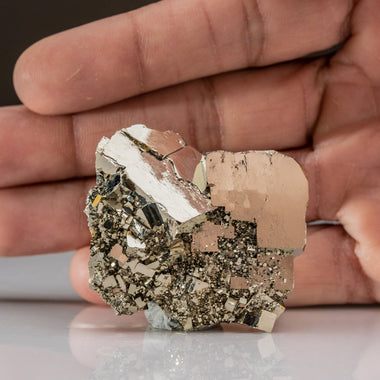
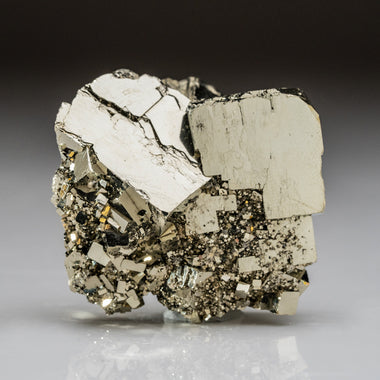
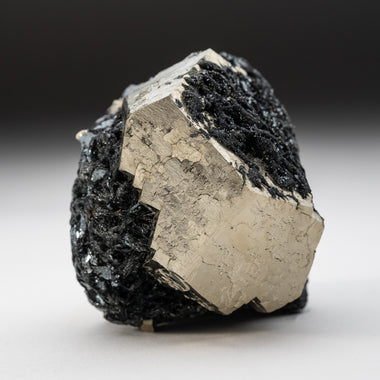
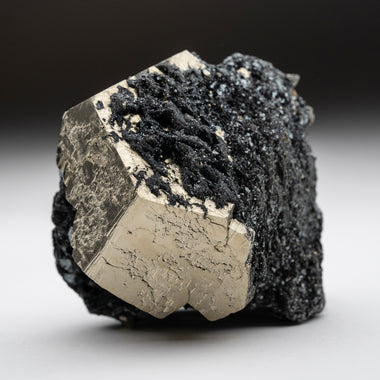
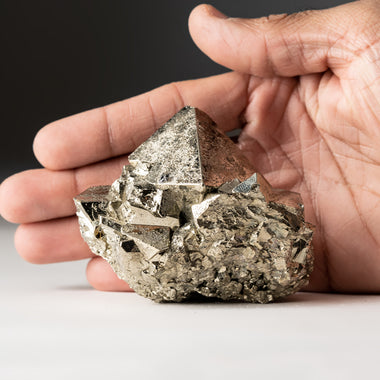
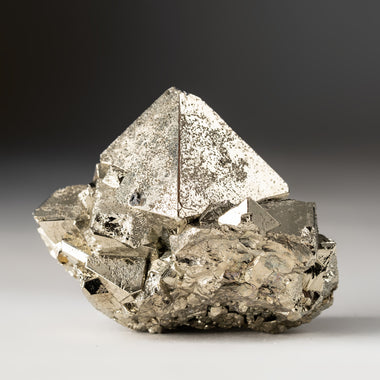
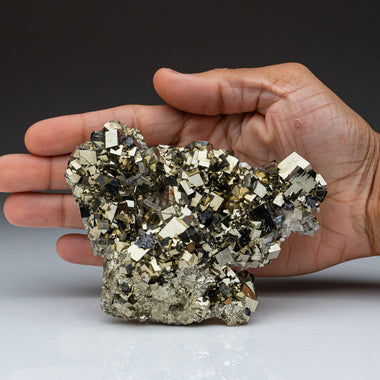
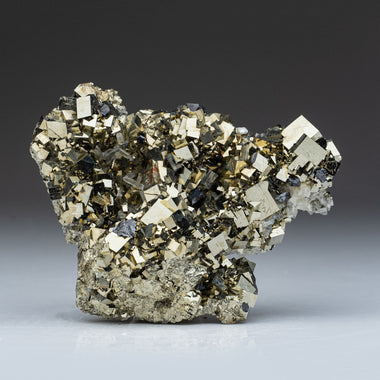
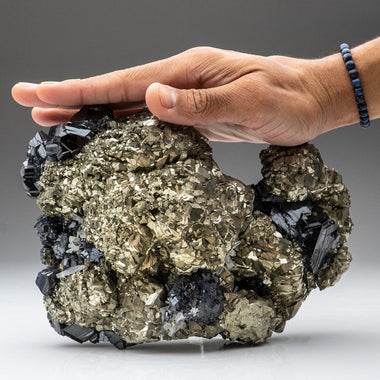
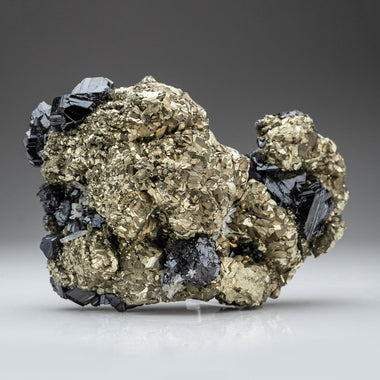
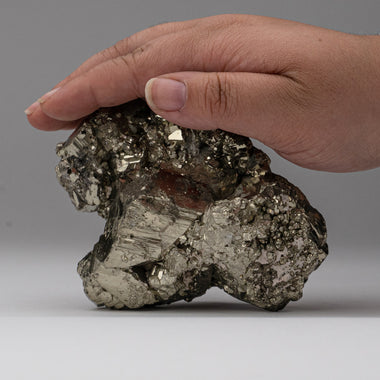
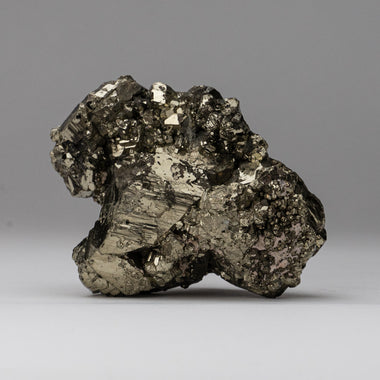
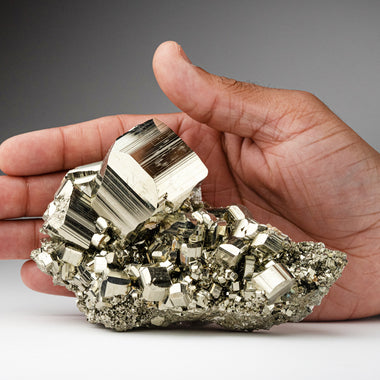
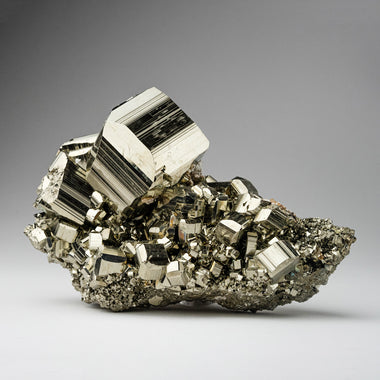
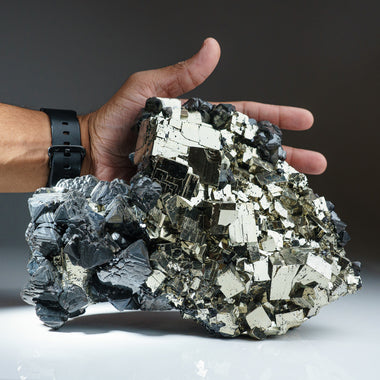
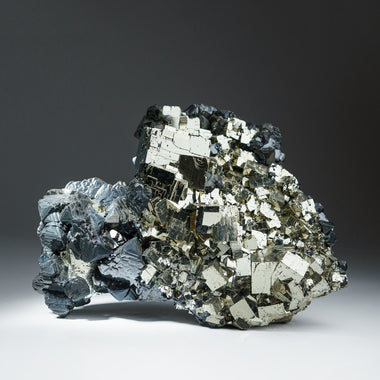
Hydrothermal veins in the Peruvian Andes grow interlocking pyritohedral and cubic clusters with a mirror metallic luster, many dusted with sphalerite. This is the world's reference pyrite, and the reason Peru leads the collection.
- Striated cubes and pyritohedra in groups
- Mirror luster straight from the pocket
- Accessible entry tier, honest weight
- Watch for: bruised edges from rough handling
Dongchuan, Yunnan, Chinathe concretion tradition
Pyrite crystallising in concentric rings around a shale core produces the so called Boji stones: spheres and discs wrapped in sparkling crystal bands. Sedimentary, sculptural and unlike anything else in mineralogy.
- Concentric rings on a spherical base
- Grown in shale, not in veins
- Runs from hand pieces to museum weight
- Watch for: nothing, they are nearly indestructible
Fool's Gold, Read Properly
The fact file behind the nickname
Pyrite earned its reputation in gold rush rivers, but the two metals are easy to separate with your hands and your eyes. The comparison is worth learning because it teaches you to read the mineral itself.
- Chemistry
- Iron disulfide. The brass yellow is structural, not a coating, and it runs through the entire crystal.
- Hardness
- Around Mohs 6, harder than window glass. Gold is soft enough to dent with teeth; pyrite would cost you the tooth.
- The tells against gold
- Pyrite is brassy rather than buttery, brittle rather than malleable, and its crystal faces carry fine parallel striations gold never shows. Streaked on unglazed ceramic it leaves greenish black, not gold.
- Crystal forms
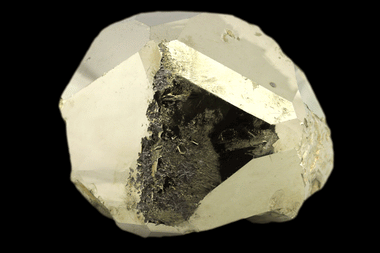
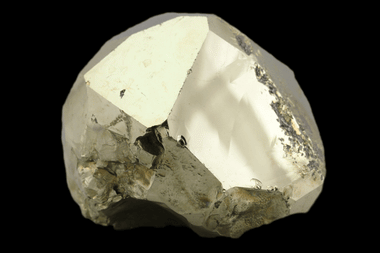
- Cubes, pyritohedra with twelve five sided faces, octahedra, and combinations of all three, sometimes on the same specimen, as on the Tanzanian material here.
- The name
- From the Greek for fire: struck against steel, pyrite sparks. It lit tinderboxes and wheellock pistols before matches existed.
- Companions
- Sphalerite, quartz, calcite and its copper cousin chalcopyrite, whose iridescent peacock surfaces from Daye in Hubei sit in this collection alongside true pyrite.
The Forms on the Grid, from Cube to Sphere
| Form | What it is, and why you would choose it |
|---|
| Cluster | Interlocking crystals as they grew in the vein, mostly Peruvian. The default collector purchase: honest, bright and dramatic at every scale from desk to cabinet. |
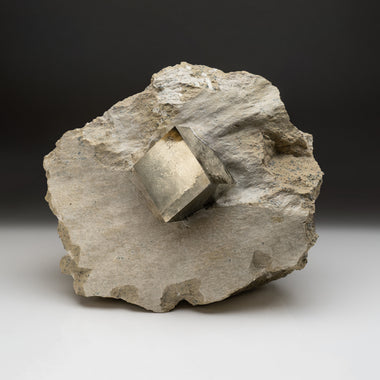
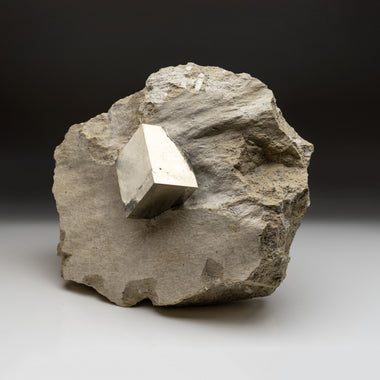
| Cube on matrix | Sharp single cubes standing on host rock, the format Navajun in Spain made world famous and Colorado's Gilman district produced in American form. Geometry so perfect people assume it is machined, and it never is. |
| Concretion | The Dongchuan spheres and discs, crystal rings wrapped around a shale core. The conversation piece tier: nobody guesses them correctly on first look. |
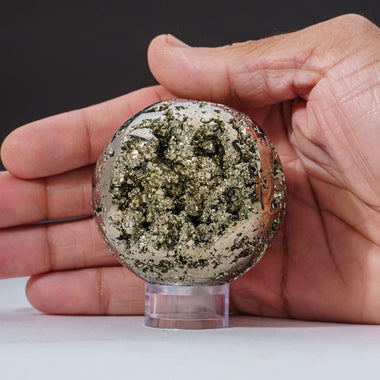
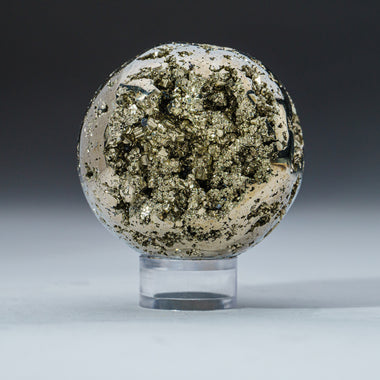
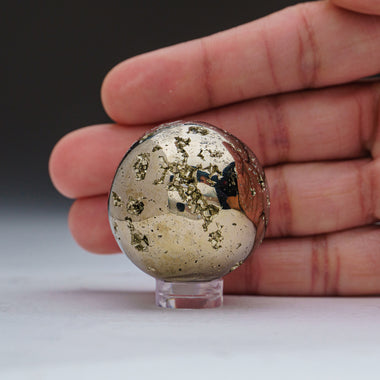
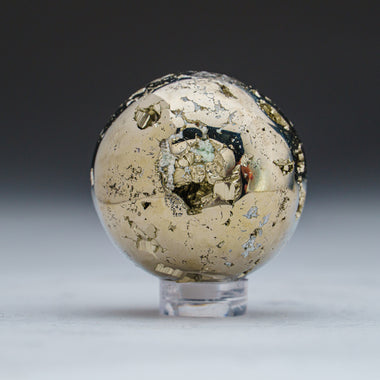
| Polished sphere | Peruvian pyrite ground and mirror polished, with crystal pockets left open where the interior shows. The accessible entry point and a reliable desk gift. |
| Pseudomorph | Goethite after pyrite from Gachala, Colombia: iron cross twins whose pyrite interior converted to goethite while keeping the shape. A mineral wearing its own history. |
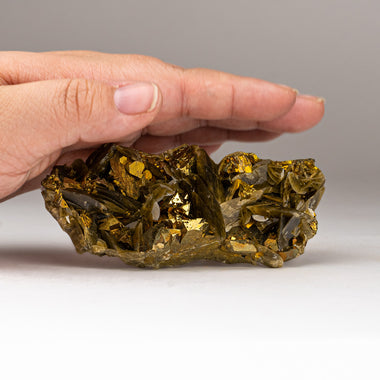
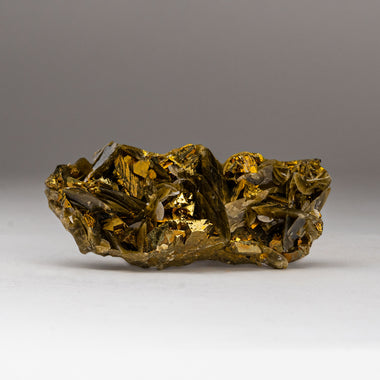
| Iridescent chalcopyrite | The related copper iron sulfide over calcite from Daye, Hubei, flashing blues, greens and golds. Technically its own species, practically the peacock of this page. |
Pyrite Prices by Locality and Crystal Quality
Each specimen below was weighed and photographed at 417 Fifth Avenue, and apart from stock photo spheres you receive the exact piece shown. Prices update live in your currency.
| Specimen | Locality or size | Price |
|---|
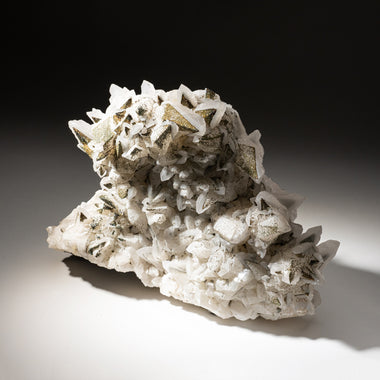
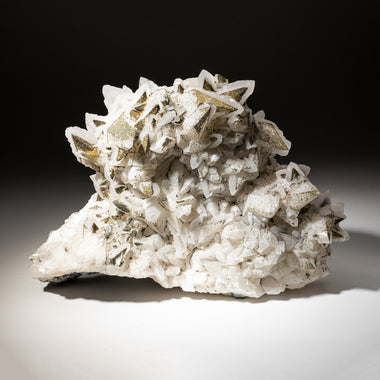
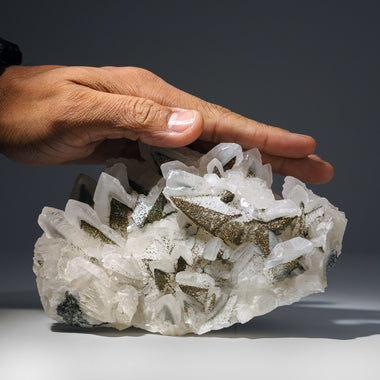
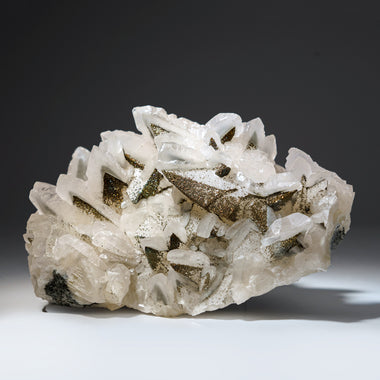
| Pyrite From Gavorrano Mine, Gavorrano, Grosseto Province, Tuscany, Italy |
See listing |
$ 450.00 |
| Pyrite From Merelani Hills, Lelatema Mts, Simanjiro District, Manyara Region, Tanzania |
Tanzania |
$ 12,000.00 |
| Pyrite on Hematite From Rio Marina, Elba Island, Livorno Province, Tuscany, Italy |
See listing |
$ 900.00 |
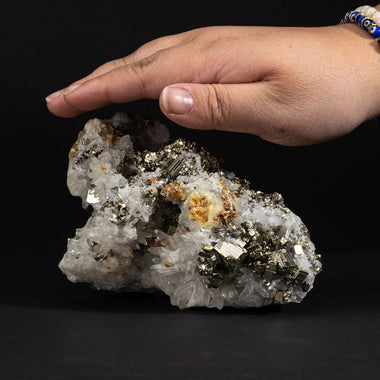
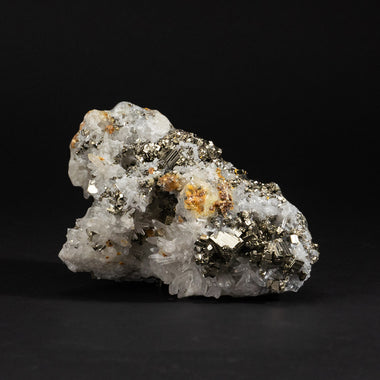
| Pyrite from Huanzala Mine, Huallanca District, Huanuco Department, Peru |
Peru |
$ 400.00 |
| Large Pyrite on Matrix From Victoria Mine, Navajún, La Rioja, Spain |
See listing |
$ 12,000.00 |
| Pyrite on Quartz from Daye Mine, Hubei Province, China |
China |
$ 8,000.00 |
| View all 66 pieces → |
Brightness is a condition report66 pyrite pieces, filterable by price. Luster tells you how a specimen has been stored; compare it ruthlessly.
Shop all pyrite
Shop all minerals
Choosing Pyrite by Budget and Character
The entry piecespheres and small clustersPolished Peruvian spheres and hand sized Huanzala clusters: maximum shine per dollar, durable enough for a desk, and the standard first purchase from the specimens under $1,000 tier.
The curiosityDongchuan concretionsRinged spheres from Yunnan at hand to cabinet scale. Buy the one whose ring pattern wraps fully around the core; three dimensional patterning is what separates good from great.
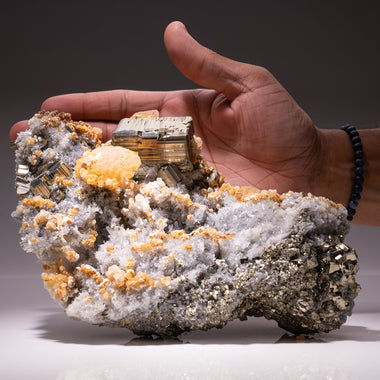
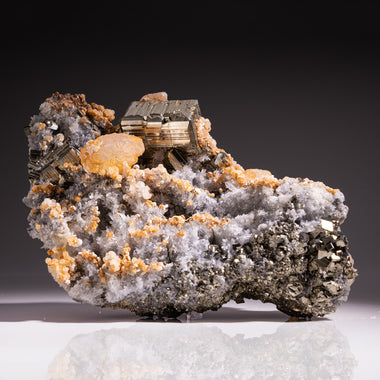
The cabinet piecebig clusters and cubes on matrixLarge Peruvian groups, calcite on pyrite combinations, and sharp cubes standing on basalt. The tier where condition and composition start to price like art.
The museum tierNavajun, Merelani and giant concretionsThe Spanish cube plates at serious weight, Tanzania's rare gem pyrite with complex faces, and concretions at two figure pounds. Comparable material sits in The Vault and the Hall of Fame.
Keeping Pyrite Bright: Care and Cautions
Humidity is the enemyIron sulfide plus persistent damp equals slow decay: dulling first, then in bad cases a crumbling known in collections as pyrite disease. Display dry, avoid bathrooms and basements, and silica gel in a display case is cheap insurance.
Keep it out of waterNo soaking, no rinsing, no ultrasonic cleaners. Dust with a dry soft brush or microfibre cloth, and the mirror luster lasts for decades.
Handle the matrix, not the edgesPyrite is hard but brittle, and crystal edges chip against rings and table tops. Lift specimens by their base rock, and give clusters their own footprint on the shelf.
Wash hands after long handlingPyrite is stable and safe to display and touch, but it is still a sulfide: wash after extended handling and keep raw fragments away from small children, the same common sense the gallery applies to malachite.
A pyrite that has been kept dry looks freshly mined at fifty years old. The luster you buy is the luster you keep, if the room cooperates.
Astro Gallery of Gems has handled pyrite across three generations on Fifth Avenue since 1961, with its collection profiled in Mineralogical Record Vol. 47 No. 4.1, and it buys Peruvian and Chinese material at source. That is why every listing names a mine, district or province rather than a country alone, and why a specialist on (212) 889-9000 can tell you how any individual specimen was stored before it reached the case.
Packing Metallic Specimens for Transit
Pyrite ships from Astro Gallery of Gems at 417 Fifth Avenue wrapped, suspended and double boxed, with the heaviest concretions and cube plates crated, everything tracked and insured. Metallic luster is the attribute photographs flatten most, so if you can visit, do: the showroom is a short walk from Bryant Park, Grand Central and Herald Square, and walk in viewing is welcome during opening hours. Call ahead and your candidates can be photographed again for you under gallery light.
Should a piece not suit, the return path is short: back in the post with a postmark inside 14 days of arrival, original packing intact, refund issued within two weeks of the gallery receiving it, or same day store credit if you prefer. The buyer carries the return postage, and transit damage needs flagging by the next business day. The complete terms live on the shipping and returns page.
Pyrite Terms You Will See on Listings
PyritohedronA twelve faced crystal form with five sided faces, so characteristic of pyrite that it carries the mineral's name.
StriationsFine parallel lines on crystal faces, a pyrite fingerprint and one of the quickest ways to separate it from gold.
ConcretionA rounded mass grown outward in layers around a core, here as pyrite rings wrapping shale from Dongchuan.
Boji stoneThe trade nickname for Dongchuan style pyrite concretions, borrowed from an American original and now generic.
ChalcopyriteThe copper iron sulfide cousin, softer and often iridescent. The peacock coloured Daye specimens on this page are chalcopyrite over calcite.
StreakThe colour a mineral leaves on unglazed ceramic: greenish black for pyrite, gold for gold. The oldest test in prospecting.
Rated everywhere we trade
Want the luster judged honestly?Name two pieces and a specialist will compare brightness, edge condition and presence in plain words before you commit.
Ask a specialist
Visit the NYC gallery
Pyrite Buying FAQs: Identification, Localities, Care and Delivery
Is pyrite worth anything if it is not gold?
Yes, on its own merits. Fine crystallised pyrite from famous localities is collected worldwide, and top Spanish cubes and Peruvian clusters hold value the way any classic mineral does. Live prices are shown on every listing, from desk pieces at the accessible end to museum tier material.
How do I tell pyrite from real gold?
Three ways in one minute: pyrite is brass coloured rather than buttery yellow, it is hard and brittle where gold is soft and bendable, and it streaks greenish black on unglazed ceramic where gold streaks gold. Crystal faces with fine striations settle it entirely, because gold never grows them.
Are the perfect cubes really natural?
Completely. Pyrite's atomic structure builds cubes on its own, and the Spanish material from Navajun grew that way in the ground, unpolished and uncut. It is the most frequently disbelieved fact in the gallery, and the most enjoyable to confirm.
What exactly is a pyrite concretion?
A sphere or disc of shale that pyrite crystallised around in concentric rings as it grew in the sediment. The Dongchuan district of Yunnan, China produces the best of them, and each one patterns differently around its core.
Which localities matter most for pyrite?
Huanzala in Huanuco, Peru for mirror luster clusters, Navajun in Spain for perfect cubes, Dongchuan in Yunnan for concretions, Elba and Tuscany for the old Italian classics, and Merelani in Tanzania for rare gem crystallised material. The listings here name them because the locality is half the value.
Will pyrite rust or fall apart?
Kept dry, no: specimens stay bright for decades. Persistent humidity is what degrades iron sulfide, so display away from bathrooms and damp basements and never store it wet. A dry room is the entire preservation programme.
Is pyrite safe to handle?
Yes, with ordinary stone sense: it is stable and display safe, wash hands after long handling sessions, and do not grind or powder it. Sparks were its historical party trick, so it stays away from tinder and small children's pockets.
How does pyrite ship?
Wrapped, suspended and double boxed from Manhattan, crated at the heavy end, tracked throughout. Metallic edges are protected first, and any transit damage should be reported by the next business day.
What should I check on a pyrite listing before ordering?
Locality first, because Navajun cubes, Huanzala clusters and Dongchuan concretions are different propositions at different prices. Then luster and edge condition, both visible in the photographs of the actual specimen you receive. Weight and dimensions are stated, metallic edges are protected first in packing, and everything ships tracked and insured worldwide.
More Metallic and Sulfide Specimens
Astro Gallery of Gems, New York