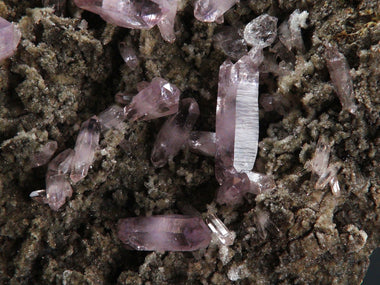
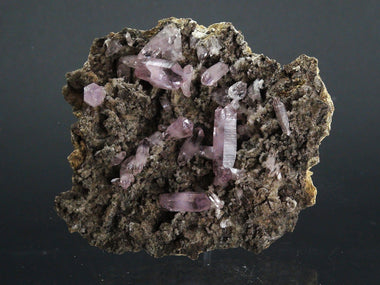
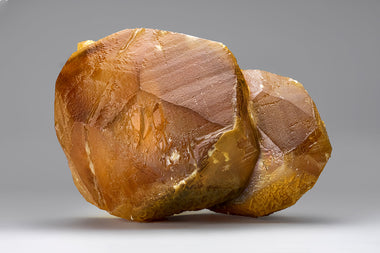
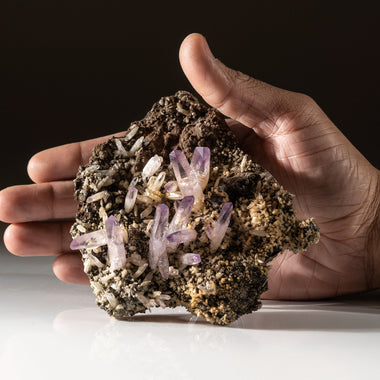
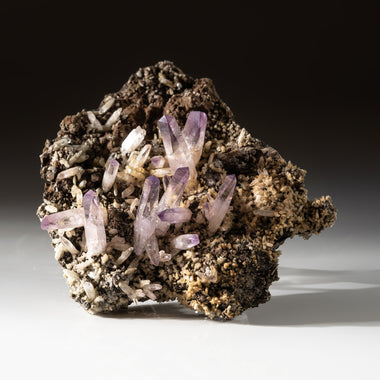
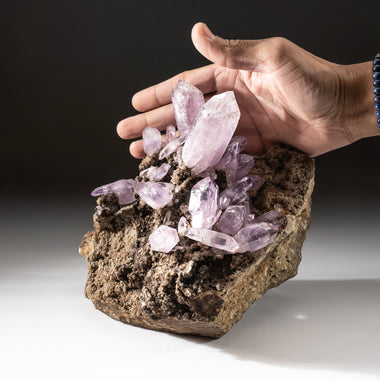
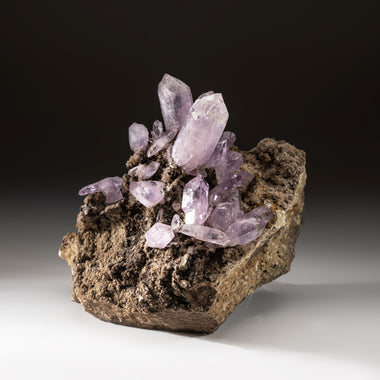
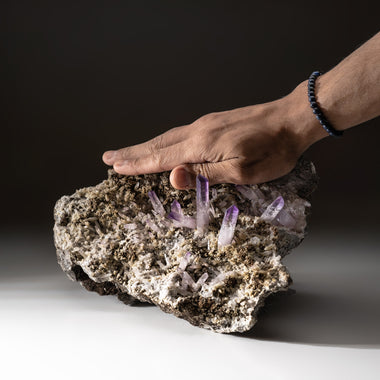
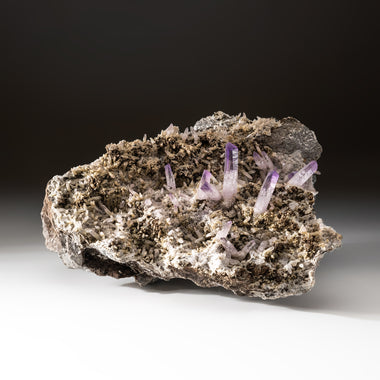
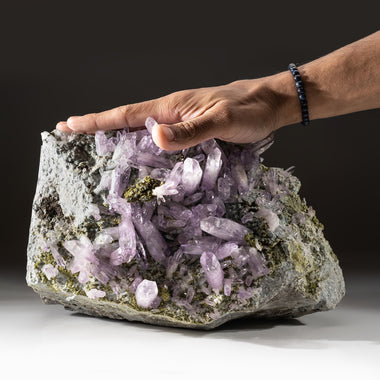
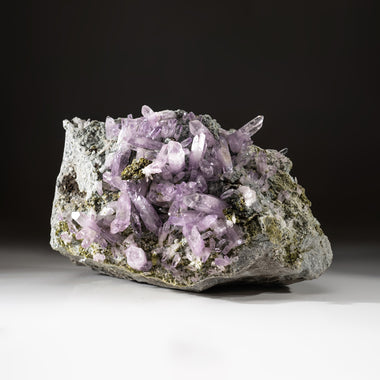
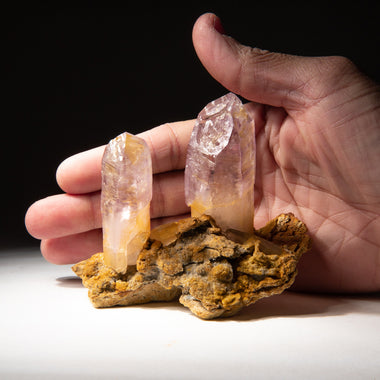
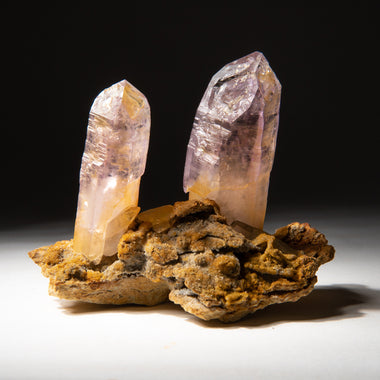
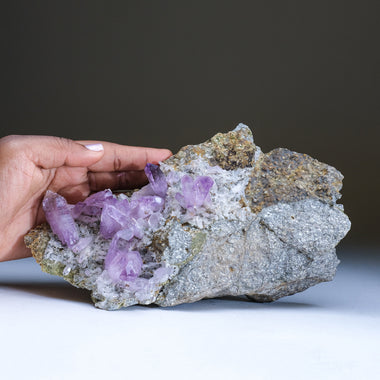
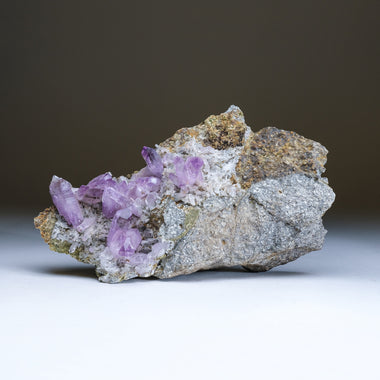
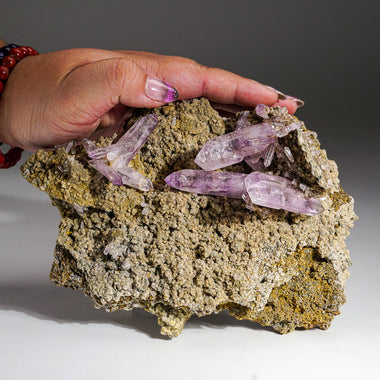
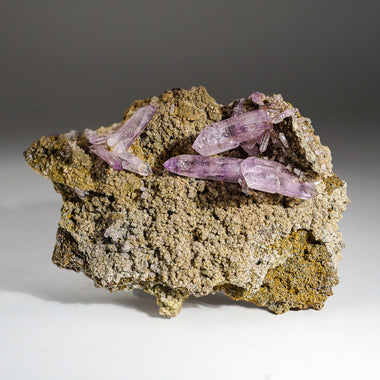
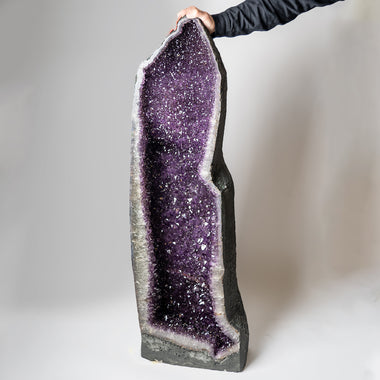
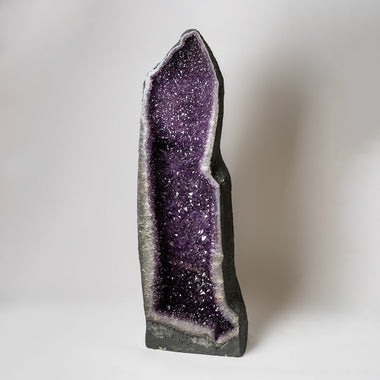
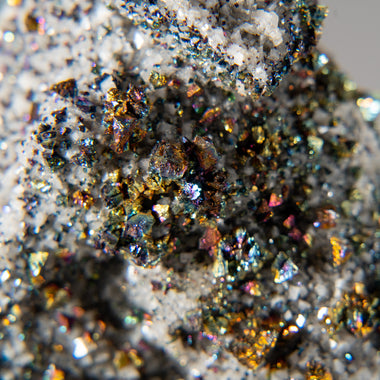
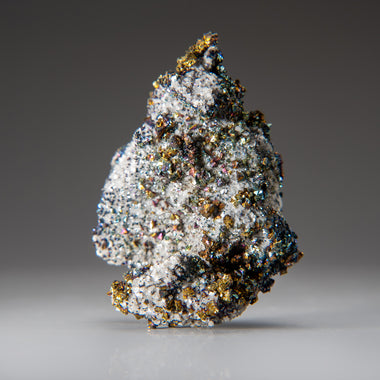
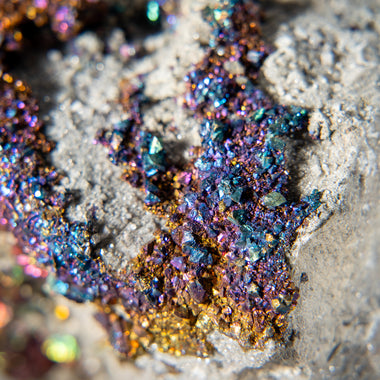
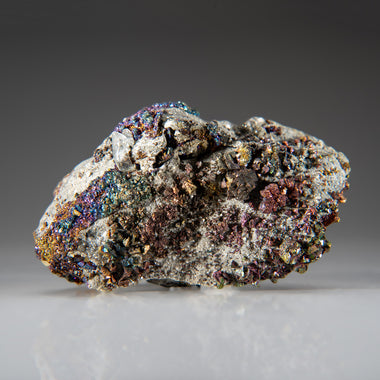
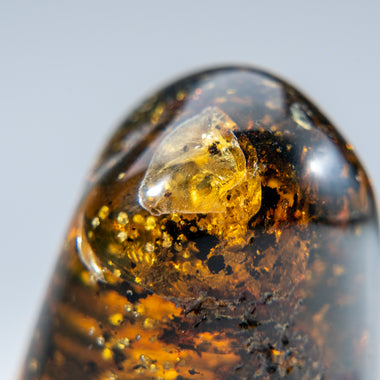
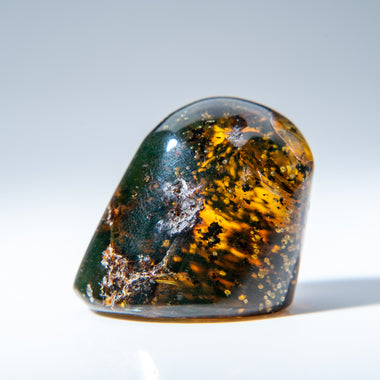
Veracruz amethyst, Chihuahua hemimorphite, Wisconsin chalcopyrite and Pennsylvania golden calcite, each catalogued to its own mine.
Buy North American Mineral Specimens from Named United States, Mexican and Canadian Mines
North American minerals are specimens recovered from the mines, quarries and volcanic districts of the United States, Mexico and Canada. The continent produces material as varied as doubly terminated Las Vigas amethyst, golden fluorapatite from an iron mine at Durango and almandine garnet locked into graphite in western Massachusetts. Astro Gallery of Gems buys at the mine, out of dispersed American collections and on the floor at Tucson, Denver and Munich, then grades and photographs each of the 27 pieces here individually.
North American Mineral Prices as They Stand in the Catalogue
Price on this shelf follows locality scarcity, crystal size and condition rather than species alone, so a compact Veracruz amethyst cluster outruns a far larger specimen from a working quarry. Astro Gallery prices each piece at gallery rate once graded, and the rows below refresh from live stock.
| Piece | Detail | Price |
| Amethyst from Piedra Parada, Las Vigas de Ramirez, Veracruz, Mexico |
See listing |
$ 375.00 |
| Amethyst on Matrix from Piedra Parada, Las Vigas de Ramirez, Veracruz, Mexico |
See listing |
$ 0.00 |
| Golden Calcite Crystals from York Stone Quarry, York County, Pennsylvania |
See listing |
$ 4,000.00 |
| Amethyst from Piedra Parada, Las Vigas de Ramirez, Veracruz, Mexico |
See listing |
$ 500.00 |
| Amethyst from Piedra Parada, Las Vigas de Ramirez, Veracruz, Mexico |
See listing |
$ 3,000.00 |
| Amethyst from Piedra Parada, Las Vigas de Ramirez, Veracruz, Mexico |
See listing |
$ 4,500.00 |
Localities on These Labels: Las Vigas, Santa Eulalia, Cerro de Mercado and the Flambeau
A North American label rewards a second reading, because the mine name predicts habit and colour far more precisely than the species name manages alone. Astro Gallery records district, county and mine wherever the producer supplied them, and Canadian classics from Mont Saint Hilaire and the Thunder Bay amethyst veins join the page whenever the gallery buys them.
Piedra Parada, Las Vigas de Ramirez, VeracruzMexican amethyst from the Las Vigas district grows as slender glassy prisms in rhyolite vugs, many doubly terminated and showing sharp phantom zoning. Astro Gallery buys these clusters undamaged, because Las Vigas crystals chip at the tips once a pocket is worked roughly.
Santa Eulalia and Cerro de Mercado, MexicoMina el Potosi in Aquiles Serdan, Chihuahua, produces colourless hemimorphite blades in radial sprays over limonite with gem calcite rhombs, while Cerro de Mercado at Durango yields hexagonal golden fluorapatite prisms in grey quartz. Both districts supply association pieces.
Flambeau Mine, Rusk County, WisconsinThe Flambeau copper deposit closed in 1997, so chalcopyrite on quartz from that mine returns to market only through older American collections. Astro Gallery buys Flambeau plates when those collections are dispersed, and they seldom stay in stock long.
York County Pennsylvania and Franklin County MassachusettsThe York Stone Quarry produces golden calcite from the Pennsylvania limestone belt, and the Red Embers Mine at Erving yields translucent almandine garnet in silvery graphite. East coast classics anchor a United States suite that Mexican material alone leaves incomplete.
Condition Reporting on a North American Specimen, and What the Written Note Covers
Condition decides value on this continent as firmly as locality does, because classic American and Mexican material has passed through several collections before reaching a case. Astro Gallery grades four things on every piece and sends a written condition note on request.
Damage and no damageAstro Gallery inspects every North American specimen under magnification and states plainly whether it is undamaged or carries chips, bruises and abrasion. A piece described as a classic with no damage has been checked crystal by crystal.
Repair and reattachmentReattached crystals turn up regularly in old collection material from Santa Eulalia and the Wisconsin sulfide mines. Astro Gallery names the repaired crystal and prices the piece against that repair, so no glue seam is discovered after a parcel opens.
Contact, trim and sawn basesContact is the dull surface where a crystal met its pocket wall, and a trimmed or sawn base is a preparation decision rather than a fault. Astro Gallery separates both from genuine damage inside the written condition note.
Matrix stabilityLimonite from Chihuahua and shale from midwestern quarries shed grains under ordinary handling. Astro Gallery states where a matrix has been consolidated and packs friable specimens so vibration never reaches the crystals standing on them.
Thumbnail, Miniature and Cabinet Tiers Across the North American Shelf
Collectors buy North American minerals by size class before anything else, because a case built around thumbnails and a room built around cabinet plates need different furniture entirely.
| Tier and weight | What sits in it and where it goes |
| Thumbnail and small miniature, under 50 grams | Single Las Vigas amethyst clusters around two inches across, the tier that fills a drawer of display boxes and travels most cheaply anywhere. |
| Miniature, 100 to 200 grams | Fluorapatite in quartz from Cerro de Mercado and almandine garnet in graphite from Erving, sized for a shallow cabinet shelf viewed at eye level. |
| Small cabinet, 200 to 600 grams | Hemimorphite sprays on limonite from Mina el Potosi and golden calcite from York County, the tier carrying most first purchases in North American material. |
| Cabinet and shelf, 600 grams to 10 lbs | Chalcopyrite on quartz plates from the Flambeau Mine and polished Mexican fluorite, which want a lit shelf and a clear front elevation. |
| Floor and furniture weight, 35 to 400 lbs | Mexican onyx lamps cut in Puebla, banded onyx pedestal tables and agate table tops, which move by freight against a quote agreed beforehand. |
Astro Gallery states weight in grams or pounds and dimensions in inches on every listing, so a tier can be measured against a shelf before purchase rather than after delivery. Anything above ten pounds changes both the packing method and the shipping quote.
Country Suite or Species Run: Two Ways to Build a North American Collection
The country suiteA country suite treats the continent itself as the organising idea, pairing Mexican amethyst and hemimorphite with United States classics from Wisconsin, Pennsylvania and Massachusetts, then adding Canadian material as it appears. This buyer values a documented mine name above crystal perfection.
The species runA species run follows one mineral across the continent instead, setting calcite from a Pennsylvania quarry beside calcite from Chihuahua to show how identical chemistry shifts habit and colour. This buyer reads the condition note before the photographs.
What a North American Mineral Description Is Actually Telling You
Phantom zoningA visible outline of an earlier growth stage sealed inside a crystal, common in Las Vigas amethyst and recorded when a pocket paused and then resumed.
Doubly terminatedA crystal carrying natural faces at both ends, meaning it grew free in a cavity. Doubly terminated Veracruz amethyst prices above singly terminated material.
LimoniteThe soft brown iron oxide matrix beneath much Chihuahua hemimorphite. Limonite is friable, which is why specimens standing on it need slower packing.
VugA cavity inside rock where crystals grew inward from the walls. Las Vigas amethyst forms in rhyolite vugs, and vug size caps crystal length.
TrimA saw cut made to reduce a specimen to display size. Trimming is a preparation choice, and Astro Gallery states the cut rather than concealing it.
Condition noteA written statement of damage, repair, contact and stabilisation on one specimen, which Astro Gallery prepares on request before a buyer reaches checkout.
Classrooms, Consoles and Gift Cases: Where North American Minerals Go
North American minerals leave this gallery for four destinations, and one set of documentation serves them all. Systematic collectors want the label and file each specimen by locality. Schools and universities buy teaching material, because a Durango fluorapatite prism demonstrates hexagonal symmetry and Mohs 5 hardness in a single object. Interior buyers reach for the polished side of the continent, the Mexican onyx lamps and banded stone tables cut in Puebla. Gift buyers choose small Veracruz amethyst clusters, and metaphysical buyers call those same clusters grounding. Astro Gallery documents locality, weight and treatment and makes no health claim.
Fading, Tarnish and Cleavage: Keeping North American Minerals Stable Indoors
Three risks account for nearly every problem reported on this shelf. Amethyst from Las Vigas loses purple across months of direct sunlight, so keep it away from a south facing sill and light it artificially. Chalcopyrite from the Flambeau Mine tarnishes to a dull film once skin oils reach the surface, so lift those plates by the quartz. Calcite from York County cleaves in three directions and Mexican fluorite in four, so pad each base and choose a shelf carrying no footfall vibration.
Settlement, Packing and Customs on a North American Mineral Order
Buying works the same way at both ends of this range. The price on the listing is the price charged, add to cart and secure checkout settle through Shop Pay, PayPal, Apple Pay, Google Pay, Visa or Mastercard, and every specimen is one of one, so a piece marked in stock is the single object photographed. Astro Gallery issues an itemised invoice naming the mine, county, species, weight and disclosed condition, which is what an appraiser reads and an insurer requires for scheduling.
Astro Gallery of Gems has shipped American and Mexican specimens since 1961, and the method shows it. Friable limonite plates and long hemimorphite sprays float in cut foam so no pressure reaches a crystal, loose material is packed clear of its matrix, and anything above a pound leaves double boxed. Every parcel travels tracked and fully insured at declared value with customs paperwork prepared before dispatch, which matters where Mexican material crosses a border in both directions. The returns policy and the guarantee on about us apply to every order.
Rated everywhere we trade
See the specimen before it shipsAstro Gallery photographs each North American piece individually and will add angles, scale shots or a video walk around on request.
Browse the shelf
Email the gallery
North American Mineral Questions, From Condition Notes to Insurance Scheduling
How much does a North American mineral specimen cost?
Prices run from small polished Mexican pieces at the entry of the range to onyx furniture at the top, with most cabinet specimens sitting between the two. The table above shows the live price on everything currently in stock, and each figure belongs to a single specimen rather than a category.
Which countries count as North American here?
The United States, Mexico and Canada. Most of what Astro Gallery holds in stock now comes from Mexican districts such as Las Vigas and Santa Eulalia and from American localities in Wisconsin, Pennsylvania, Colorado and Massachusetts, with Canadian classics appearing whenever the gallery buys them.
Can I get a written condition note before I buy?
Yes. Astro Gallery sends a written condition note on request, covering damage, repair, contact, trimming and any matrix stabilisation on that individual specimen. Asking for it before ordering settles the question that otherwise causes most returns.
Is the purple in Veracruz amethyst natural?
Yes. Las Vigas amethyst from Piedra Parada takes its colour from natural irradiation of iron bearing quartz inside rhyolite vugs, and Astro Gallery buys and sells it untreated. Any treatment identified on a specimen is stated on that listing.
What size North American specimen suits a display cabinet?
Choose the 200 to 600 gram tier, which covers hemimorphite sprays from Mina el Potosi and golden calcite from York County and sits comfortably on a shallow shelf. Anything above ten pounds wants an open console position and a heavier packing method.
Do you ship to Canada and Europe?
Yes. Every order leaves tracked and fully insured at declared value with customs paperwork completed before dispatch. Astro Gallery quotes freight separately for onyx tables, lamps and any specimen above roughly forty pounds, so that cost is agreed before you commit.
Will the invoice work for insurance scheduling?
Yes. The itemised invoice names species, mine, county, weight, dimensions and disclosed condition, which is what an appraiser reads and what an underwriter asks for. Astro Gallery reissues the document on request if a policy needs the wording restated.
Can I return a specimen that does not match the description?
Yes, under the terms on our returns page, and the guarantee covers identification and locality on every piece sold. Astro Gallery photographs each specimen individually, so what arrives matches those images rather than a category sample.
Regions and Species Bordering the North American Shelf
Buyers arriving here want either a continent or a species, and the catalogue divides along the same line. Collectors filling a world suite move sideways into the other producing regions, while collectors following amethyst or calcite chase that species wherever it was mined.
Polished Mexican material