Skip to content

Museum Quality Minerals

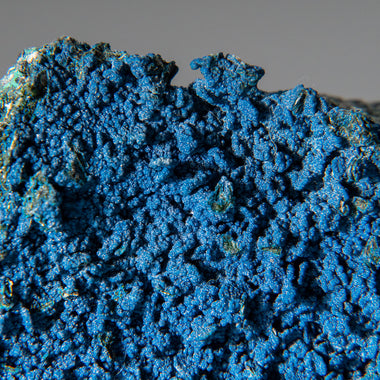
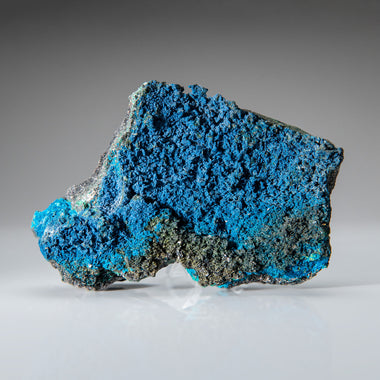
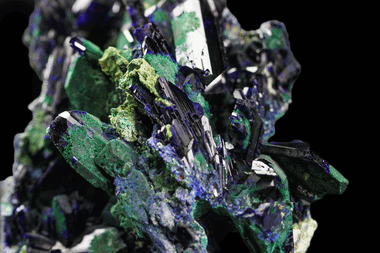
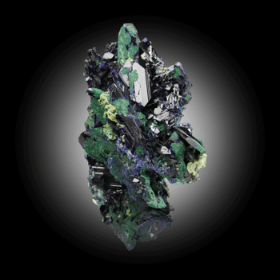
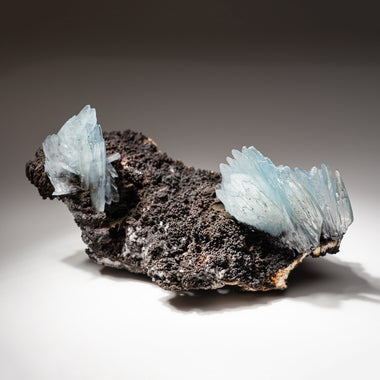
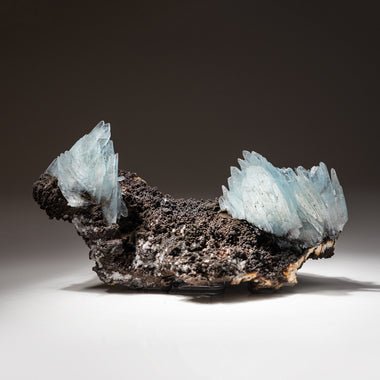
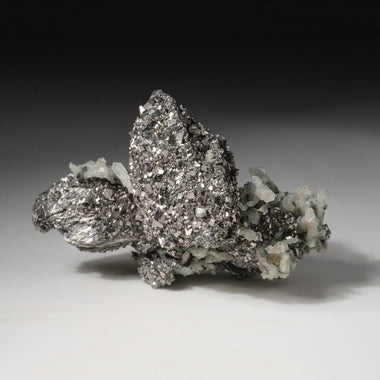
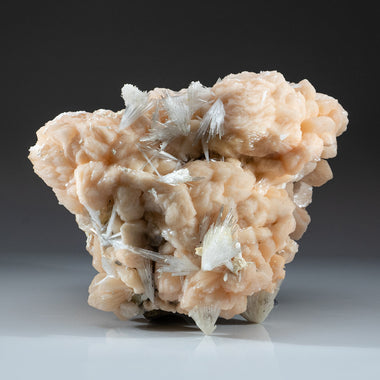
Tsumeb azurite, Xuebaoding scheelite, Asturian fluorite and Wenshan hemimorphite, each catalogued as a single object.
Museum Quality Mineral Specimens: What the Top Grade Costs and Why It Costs It

Museum quality is the highest grade in mineral collecting, awarded to a specimen whose crystals are undamaged across the display face, whose colour and lustre hold up under close inspection, and whose mine and district are recorded precisely enough for another dealer to verify. Astro Gallery of Gems catalogues every one of the 35 specimens on this page as a one of one object, prints the locality into the title, photographs the display side and the reverse, and sets the price on the individual piece instead of a species average.
Where the Top Grade Is Won and Lost on a Specimen

Grade is settled on the display face, under raking light, at reading distance. Astro Gallery inspects each candidate for contact, cleave, crystal completeness and lustre before accepting it into this group, then writes what the inspection found into the description rather than framing it out of the photographs.

Damage across the display faceMuseum quality accepts contact on the reverse and the base, where a plate rested against neighbouring crystals inside the pocket, and accepts almost none on the face you look at. Astro Gallery shoots both sides so that trade off is visible before payment.
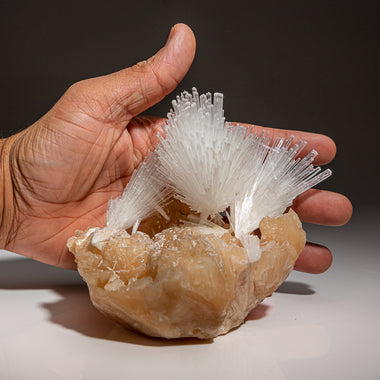
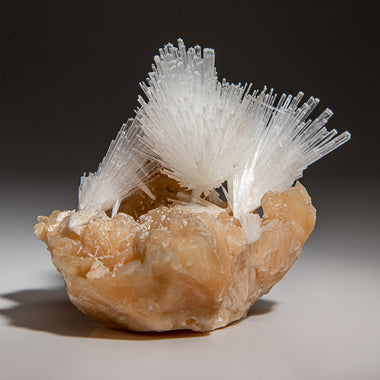
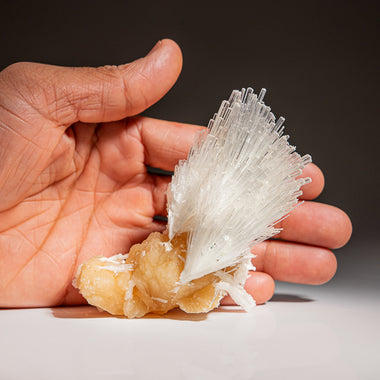
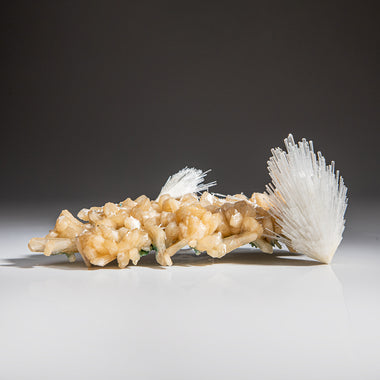
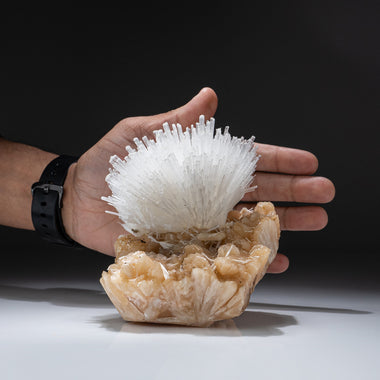
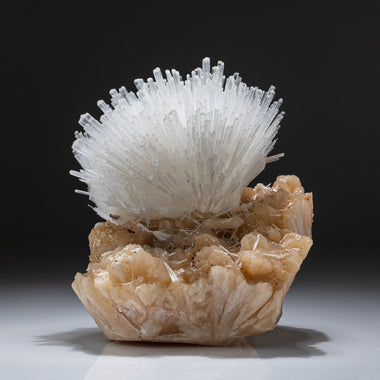
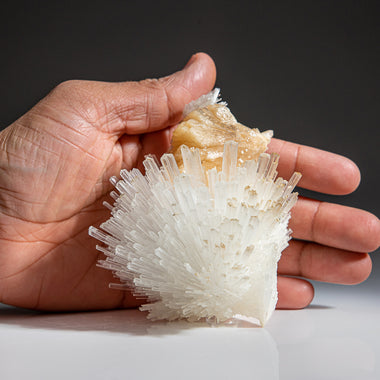
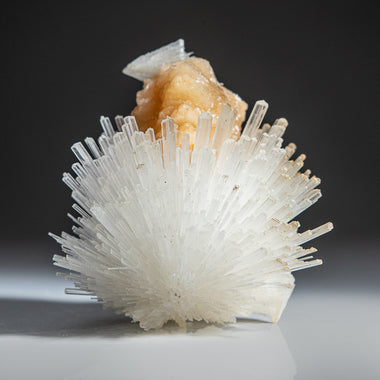
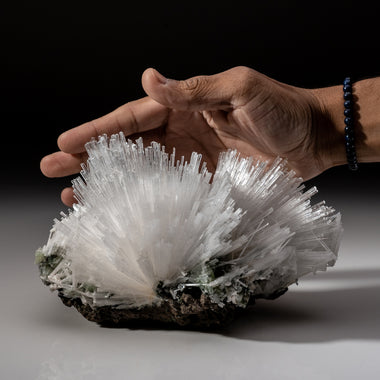
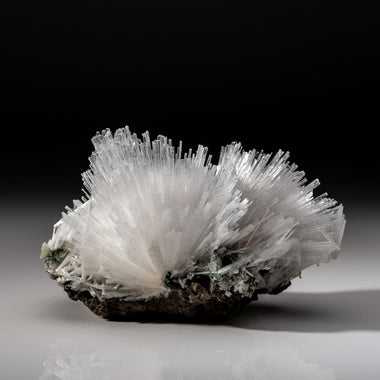
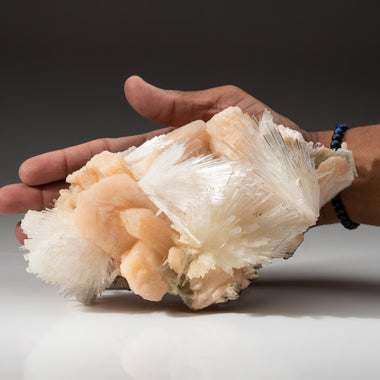
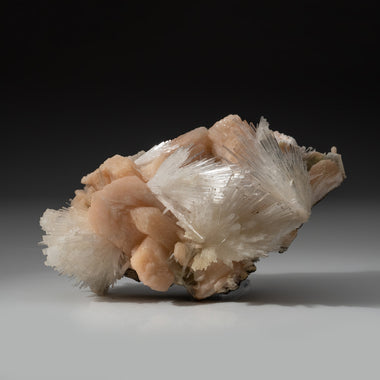
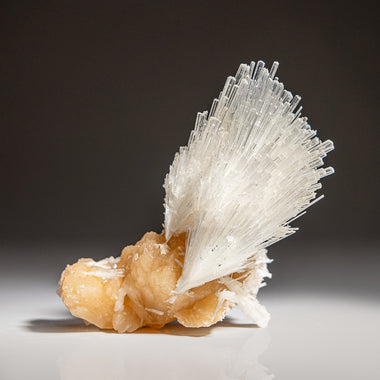
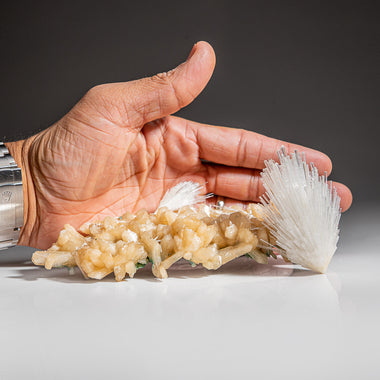
Termination completenessA Xuebaoding scheelite reaches this grade when every octahedron that shows terminates on undamaged faces, and a Nasik scolecite reaches it when the hair fine sprays end in points rather than snapped stubs. Broken terminations move a piece down a tier immediately.
Lustre and colour depthAzurite from Bou Beker carries a resinous to vitreous lustre and a saturated blue that dulls once a specimen has been scrubbed too hard. Original surface beats cleaned surface, so Astro Gallery states any acid or ultrasonic cleaning in the listing.
Repair, trimming and matrix balanceMatrix should support the crystals without swallowing them, and a trimmed base should read as a deliberate cut rather than a fracture. Repaired crystals, reattached points and stabilised matrix appear in the written description on every specimen offered here.

What the Specimens Below Cost Right Now

Each row names one catalogued object, priced on its own merits and pulled from the table the moment it sells. The price on the listing is the figure charged at secure checkout, and no two rows repeat, because a second azurite out of the same pocket grades differently.

PieceDetailPrice
Azurite from Bou Beker Mine, 21 km SSE of Oujda, Errachidia Province, Morocco See listing $ 3,500.00
Azurite with Malachite From Tsumeb, Otjikoto Region, Namibia See listing $ 15,000.00
Barite on Geothite From Jebel Ouichane, Beni Bou Ifrour, Nador, Nador Province, Oriental Region, Morocco See listing $ 3,000.00
Botryoidal Hemimorphite From Wenshan Mine, Yunnan, China See listing $ 3,000.00
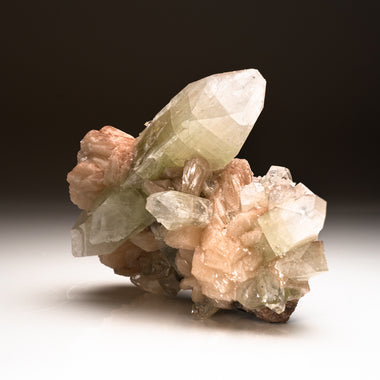
Green Apophyllite With Stilbite From Jalgaon, Maharashtra, India See listing $ 20,000.00
Hemimorphite with Calcite From Santa Eulalia District, Aquiles Serdán, Chihuahua, Mexico See listing $ 1,800.00
Every specimen here is in stock and one of oneAdd to cart at the price shown, or ask for raking light photographs of the display face and the reverse before you commit.
View all 35 pieces Request photographs

Bou Beker, Tsumeb and Xuebaoding: Localities That Decide the Grade

A locality earns its place in a title when it changes what the crystal looks like or how hard the specimen is to replace. Astro Gallery buys at the mine, at the European and American shows, and out of dispersed private cabinets, so old collection labels travel with several of the pieces catalogued here.

Tsumeb, Otjikoto Region, NamibiaAzurite with malachite from the oxidation zone of a mine that stopped producing in 1996, which means every Tsumeb specimen on the market now moves cabinet to cabinet. Scarcity, not size, is what lifts these copper carbonates to the upper prices in this group.
Bou Beker and Jebel Ouichane, MoroccoAzurite from Bou Beker near Oujda in Errachidia Province, and barite blades on goethite from Jebel Ouichane at Beni Bou Ifrour in Nador Province. Moroccan material rewards buyers who want saturated colour and sharp habit without a closed mine premium.
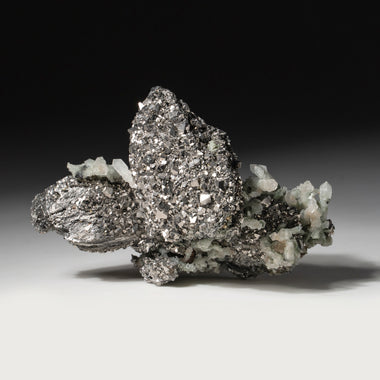
Xuebaoding, Sichuan, and Huanggang, Inner MongoliaScheelite with muscovite from Pingwu at Xuebaoding, a calcium tungstate at Mohs 4.5 to 5 that fluoresces blue white, plus lollingite with arsenopyrite from the Huanggang iron and tin deposit. Both are locality driven purchases where the label carries much of the value.
Nasik, Jalgaon, Santa Eulalia and CaraviaZeolite specimens from the Deccan basalts of Maharashtra, hemimorphite with calcite from the Santa Eulalia District in Chihuahua, and purple fluorite from the Caravia and Berbes district in Asturias. These localities supply the accessible end of museum quality.

Museum Quality Tiers and the Reason Each Step Costs More

Price climbs in steps rather than a smooth curve, and each step corresponds to something a collector can point at: a cleaner face, a rarer species, a mine that no longer produces, or a size that the locality almost never yields. These tiers map the range currently catalogued.

TierWhat sits in it and why the price moves
Entry to the gradeNasik scolecite sprays and Jalgaon green apophyllite with stilbite, complete on the display face and correctly labelled, which give a new collector a genuine museum quality piece at the lowest prices on this page.
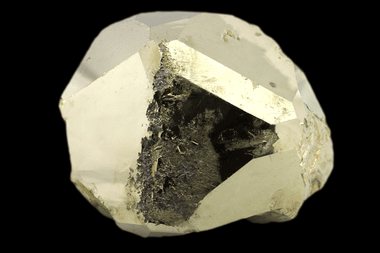
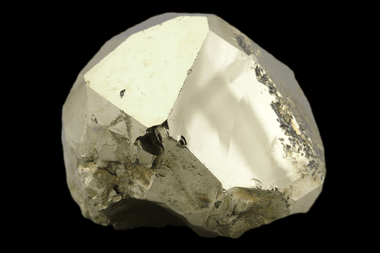
Classic locality, strong exampleCaravia purple fluorite and Merelani Hills pyrite from the Simanjiro District in Tanzania, where the species is available but a specimen with undamaged edges and full lustre is not.
Aesthetic top of speciesBotryoidal hemimorphite from the Wenshan Mine in Yunnan and hemimorphite with calcite from Chihuahua, priced above their tier because the botryoidal surface and the calcite association photograph as a composition.
Closed mine and rare associationTsumeb azurite with malachite and Huanggang lollingite with arsenopyrite, where no new supply exists and replacement means waiting for another collection to disperse rather than another parcel to arrive.
Anchor specimenThe largest Xuebaoding scheelite plates and the finest azurite in the group, which carry the highest prices here and normally become the single piece a cabinet is built around.

Cabinet Builders and Single Anchor Buyers

The collector building a cabinetA cabinet is assembled over years, one species or one region at a time, and museum quality earns its cost by holding value while the group grows around it. Buyers on this path favour Maharashtra zeolites, Asturian fluorite and Moroccan barite, adding a closed locality piece when one surfaces.
The buyer after one anchor pieceAn anchor specimen carries a room, a display case or an office on its own, so aesthetics and scale outrank breadth of coverage. Buyers on this path go straight to the Tsumeb azurite or the largest scheelite plate, and want the itemised invoice for insurance from the day it arrives.

Museum Quality Terms, Label Marks and Condition Words

ContactA dull, unformed area where a crystal grew against another crystal or the pocket wall. Contact is natural, unlike a break, and its position decides whether a specimen keeps museum quality.
Ex collectionA note that a specimen previously sat in a named private or institutional cabinet. Ex collection provenance raises value when an original handwritten or printed label accompanies the piece.
Repair against restorationRepair reattaches a crystal that belongs to the specimen, while restoration adds material that was never there. Both are disclosed in writing on every specimen catalogued in this group.
Thumbnail, miniature, cabinetThe trade size classes, running from under an inch, through the three to seven centimetre miniature range, up to cabinet pieces built for a shelf rather than a drawer.
FloaterA specimen crystallised free in a cavity and terminated on every side, with no attachment point at all. Floaters command a premium because complete all round examples are uncommon.
AssociationTwo or more species crystallised together, such as azurite with malachite or scheelite with muscovite. A good association is priced above either species standing alone.

Insuring a Museum Quality Purchase and Scheduling It on a Policy

Astro Gallery issues an itemised invoice with every purchase, naming the species, the mine and district, the dimensions, the weight and the amount paid. Insurers accept that document as the basis for an appraisal or for scheduling the specimen on a fine art or valuables policy, and it also records the declared value used while the parcel is in transit. Collectors who insure a cabinet as a group find it simpler to keep the invoices together with the original collection labels, since a Tsumeb azurite backed by a dated label from a dispersed cabinet appraises differently from an unlabelled one.

Cabinet Display, Light and Handling for Fine Specimens

A glass fronted cabinet on a wall away from a window solves most display problems at once, because it holds dust off the crystals and keeps daylight from reaching pigment sensitive species. Astro Gallery recommends low heat LED lighting angled from above, which reveals lustre without warming the shelf. Fluorite from Caravia cleaves on four planes and chips if it knocks a neighbour, scolecite sprays from Nasik snap under a careless thumb, and azurite prefers stable humidity over a bathroom or a basement. Lift every piece by the matrix, never by a crystal, and rest each specimen on a felt pad or a small acrylic stand so nothing slides.

Ordering, Payment and Insured Worldwide Delivery

Buying works the same way for a scolecite spray and for the highest priced azurite on the page: the price on the listing is the price charged, and adding a specimen to cart holds it while secure checkout settles through Shop Pay, PayPal, Apple Pay, Google Pay, Visa or Mastercard. Ask our team beforehand for measurements, a raking light photograph of the display face, or a close view of a specific contact area, and they will send it rather than referring you back to the listing images.

Astro Gallery of Gems has packed fragile crystal for transit since 1961. We isolate delicate terminations in cut foam, block the matrix so weight cannot travel inside the carton, and double box every cabinet piece. Each parcel leaves tracked and fully insured at declared value, with customs paperwork completed before dispatch, and the heaviest plates travel on a freight quote agreed with you in advance. Our published returns policy, linked under shipping and returns, covers any specimen whose condition differs from the written description, and the guarantee published on about us applies to every locality and label we print.

Rated everywhere we trade

Ask for the reverse before you decideOur team photographs the back, the base and any contact area on request, usually the same working day.
Browse the specimens Email the gallery

Questions Collectors Ask Before Buying at This Grade

What does museum quality actually mean?
Museum quality describes a specimen with no damage across its display face, full original lustre, correct crystal habit for the locality, and a documented mine of origin. It is a condition and documentation standard rather than a claim that a museum once owned the piece, and we state any contact, repair or cleaning in the description.
How much does a museum quality mineral specimen cost?
Maharashtra zeolites and Asturian fluorite open the range, closed locality material such as Tsumeb azurite sits well above it, and the largest scheelite plates carry the highest prices in the group. The table above shows live prices for everything in stock, and each figure belongs to that individual specimen.
Am I buying the exact piece shown in the photographs?
Yes. Every specimen catalogued at this grade is one of one, so we shoot each piece individually from the display side and the reverse. No two azurites or scheelites out of the same parcel grade alike, which is why a stock image would tell you nothing useful.
Do these specimens come with provenance or an old collection label?
Several do, and the listing says so explicitly when an original label travels with the piece. We buy out of dispersed private cabinets as well as at the mine and at the shows, and we pass on any dated or handwritten label exactly as it reached us.
Will you disclose repair or restoration?
Yes, in writing on the listing itself. Repair reattaches a crystal belonging to the specimen and restoration adds material that was not there, and we name which one applies, where it sits and how visible it is under normal display light.
Can I use your invoice for insurance or an appraisal?
Yes. The itemised invoice names the species, the mine and district, the dimensions, the weight and the amount paid, which is what insurers ask for when scheduling a specimen on a valuables policy. Collectors also use it as the starting document for an independent appraisal.
Do you ship museum quality specimens internationally?
Yes. Every order travels tracked and fully insured at declared value with customs paperwork prepared before dispatch. Heavy cabinet plates move by freight against a quote we agree with you first, so nothing is charged before you approve it.
Can I return a specimen if the condition differs from the description?
Yes, under our published returns policy, and that is the situation the policy exists for. Requesting extra photographs of the reverse and any contact area before ordering resolves the question for most buyers without a piece ever moving.

Where the Top Grade Sits Beside the Rest of the Catalogue

Museum quality overlaps with several groups, so the useful question is whether species, region or grade is driving your search. Buyers chasing a species follow fluorite or pyrite across every grade, while buyers chasing condition move between this page, the fine minerals selection and the vault.