Skip to content

Barite

Blue blades from Nador, golden prisms from Guangxi, amber rosettes grown inside the shale concretions of Meade County.

Buy Barite Specimens: Moroccan Blue Blades, Nandan Golden Crystals and Elk Creek Rosettes

Barite is barium sulfate, an orthorhombic mineral crystallising as tabular blades, blocky prisms and radiating rosettes, and its specific gravity near 4.5 makes a small piece feel roughly twice as heavy as quartz of the same size. Astro Gallery of Gems buys barite at the mine face in Nador Province and on the floor at Tucson, Denver and Munich, then catalogues, weighs and photographs each of the 25 specimens here one at a time.

Blue at Jebel Ouichane, Gold at Nandan: Where Barite Colour Is Decided

Colour in barite comes from the chemistry of the vein that hosted it, so the district printed on a label predicts a specimen more reliably than any photograph does. Astro Gallery buys from four producing areas, and each one differs in colour, blade length and matrix.

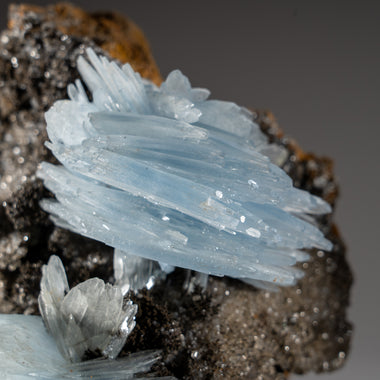
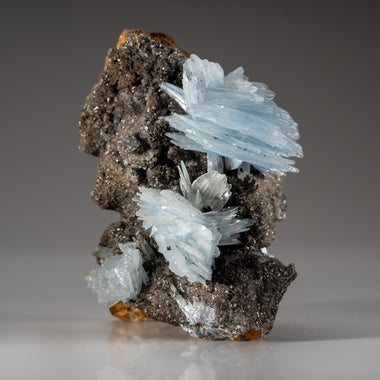
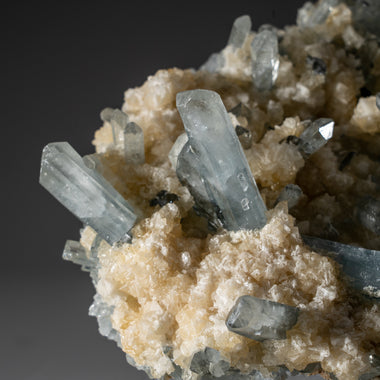
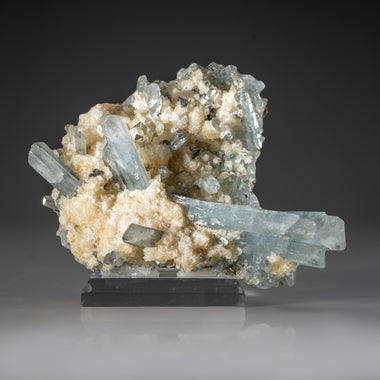
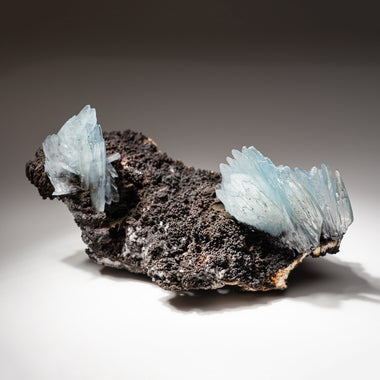
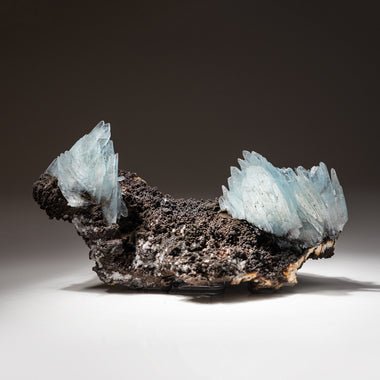
Jebel Ouichane, Nador ProvinceThe Sagangane workings in Morocco's L'Oriental Region produce transparent blue barite prisms in intersecting clusters on dark sphalerite. Blue material commands the highest prices here, because clean terminations rarely survive extraction from an iron ore face.
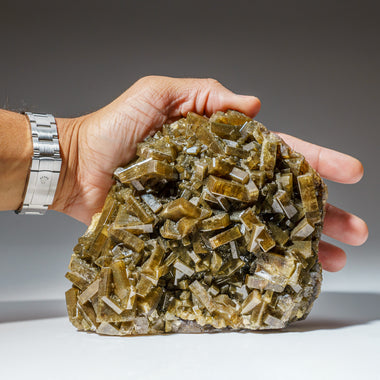
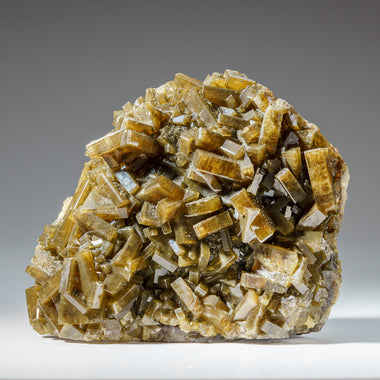
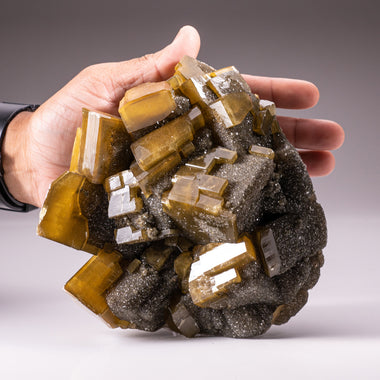
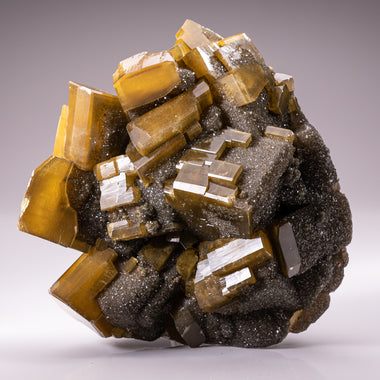
Nandan County, Hechi, GuangxiThe Dachang polymetallic field yields golden barite as diverging sprays and sharp rhombic plates, frequently with brassy marcasite scattered across the faces. Nandan supplies most of the large golden display plates Astro Gallery buys in China.
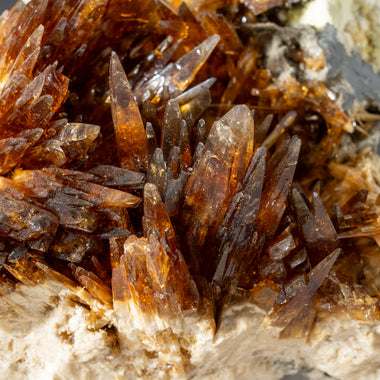
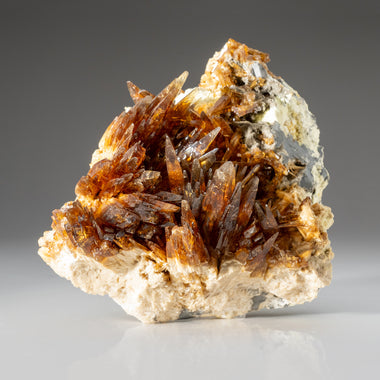
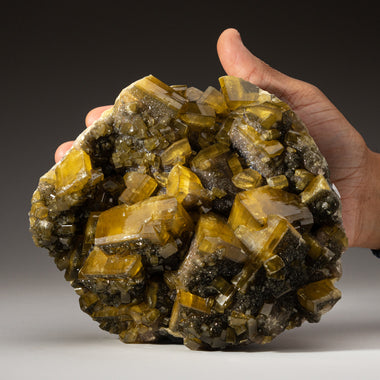
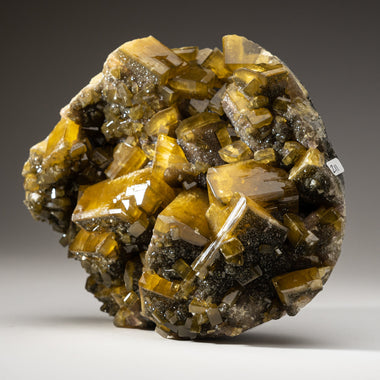
Elk Creek, Meade County, South DakotaGolden barite grows inside septarian concretions in the Pierre Shale, lining cavities with amber crystals over botryoidal marcasite. Astro Gallery buys these plates already opened, because the shale crumbles when a concretion is split carelessly.
Stoneham, Mibladen and TarnobrzegBarite also reaches the gallery from the Sterling Mine at Stoneham, from the lead workings at Mibladen in the Haute Moulouya Basin, and from the Machow Mine at Tarnobrzeg. Those three supply the association pieces collectors buy for the pairing.

What a Barite Specimen Costs Today

Every row below is one physical specimen photographed as it will arrive, with the price on the listing updating straight from the catalogue. Astro Gallery prices barite at gallery rate against blade length, colour saturation, matrix and disclosed damage, and a piece that sells leaves this table entirely.

PieceDetailPrice
Barite from Jebel Ouichane, Sagangane, Nador Province, L'Oriental Region, Morocco See listing $ 6,500.00
Barite from Jebel Ouichane, Sagangane, Nador Province, L'Oriental Region, Morocco See listing $ 3,500.00
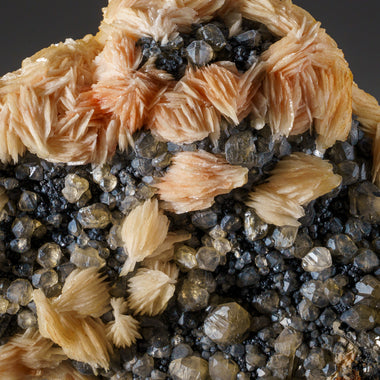
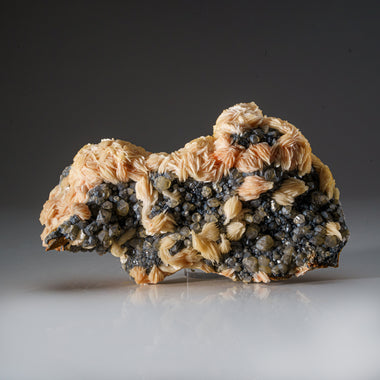
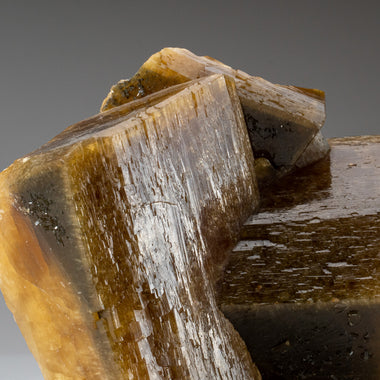
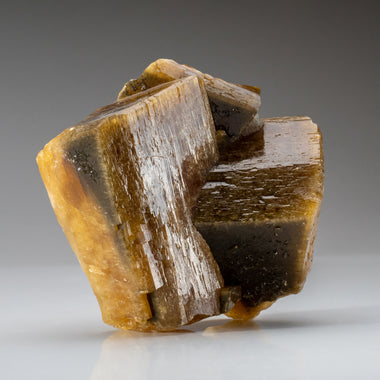
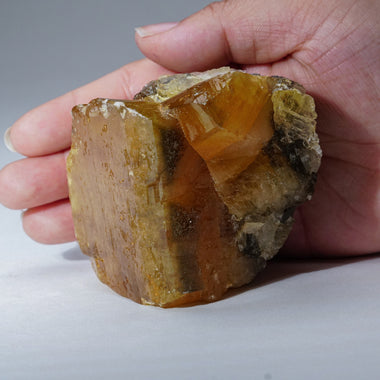
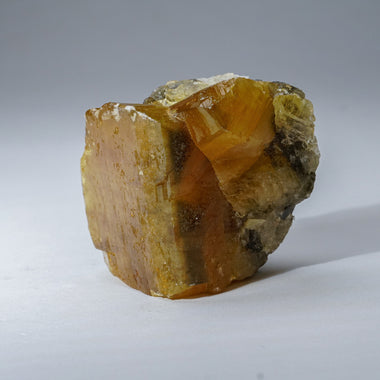
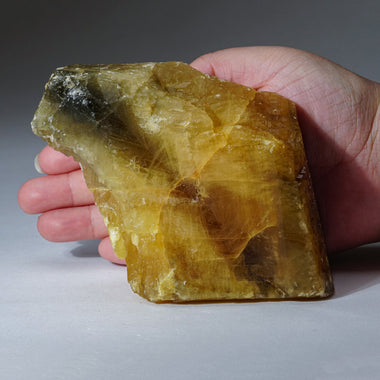
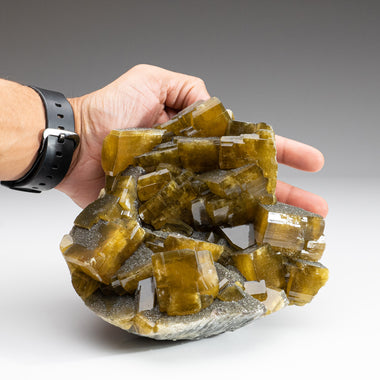
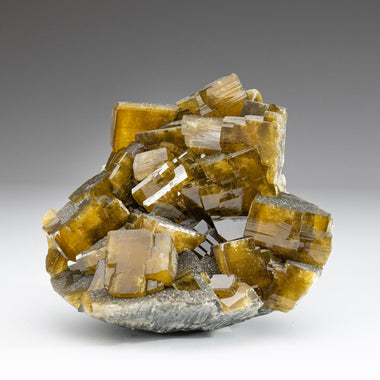
Golden Barite Crystals from Nandan County, Hechi, Guangxi, China See listing $ 6,000.00
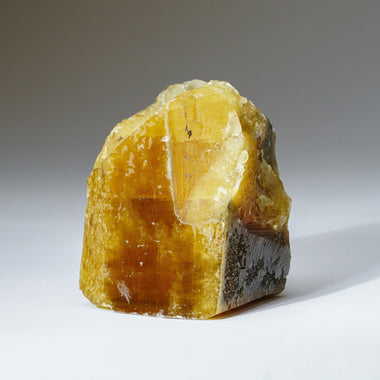
Barite on Botryoidal from Elk Creek, Meade County, South Dakota See listing $ 400.00
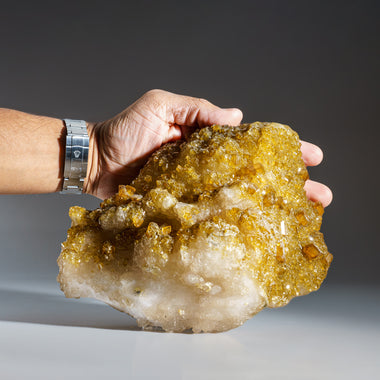
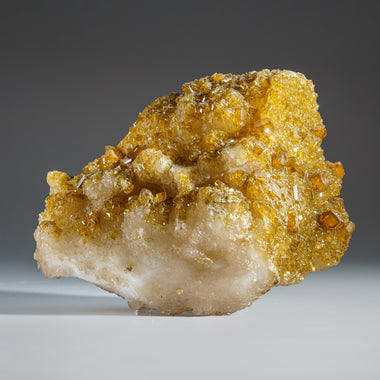
Golden Barite from Elk Creek, South Dakota (451.7 grams) 451.7 grams $ 2,700.00
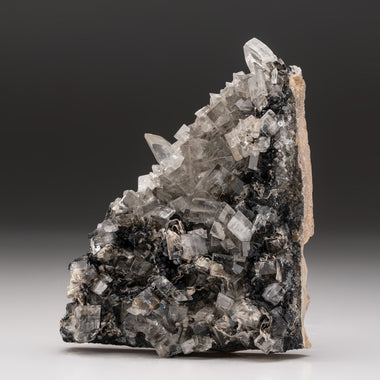
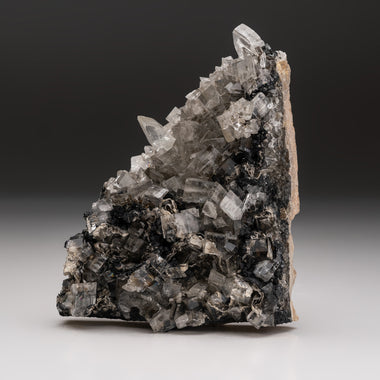
Barite with Cerussite from Mibladen, Haute Moulouya Basin, Midelt Province, Morocco See listing $ 3,000.00
Every barite specimen here is one of oneAstro Gallery photographs each cluster individually and keeps the price on the listing live against current stock.
View all 25 pieces Request photographs

Barite Habits Stocked, From Bladed Rosette to Blocky Golden Prism

Habit decides how a barite specimen reads across a room and how carefully it must be handled. Bladed clusters throw light back in flat sheets and snap at the base, while blocky prisms absorb handling and keep their terminations.

Habit and weightWhat sits in it and who buys it
Blue bladed cluster, 1.9 to 4.5 lbsIntersecting transparent blue prisms from Jebel Ouichane on sphalerite, four to eight inches across, bought by collectors who decide on colour before locality.
Golden prismatic spray, 440 grams to 3 lbsDiverging sprays of elongated golden crystals from Nandan County and Lushi in Henan Province, glassy on every face and sized for a standard glass cabinet.
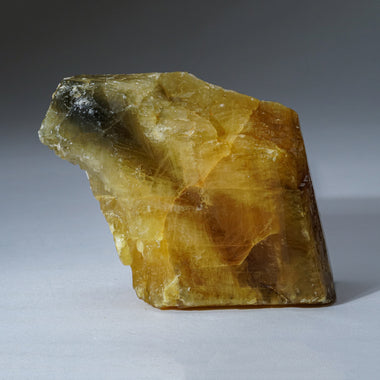
Amber rosette on botryoidal matrix, 450 grams to 3 lbsElk Creek barite lining a septarian cavity over botryoidal marcasite, the most fragile group here and the one Astro Gallery packs most slowly.
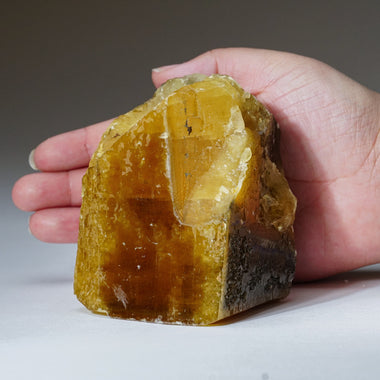
Association plate, 3 to 7 lbsBarite grown with cerussite at Mibladen, with sphalerite at Stoneham or beside native sulfur at Tarnobrzeg, bought for the combination as much as the barite.
Large display plate, 6.8 to 8.15 lbsGolden barite covering a plate up to nine inches across with a minimal attachment point, needing a shelf rated for the load and a light above it.

Weight carries further with barite than with almost any other display species, because specific gravity near 4.5 concentrates real load onto a small footprint. A three pound plate occupies roughly the volume of a one and a half pound quartz group, so a shelf may flex under the same visual size.

Cleavage, Contact and Repair Disclosure: Grading Barite Before Payment

Barite reaches the market carrying a predictable set of injuries, because perfect basal cleavage lets one knock remove a flat sheet without warning. Astro Gallery grades each specimen against the four points below and writes the findings into the description.

Basal cleavage stepsBarite parts along a perfect basal plane, so damage shows as a flat, mirror bright rectangle across a blade rather than a rough fracture. Astro Gallery photographs any cleavage step at the angle that catches that reflection.
Repair and reattachmentLong barite blades snap at the base during extraction and are frequently reattached before reaching a dealer. Astro Gallery names the repaired crystal in the description and prices the specimen against that repair, not against an intact equivalent.
Stabilisation of the matrixElk Creek shale and Moroccan gossan shed grains under handling, and preparators consolidate them with a hardener. Astro Gallery discloses stabilisation wherever a matrix has been treated, since a consolidated piece behaves differently on a shelf.
Contact and attachment pointContact is the dull surface where a barite crystal grew against a pocket wall or a neighbour, and it counts as original growth. Astro Gallery separates contact from breakage so the two are never priced alike.

Specific Gravity 4.5 and the Heft Test Any Buyer Can Run

Barite takes its name from the Greek word for heavy, and weight remains the fastest identification for the species. Lift a barite blade and a celestine of matching size, and the barite settles noticeably lower in the hand, because barium sits far heavier in the lattice than strontium. Mohs 3 to 3.5 completes the check, since a copper coin marks barite while quartz at Mohs 7 resists it. Astro Gallery states weight and dimensions on every listing, so a buyer can run that density comparison before choosing add to cart.

Reading a Barite Label Without Guessing

Basal cleavageThe plane parallel to the tabular face of a barite crystal, along which the mineral parts cleanly. It is why barite breaks flat and bright rather than jagged.
BladeA barite crystal grown much wider and longer than it is thick. Blade length rather than overall size sets the price on most Moroccan material.
RosetteA radiating cluster of tabular barite crystals resembling an opened flower, called a desert rose where barite crystallises through loose sand.
Growth phantomA ghost outline of an earlier crystal face sealed inside a transparent barite prism, recorded when growth paused and a thin impurity layer settled.
ContactA dull, unfinished surface where a barite crystal met the pocket wall or an adjacent crystal. Contact is original growth and is described separately from damage.
GangueThe non ore minerals filling a vein beside the metals. Barite is the classic gangue of lead and zinc veins, which is why it arrives with sphalerite and cerussite.

The Locality Collector and the Colour Collector Reach for Different Barite

The locality collectorA locality collector buys the label first, chasing one specimen from Jebel Ouichane, one from Elk Creek and one from the Machow Mine to record how a single sulfate behaves across three continents. Blade perfection matters less than a documented locality, and this buyer reads the disclosed condition closely.
The colour and display buyerA display buyer starts with the blue of Nador or the gold of Nandan and works backwards toward the locality. Saturation, transparency and an unbroken run of terminations across the front face decide the purchase, and this buyer wants the largest plate a lit shelf can carry.

Paying for Barite and Getting Blades to a Shelf Unbroken

Checkout runs identically for a 442 gram Elk Creek plate and an eight pound Nandan display piece. The price on the listing is the price charged, and add to cart and secure checkout settle through Shop Pay, PayPal, Apple Pay, Google Pay, Visa or Mastercard. Astro Gallery issues an itemised invoice naming species, locality, weight and disclosed condition, which is the document an appraiser reads and an underwriter needs for insurance scheduling.

Astro Gallery of Gems has packed sulfate crystals since 1961, and barite receives the treatment a Mohs 3 mineral requires. Fragile blades float in cut foam so no pressure reaches a termination, loose crystals travel separately from their matrix, and every specimen above a pound leaves double boxed. Each parcel goes out tracked and fully insured at declared value with customs paperwork completed before dispatch. The returns policy and the guarantee published on about us apply to every specimen dispatched.

Rated everywhere we trade

Check a blade before you commitRequest a raking light image of the cleavage faces, the attachment point and the reverse of any plate.
Browse the barite Email the gallery

Living With a Mohs 3 Mineral: Dust, Water and Sunlight Around Barite

Barite asks for less handling than almost any species on a collector's shelf. At Mohs 3 to 3.5 a fingernail leaves nothing behind but a steel tweezer tip scores it instantly, so lift a specimen by the matrix and never by a blade. Dust with a soft artist brush rather than a cloth, because woven fibres catch blade edges and lever them against the cleavage plane. Keep barite out of ultrasonic cleaners, and hold blue Moroccan and Colorado material clear of direct sunlight, where the colour centres responsible weaken over years.

Barite Beyond the Cabinet: Teaching Pieces, Display and Gifting

Barite earns a place in three collections at once. Systematic collectors file it under sulfates beside celestine and anglesite, and a single Elk Creek rosette demonstrates specific gravity and cleavage more directly than a textbook page, which is why geology departments buy smaller plates as teaching material. Interior buyers treat a blue Moroccan cluster as a sculptural object under a directional lamp, where transparency does work colour alone cannot. Astro Gallery documents locality, weight and treatment across all three uses and makes no energetic or health claim.

Barite Questions That Arrive Before an Invoice Goes Out

How much does a barite specimen cost?
Barite on this page spans two orders of magnitude, from a small Elk Creek plate at the entry of the range to a large blue Moroccan cluster with undamaged terminations at the top. The table above carries the live price on every specimen in stock, and each figure belongs to one piece rather than to a size grade.
Is the blue in Moroccan barite natural?
Yes. Blue barite from Jebel Ouichane and from Stoneham in Weld County takes its colour from natural colour centres in the crystal lattice rather than from dye or heat. Astro Gallery buys this material untreated and states any treatment it identifies on the listing.
Why is barite so heavy for its size?
Barium sulfate carries a specific gravity near 4.5, around one and a half times that of calcite and well above quartz. That density gave the species its name, from the Greek word for heavy, and it separates barite from celestine or calcite faster than any other field test.
Are these barite specimens repaired?
Some are, and the description says so. Long blades snap at the base during extraction, so Astro Gallery inspects every specimen under magnification, names any repaired crystal in the description, and prices the piece against that repair rather than against an intact equivalent.
What size barite fits a display cabinet?
Golden sprays from Nandan County between roughly 440 grams and three pounds sit inside a standard glass cabinet without crowding the shelf. Large plates approaching eight pounds and nine inches across need an open console position and a light source mounted above them to read properly.
Can I get an invoice for appraisal or insurance?
Yes. Astro Gallery issues an itemised invoice naming species, locality, weight, dimensions and disclosed condition with every barite order, and that document is what appraisers read and what insurers ask for when scheduling a specimen onto a policy.
Do you ship barite outside the United States?
Yes. Every barite order travels tracked and fully insured at declared value with customs paperwork prepared before dispatch. Astro Gallery double boxes anything above a pound and quotes freight separately for the heaviest display plates, so that cost is agreed beforehand.
How do I clean a barite specimen?
Dust it with a soft artist brush and nothing else. Barite sits at Mohs 3 to 3.5 with perfect basal cleavage, so cloth fibres catch blade edges, ultrasonic cleaners loosen crystals from matrix, and soaking damages any stabilised shale underneath.

Districts and Species Next to the Barite Case

Barite crosses several parts of the catalogue at once, arriving as gangue in lead and zinc veins and as a display species in its own right. Collectors following the vein chemistry move toward the sulfides, while collectors following the blue move toward fluorite and calcite.